




Bookshelf styling looks effortless in magazines and feels impossible at home. You stack the books, add a vase, step back, and the shelf looks like either a showroom or a storage unit. The difference between that and a designer result is rarely money. It comes from a few repeatable choices about color, scale, and empty space.
This guide shares 11 ideas, from calm minimalist shelves to cozy Nancy Meyers-style built-ins. Each look has its own palette, key pieces, and one trick that makes it work, so you can pick the style that suits your room and copy it one shelf at a time.
Three Rules That Always Work
Start with an anchor. Every shelf needs one visually heavy element, such as a stack of large books, a dark vase, or a solid-colored box. It gives the eye a place to land and stops the arrangement from reading as scattered objects.
Next, vary the height and group items in odd numbers. Three objects at different heights read as one intentional cluster, while two or four identical ones look like a mistake. Place the tallest piece off-center and let the others step down from it.
Finally, leave about a third of every shelf empty. That negative space is what makes the styled parts look chosen rather than crammed. When a shelf feels busy, remove one object before adding anything new.
1. Minimalist Bookshelf Styling
This look is about editing, not decorating. Give each shelf one hero, such as a ceramic vessel, a small framed print, or a short stack of books topped with a bowl, and leave the rest open. Entire shelves can stay empty, and that emptiness is exactly what keeps the look calm.
For a minimal look in neutral tones, stay with white, oatmeal, and stone, and choose objects with simple, rounded shapes. Keep at least a hand’s width between groups so each one has room to be noticed.
Avoid mirrored symmetry. Identical vases at both ends of every shelf look sterile, so place the hero object on the left of one shelf and on the right of the next.

2. Neutral Shelf Styling
Designer-level neutral decor works because of texture, not color. Mix matte ceramic, aged wood, linen, stone, and paper so each object looks different even though the palette is quiet. A shelf of only smooth white pieces looks flat, while the same shelf with a rough clay pot and a linen-covered box looks expensive.
Modern neutral decor also needs contrast. One black frame or dark bronze candlestick per section gives the eye a focal point and stops cream and tan from blurring together.
Check undertones before you buy. Warm creams and cool grays fight each other on the same shelf, so choose one family and extend it to your book jackets too.

3. Organic Modern Shelf Styling
This style pairs clean lines with natural, slightly imperfect forms. Think of a hand-thrown bowl, a travertine block, a wooden candlestick, and a branch of dried olive in a rounded vase. Aim for at least one soft curve on every shelf.
This look is warmer and more tactile than minimalism. Where a minimalist shelf removes objects, an organic one welcomes a few more, as long as each comes from nature: clay, wood, stone, fiber, or plants.
Match your accessory woods to your furniture. A pale oak bowl beside a walnut bookcase looks accidental, while a matching tone looks planned.

4. Nancy Meyers Shelf Styling
The Nancy Meyers look is the opposite of sparse. Her films are known for homes that feel generous and lived in, with creamy whites, soft blues, and warm wood. Loose stacks of books, framed family photos, and a ceramic pitcher beside a woven basket capture the mood.
Fresh flowers or hydrangea stems in a plain white vase do much of the work. Cookbooks, ironstone, and baskets fill the lower shelves, and nothing needs to line up perfectly.
Warmth matters more than polish. Fold a throw over a basket, leave one stack leaning, and let a few books sit at an angle so the shelf looks used rather than staged.

5. Built-In Bookshelf Styling
Built-ins work best when you think architecturally. Paint the back panel a deeper or contrasting color to add depth, then treat each vertical bay as its own composition that repeats one motif, such as a book stack topped with a bowl.
Style by height. The top shelves are far from the eye, so fill them with big baskets, oversized vases, or large framed art. Keep small, detailed objects at eye level, and hide anything you do not want to show in closed cabinets or lidded baskets at the bottom.
Add light if you can. A picture light, puck light, or LED strip turns a plain built-in into the focal point of the room after dark.

6. Bookshelf Styling With Books
Styling around books is harder than styling with objects, and most guides skip it. When the collection is large, build structure through arrangement: group by color for a gradient, by height for a tidy skyline, or by subject if you need to find titles fast.
Break up long rows. Lay a short stack horizontally every eight to ten books and use it as a platform for one small object. Pull the spines to the front edge so they form a clean line, and turn one or two favorite covers outward on a mini easel for a visual pause.
If you own more books than shelves, put oversized volumes on the bottom, move paperbacks to a closed cabinet or another room, and keep only the best-looking spines in view.

7. Modern Farmhouse Shelf Styling
The farmhouse look blends rustic pieces with clean contrast. Start with a white or light shelf, then add matte black frames, a wooden cutting board leaned at the back, enamelware, ironstone, and stoneware holding greenery.
Limit yourself to two finishes, usually black metal and warm wood. That rule keeps the look crisp instead of cluttered and stops the shelf from drifting into theme-store territory.
Skip word signs and faux-vintage decor. One genuine antique, like a scale, a crate, or a worn bread board, does more than five new pieces with painted distressing.

8. Coastal Shelf Styling
The coastal look feels like a breeze through an open window. Use white, sand, and soft blue, then add light-toned wood, rope, woven seagrass, driftwood, and blue-and-white ceramics. A glass jar of sea glass or a few shells in a wooden bowl brings in the theme without announcing it.
Choose one coastal motif per shelf. A single piece of driftwood beside a blue vase reads as relaxed and collected, while anchors, signs, and starfish on every shelf read like a beach gift shop.
Keep the palette light and leave plenty of air. Coastal shelves look best when the eye can travel across them without stopping.

9. Open Shelf Styling
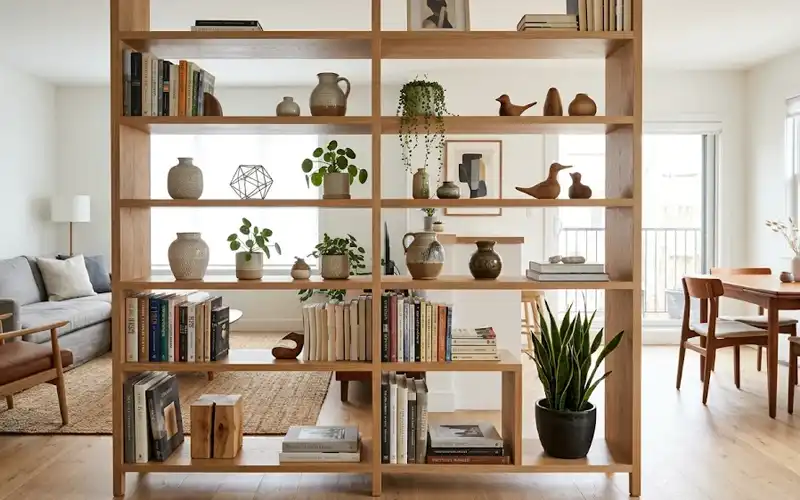
An open unit needs extra thought because it has no back panel to hide behind. Whatever you place on it is visible from the front, the sides, and sometimes from the other side of a room divider. Choose objects with attractive silhouettes and avoid anything with a messy backside.
Keep the arrangement airy. Leave gaps so you can see through the unit, put heavier pieces on the lower shelves for stability, and balance both faces if the bookcase divides a space. Anchor tall, ladder-style units to the wall for safety.
Repeat one material across the shelf, such as three wood objects at different levels, so a visually light unit still feels cohesive.
10. Office Shelf Styling
A modern office shelf should feel clean, credible, and calm, especially when the shelf appears behind you on video calls. Keep the section behind your chair simple: books grouped by subject, one or two framed pieces of art, a plant, and a lamp with a warm bulb. Matte black, wood, and brass look polished without feeling decorative.
A professional office shelf leans further toward restraint. Show reference books with legible spines, keep personal photos modest, and display awards or certificates in a single tidy row rather than scattered across shelves. Hide files and supplies in closed boxes.
Check the camera view before you finish. Whatever sits at eye level behind your shoulders is what colleagues remember, so make that section the most intentional.

11. Aesthetic Shelf Styling
This look is driven by a theme you can name in one phrase: dark academia, rainbow gradient, vintage reader, or soft pastel. Pick one and commit, because the look only works when every object supports it.
Color-ordered books are the easiest entry point. Thrifted hardcovers in a single color family make a bold statement for very little money, and a gradient from light to dark gives the shelf instant rhythm.
Layer small personal extras in front: a handful of postcards, a few polaroids, a vintage candle holder, or a trailing plant. They add story, which is exactly what makes a shelf look photographed rather than merely tidy.

Bookshelf Styling Inspiration
Match the look to your room and your habits. If you want a calm space with few belongings, begin with minimalist or neutral. A home that leans warm and natural suits organic modern or Nancy Meyers, while farmhouse and coastal fit casual family rooms with plenty of daylight.
Working from home points to the office look, and a large library points to the books-first approach before any decor. If several styles tempt you, choose the one closest to the furniture you already own, since that cuts the number of new purchases.
Bookshelf Styling Tips
Hide the practical items. Routers, game consoles, and cable boxes can sit on a shelf when tucked behind a lidded basket, a decorative box, or a row of books, with a gap behind for ventilation. Thread cords through the back of the unit and secure them with adhesive clips so nothing dangles.
Shop your home before you shop a store. Kitchen bowls, candlesticks, trays, and frames all work as shelf decor, and thrift shops and marketplace listings are strong sources for vintage vases and secondhand books. A shelf collected slowly always looks better than one bought in a single afternoon.
Use the photo test when something feels off. Snap a picture on your phone and switch it to black and white. Heavy clusters, uneven gaps, and a lopsided layout show up instantly, and you can fix them before you move a single object.
Frequently asked questions
Where do I start when styling a bookshelf from scratch?
Clear every shelf, wipe it down, and sort items into books, art, vessels, and personal pieces. Place the largest items on the top shelves first, work downward, and add the smallest pieces last.
How many decor items should go on each shelf?
Three to five groups per shelf suits most looks. Minimalist shelves can drop to one or two, while collected and Nancy Meyers styles can stretch higher.
Should I arrange books by color?
Color ordering gives the cleanest look but makes titles harder to find. If you use your books often, group by subject first and then arrange by color inside each section.
How often should I restyle my shelves?
A light seasonal refresh is enough. Swap two or three objects, such as greenery, a candle, or one piece of art, and leave the structure alone.
Final Thoughts
The best bookshelf styling ideas are simple: pick a look, limit your palette, group objects with purpose, and leave room to breathe. Start with one shelf, try the look that suits your home, and adjust until it feels like yours.