



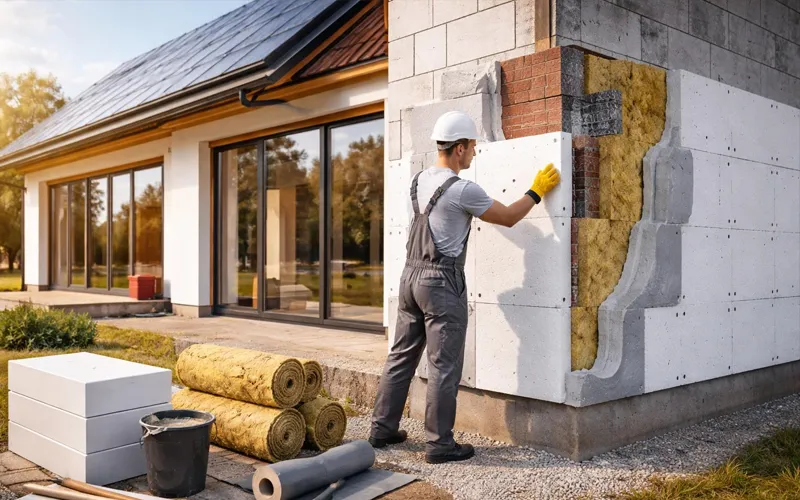
Choosing the right insulation types for walls can improve indoor comfort, reduce unwanted heat transfer, and help maintain consistent temperatures throughout the year. Proper wall insulation can keep homes warmer during winter and cooler during summer, reducing the workload on heating and cooling systems. However, the best material depends on the wall structure, local climate, available space, moisture conditions, and installation budget.
Homeowners can choose from several options, including fiberglass, mineral wool, spray foam, rigid foam boards, cellulose, and wood fiber insulation. Each material offers different benefits in terms of thermal resistance, sound absorption, fire resistance, and installation requirements. Understanding these differences helps homeowners select a suitable solution for new construction, renovations, or existing walls that need better thermal protection.
Why Wall Insulation Matters
Exterior walls separate indoor living spaces from outdoor temperatures. Without adequate insulation, heat can escape through walls during winter and enter the home during summer. This makes it harder to maintain comfortable indoor temperatures and can increase energy consumption.
Effective insulation slows heat transfer through the wall assembly, helping rooms maintain more stable temperatures. It can also reduce cold spots near exterior walls and improve comfort in bedrooms, living rooms, and other frequently used spaces. When combined with proper air sealing, efficient windows, and suitable ventilation, insulation can contribute to better overall energy performance.
Wall insulation can also help control noise. Fibrous materials such as fiberglass and mineral wool absorb sound within wall cavities, which may reduce noise transmission between rooms or from outside. The amount of sound reduction depends on the entire wall construction, including framing, drywall, insulation, and sealing around openings.
Understanding Insulation Materials
Before comparing materials, it is helpful to understand thermal resistance, commonly measured as R-value in the United States. A higher R-value generally indicates greater resistance to heat flow at a given thickness. However, the insulation’s advertised R-value does not tell the whole story about how a wall will perform.
Gaps, compressed insulation, air leakage, and thermal bridging through framing can reduce the effectiveness of the complete wall system. Moisture control is equally important because water intrusion and condensation can damage building materials and affect long-term performance.
A thermal insulation materials list for residential walls may include fiberglass batts, mineral wool, spray polyurethane foam, rigid foam boards, cellulose, and wood fiber products. These materials are used in different ways, so the most suitable choice depends on whether insulation will be installed inside wall cavities, within existing walls, or as a continuous exterior layer.
Fiberglass Insulation
Fiberglass is one of the most widely used residential insulation materials because it is generally affordable, readily available, and compatible with conventional framed walls. It consists of fine glass fibers that trap air and slow heat transfer. Fiberglass products are available in batts, rolls, and loose-fill forms for different building applications.
One advantage of fiberglass is that pre-cut batts can fit between wall studs in new construction and renovation projects. The material is also noncombustible, although the fire performance of a complete wall depends on all its components and finishes. Fiberglass does not create a complete air barrier, so gaps around windows, electrical boxes, plumbing, and framing connections must be addressed separately.
Types of Fiberglass Insulation
The types of fiberglass insulation for walls include faced batts, unfaced batts, rolls, and loose-fill products.
- Faced batts: These have a paper or other approved facing that may serve as a vapor retarder when installed in the correct location for the wall design and climate.
- Unfaced batts: These have no attached facing and may be suitable when the wall uses a separate vapor-control strategy or does not require an additional facing.
- Fiberglass rolls: These cover longer areas and can be useful in suitable open wall cavities.
- Loose-fill fiberglass: This is installed using specialized equipment in appropriate enclosed cavities and other approved spaces.
Correct installation is essential. Batts should fit the cavity without large gaps, folds, or compression. Around wiring and plumbing, the insulation should be carefully cut and fitted rather than pushed behind obstructions.
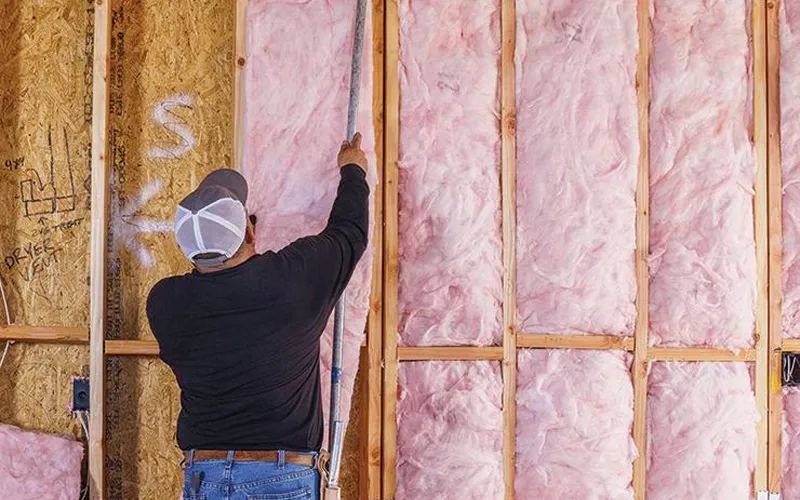
Fiberglass is often a practical option for homeowners seeking an economical insulation material. Its overall effectiveness depends on the specified R-value, installation quality, air sealing, and the wall assembly.
Mineral Wool Insulation
Mineral wool, also known as rock wool or stone wool, is made from mineral-based fibers and is available in batts and rigid boards. It is commonly used where thermal performance, sound absorption, and fire resistance are important considerations.
Many mineral wool products are noncombustible and can withstand high temperatures. This makes them useful in wall assemblies designed to meet specific fire-safety requirements. However, the fire rating of a complete wall depends on its framing, sheathing, fasteners, finishes, and other components.
Mineral wool batts are designed for installation between wall studs, while suitable rigid boards can be used in continuous exterior insulation systems. The material’s fibrous structure also absorbs sound, although the overall noise reduction depends on the complete wall construction.
Some mineral wool products resist water absorption, but this does not make them waterproof. Proper flashing, drainage, and moisture management are still necessary to protect the building.
Mineral wool may cost more than basic fiberglass products, but it can be worthwhile when fire resistance and sound absorption are important priorities. Careful fitting and compliance with product instructions help ensure reliable performance.
Spray Foam Insulation
Spray foam insulation is applied as a liquid that expands and hardens, creating an insulating layer within suitable wall cavities and other approved areas. It can conform to irregular spaces and, when properly installed, reduce air leakage through the areas it covers.
There are two main types of spray foam: open-cell and closed-cell. They differ in density, thermal resistance, vapor permeability, and moisture behavior.
Open-cell spray foam is generally lighter and less dense than closed-cell foam. It can provide effective insulation and air at the appropriate thickness, but it should not automatically be treated as a vapor barrier.
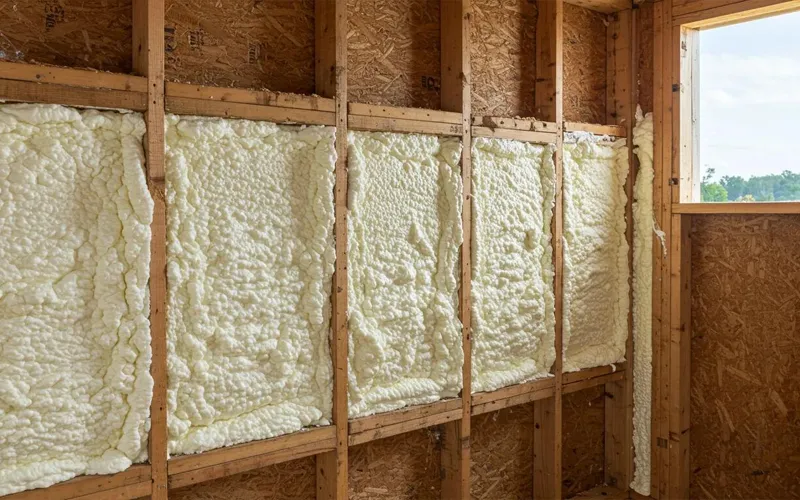
Closed-cell spray foam is denser and typically provides a higher R-value per inch. Depending on the product and installed thickness, it may also provide substantial resistance to vapor movement.
Spray foam can be useful in walls with irregular cavities or areas where controlling air leakage is particularly important. However, it must be compatible with the wall’s moisture-control strategy. Applying foam over existing water damage or designing a wall that cannot dry properly may create problems.
Spray foam usually costs more than fiberglass and may require professional installation. Application involves chemical exposure risks, so installers must follow manufacturer instructions for protective equipment, ventilation, re-entry, and curing. Homeowners should also confirm that the product is suitable for the intended wall assembly and meets applicable building requirements.
Although spray foam offers useful advantages, it is not automatically the best type of insulation for every home. Its cost, installation requirements, and moisture-related considerations should be evaluated before making a decision.
Rigid Foam Boards
Rigid foam boards are particularly useful when a project requires continuous insulation across a wall surface. They can be installed on suitable exterior wall assemblies to reduce heat transfer through framing, helping address thermal bridging that occurs when studs conduct heat more readily than the insulation between them.
The main types of rigid foam boards include expanded polystyrene (EPS), extruded polystyrene (XPS), and polyisocyanurate (polyiso). Each has different thermal characteristics, moisture behavior, and installation requirements.
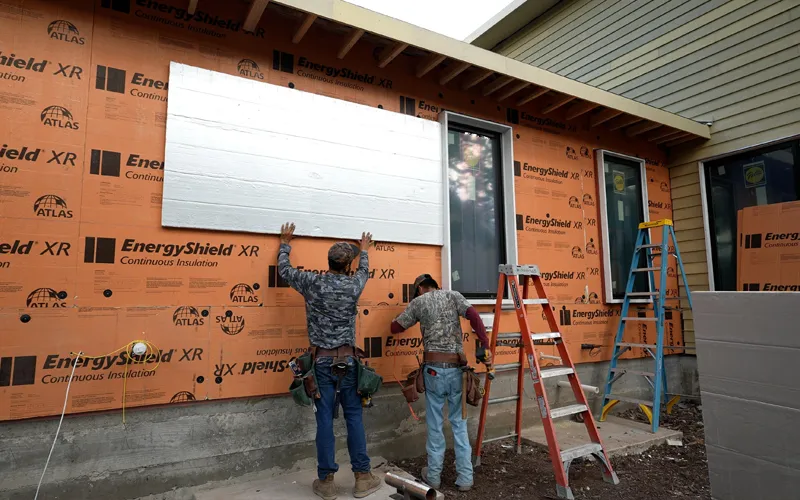
- EPS: A lightweight foam insulation that is available in different densities and thicknesses for suitable building applications.
- XPS: A closed-cell foam board traditionally used in applications requiring moisture resistance. Its thermal performance, environmental impacts, and suitability should be compared with current alternatives.
- Polyiso: A rigid foam product that often provides a relatively high published R-value per inch under specified test conditions. Its thermal performance can vary with temperature.
Rigid foam boards can improve whole-wall thermal performance when installed as a continuous layer. However, the result depends on board thickness, joints, fasteners, framing, and the rest of the wall assembly.
Installation requires attention to drainage, flashing, air control, and compatibility with exterior cladding. Some products also require specific protective coverings or fire-safety measures. Foam boards should therefore be selected as part of a complete wall system rather than on R-value alone.
Cellulose Insulation
Cellulose insulation is generally manufactured from recycled paper fibers treated with additives intended to improve fire resistance and other performance characteristics. It is available in forms suitable for certain wall cavities, including dense-pack applications installed using specialized equipment.
Dense-pack cellulose can fill irregular spaces around framing and other obstructions more completely than poorly fitted batts. This can reduce gaps in the insulating layer, although separate air sealing may still be necessary. Cellulose can also absorb sound within wall cavities, making it useful for projects where thermal comfort and noise reduction are both important.
Its performance depends on installation density, cavity conditions, and moisture management. Persistent water intrusion or condensation can cause cellulose to become damp and may affect its performance or damage surrounding materials.
Before adding cellulose to an existing wall, homeowners should check for leaks, damaged materials, and other moisture problems. Retrofit projects may require access openings or specialized installation methods to ensure the cavities are filled correctly.
Cellulose can be a suitable option for certain new construction and renovation projects, particularly when recycled-content materials are preferred. An experienced installer can help determine whether the existing wall construction is appropriate for this insulation method.
Exterior Wall Insulation
What type of insulation for exterior walls is best? The answer depends on the wall construction, climate, budget, and whether insulation will be installed inside the cavities or across the exterior surface.
For conventional wood-framed walls, fiberglass batts, mineral wool batts, and suitable dense-pack cellulose are common cavity-insulation options. When improved thermal performance across the framing is required, continuous rigid foam boards or suitable mineral wool boards may be considered.
Spray foam may be appropriate in certain wall cavities where air leakage is a major concern, but the product must be compatible with the wall’s moisture-control requirements. Other air-sealing methods can also reduce drafts without using spray foam throughout the wall.
Climate plays an important role in exterior insulation design. Colder regions may require higher insulation levels and careful management of indoor moisture to reduce condensation risks. In hot climates, insulation can slow outdoor heat from entering the home, while shading, air sealing, and suitable ventilation can further improve comfort.
The best insulation for exterior walls is not necessarily the material with the highest advertised R-value. The complete assembly must manage heat flow, air leakage, rainwater, and vapor movement appropriately. Homeowners should check local energy codes and product requirements before choosing a system.
Insulation for Residential Homes
Residential insulation types for walls vary according to the building’s age, framing, existing finishes, and renovation plans. New construction generally offers more flexibility because the wall cavities and exterior layers are accessible before drywall and cladding are installed.
In existing homes, the installation method depends on whether the wall cavities can be accessed. Fiberglass or mineral wool batts may be installed when interior walls are opened during renovation. Suitable blown-in or dense-pack materials may be used in certain existing cavities when installed with the correct equipment and methods.
Different wall structures also require different approaches. Timber-framed walls, metal-framed walls, and masonry walls do not perform identically. Metal framing can create significant thermal bridging, which makes continuous insulation relevant in some designs. Brick walls also require careful consideration of rainwater entry, drainage, drying potential, and the existing wall layers before insulation is added.
Before starting a retrofit, homeowners should check the condition of electrical wiring, plumbing, exterior finishes, and any existing vapor-control layers. Older walls should be inspected for moisture problems that could become harder to detect after insulation is installed.
The best solution balances material cost, installation labor, access, expected performance, and future maintenance. A qualified building professional can help assess the existing construction and identify a suitable insulation method.
Wood Fiber Insulation
Wood fiber insulation is manufactured from wood fibers and is available in batts, flexible mats, and rigid boards. Depending on the product, it can provide thermal resistance, sound absorption, and moisture-buffering characteristics. It may appeal to homeowners looking for insulation products made with renewable or recycled-content materials.
When comparing wood insulation types for walls, it is important to distinguish manufactured insulation products from ordinary timber. Purpose-made wood fiber products are designed for specific building applications and have documented thermal and other performance characteristics. Untreated wood placed inside a cavity does not offer the same predictable insulation performance.
Wood fiber insulation can be used in suitable timber-framed walls and certain exterior insulation systems. Some products are relatively vapor-permeable, which may support drying in appropriately designed wall assemblies. However, vapor permeability alone does not make a wall moisture-safe. Rain control, flashing, drainage, and the placement of other building layers remain essential.
Cost, availability, thickness, fire classification, and installation requirements vary by product. Homeowners should check the manufacturer’s technical documentation and ensure the chosen material is suitable for the intended wall design.
Wood fiber insulation can be a useful option in suitable projects, but it should be selected based on documented performance and compatibility with the complete wall assembly.
Comparing Insulation Materials
Different insulation materials offer different combinations of thermal resistance, sound absorption, fire resistance, moisture behavior, and installation cost. Comparing these characteristics makes it easier to narrow down the options for a particular project.
| Material | Main advantage | Important consideration |
| Fiberglass | Generally affordable and widely available | Requires careful fitting and separate air sealing |
| Mineral wool | Sound absorption and high-temperature resistance | Product cost and moisture management |
| Spray foam | Can combine insulation with air sealing | Higher cost and specialized installation requirements |
| Rigid foam boards | Useful for continuous insulation | Requires careful detailing around joints, drainage, and cladding |
| Cellulose | Recycled-content material that can fill suitable cavities | Installation density and moisture control are important |
| Wood fiber | Renewable or recycled-content options are available | Product suitability, fire classification, and cost vary |
Fiberglass is often a practical starting point for budget-conscious projects, while mineral wool may be preferable when sound absorption and fire resistance are priorities. Spray foam can help control air leakage in suitable applications, and rigid foam boards are relevant when continuous exterior insulation is required.
Cellulose and wood fiber may be suitable for specific wall designs, depending on installation methods and product characteristics. No single material is ideal for every property.
When comparing prices, consider the installed cost rather than the insulation material alone. Labor, air-sealing work, protective layers, moisture-control improvements, and changes around windows or exterior finishes can significantly affect the total project budget.
Common Installation Mistakes
One of the most important mistakes to avoid is installing insulation before addressing moisture problems. Roof leaks, damaged flashing, plumbing leaks, and water entering through exterior walls should be repaired first. Covering damp materials can hide the source of the problem and increase the risk of damage or mold growth.
Another common mistake is leaving gaps around framing, electrical boxes, pipes, and other obstructions. Even high-quality insulation can underperform when it is poorly fitted or compressed. Air sealing should be completed using compatible materials, with attention to openings and connections where outside air can enter.
Choosing insulation based only on R-value can also lead to poor results. A complete wall assembly must manage heat transfer, air movement, rainwater, and vapor diffusion. The appropriate arrangement of air barriers, vapor retarders, and protective layers varies according to climate and construction.
Finally, not every insulation project is suitable for DIY installation. Some homeowners may be able to install certain batts safely by following product instructions, but spray foam, dense-pack cellulose, and complex exterior systems may require specialized equipment and professional knowledge.
Reviewing product documentation, local building requirements, and the condition of the wall before starting work can help prevent costly mistakes.
Choosing the Right Insulation
Start by identifying your wall construction and determining where the insulation will be installed. The options may differ depending on whether the wall is open during renovation, already finished, or being upgraded with a continuous exterior layer.
Next, consider the local climate and the problems you want to address. A home that becomes excessively hot in summer may benefit from insulation combined with air sealing, exterior shading, and suitable ventilation. A home that feels cold during winter may need better insulation, improved window performance, and attention to drafts.
Your budget should include installation labor, air-sealing materials, moisture-control work, and any changes required around windows, doors, or exterior finishes. The lowest-cost material may not be the most economical option if installation is difficult or additional work is required.
Check the product’s specified R-value, recommended thickness, fire classification, moisture characteristics, and installation instructions. If the wall has existing dampness, unusual construction, or limited drying potential, consult a qualified building professional before adding insulation.
Ultimately, the best choice is the material that suits the complete wall assembly, rather than the one that simply offers the highest advertised performance.
Conclusion
Choosing the right insulation types for walls can improve indoor comfort, reduce unwanted heat transfer, and support more efficient heating and cooling. Fiberglass, mineral wool, spray foam, rigid foam boards, cellulose, and wood fiber products each offer different advantages depending on the building design, climate, budget, and installation requirements.
Before starting a project, inspect the existing wall, address moisture problems, and consider the need for air sealing and appropriate vapor control. Compare materials by their installed performance, cost, and compatibility with the wall construction rather than relying on a single product feature.
With careful planning and correct installation, wall insulation can help create a more comfortable home throughout the year.
Frequently Asked Questions
1. What are the best insulation types for walls?
Fiberglass, mineral wool, spray foam, rigid foam boards, cellulose, and wood fiber are common wall insulation options. The best choice depends on your budget, climate, wall structure, and insulation needs.
2. What type of insulation is best for exterior walls?
Fiberglass and mineral wool are popular for wall cavities, while rigid foam boards provide continuous exterior insulation. The right option depends on the wall design and moisture-control requirements.
3. What is the most affordable insulation for walls?
Fiberglass insulation is generally one of the most affordable options for residential walls. However, the total cost depends on material thickness, installation labor, and the condition of the existing walls.
4. Which wall insulation is best for reducing noise?
Mineral wool and fiberglass can help absorb sound within wall cavities. Actual noise reduction depends on insulation thickness, drywall layers, framing, and gaps in the wall assembly.
5. What is the difference between fiberglass and mineral wool insulation?
Fiberglass is generally more budget-friendly, while mineral wool offers excellent fire resistance and sound absorption. Both can provide effective thermal insulation when installed correctly.
6. Can you insulate existing walls without removing drywall?
Yes, certain existing walls can be insulated using blown-in cellulose or suitable loose-fill fiberglass. The installation method depends on the wall cavity, existing insulation, and moisture conditions.
7. What R-value is best for wall insulation?
The recommended R-value depends on your local climate, building type, and energy codes. Higher R-values generally provide greater resistance to heat flow, but proper installation and air sealing are also important.
8. Is spray foam insulation better than fiberglass for walls?
Spray foam can provide insulation and reduce air leakage, while fiberglass is generally less expensive and easier to install in open wall cavities. The better option depends on your budget and wall assembly.
Want more Home Improvement ideas and tips? Explore helpful ideas and the latest trends on TrendsMore.com.