



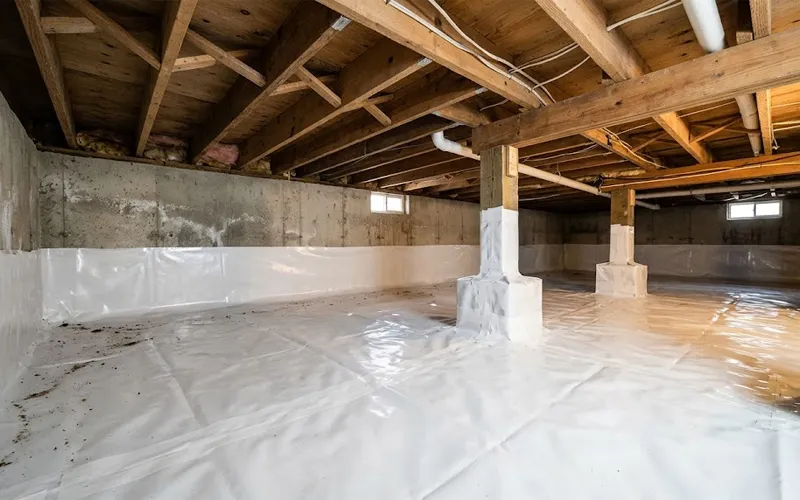
Choosing the right materials for crawl space moisture barrier installation helps protect a home’s foundation area from ground moisture, damp insulation, musty odors, and conditions that encourage mold growth. The most suitable materials depend on the amount of moisture present, the condition of the crawl space, the type of soil, and whether the area will remain vented or be converted into an enclosed space. A well-planned moisture control system should do more than cover the ground; it should also address water intrusion, drainage, and humidity.
Understanding Crawl Space Moisture Barrier Materials
A crawl space moisture barrier is a protective layer placed over exposed soil to reduce water vapor entering the space from the ground. Soil naturally releases moisture into the air, particularly after rainfall or during periods of high humidity. When this moisture accumulates beneath a house, it can contribute to condensation on pipes, damp insulation, unpleasant odors, and deterioration of susceptible building materials.
Polyethylene plastic sheeting is one of the most common options because it is relatively affordable, flexible, and available in different thicknesses. Reinforced polyethylene, heavier-duty vapor barrier materials, and specialized liners provide additional durability for demanding conditions. However, no single material is ideal for every property. Selecting an appropriate product requires considering its thickness, puncture resistance, seam requirements, installation method, and compatibility with the intended moisture control system.
Comparing Common Materials for Crawl Spaces
Standard polyethylene sheeting is often suitable for crawl spaces with relatively smooth soil, limited foot traffic, and straightforward installation requirements. It is lightweight and easy to cut around support posts, plumbing, and other obstacles. Thinner sheeting generally costs less, but it can tear more easily when installers move across uneven ground or work around sharp objects.
Reinforced polyethylene includes additional strengthening layers or fibers that improve resistance to tearing. This material can be useful where the ground contains small stones or where occasional maintenance requires people to enter the crawl space. Its performance still depends on the product’s construction, so buyers should review the manufacturer’s specifications rather than assuming every reinforced liner offers the same level of protection.
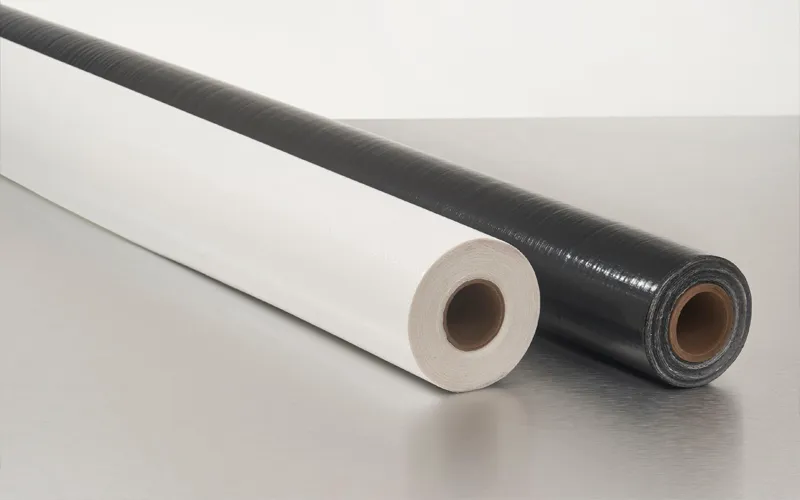
Heavy-duty crawl space liners are another option for homeowners who need a more durable surface. Some products include textured finishes, reinforced layers, or features designed for attachment to foundation walls and support structures. These liners can be appropriate for professional moisture control projects, especially when the crawl space is being enclosed. However, a heavier liner does not automatically solve drainage problems, standing water, or excessive humidity.
Why Material Thickness Matters
Thickness is an important consideration because it affects how well a liner withstands punctures and everyday handling. Manufacturers commonly describe polyethylene thickness in mils, with one mil equal to one-thousandth of an inch. A 6-mil sheet, for example, is 0.006 inches thick.
Thinner materials may be adequate for limited applications on clean, smooth soil, provided local requirements and project specifications allow them. Thicker products are generally worth considering when the surface is rough, access is difficult, or greater resistance to damage is needed. A 10-mil or 12-mil liner may offer a useful balance for some projects, while a 20-mil product provides a heavier-duty option for more demanding conditions.
Homeowners searching for a 20 mil crawl space Vapor Barrier Home Depot should verify the exact product specifications, availability, dimensions, and intended use before purchasing. A product advertised as heavy-duty may differ from another liner in reinforcement, material composition, and warranty coverage. Thickness alone does not establish overall quality, and the best choice should reflect the crawl space’s actual conditions.
Choosing a Suitable Vapor Barrier Material
The most appropriate crawl space vapor barrier material should combine adequate thickness with durability, moisture resistance, and practical installation features. Ordinary polyethylene may work well for a basic ground-covering project, while reinforced or specialized crawl space liners can be more suitable for uneven surfaces or enclosed systems.
Material quality also affects installation. A liner that tears easily can develop gaps around footings, pipes, and seams, allowing ground moisture to escape into the crawl space. Products with clearly defined overlap requirements, compatible seam tape, and suitable attachment accessories can make it easier to create a continuous barrier.
Before buying a product, check its intended application and installation instructions. Some liners are designed primarily for covering soil, while others are made to extend up foundation walls and integrate with a broader encapsulation system. Selecting the right type at the beginning can reduce unnecessary repairs and material waste later.
Preparing the Crawl Space Before Installation
Even high-quality materials cannot perform properly when installed over an unsuitable surface. Before starting crawl space moisture barrier installation, inspect the area for standing water, plumbing leaks, damaged drainage components, and signs of water entering through foundation walls. These problems should be addressed before covering the ground.
Remove construction debris, sharp stones, broken materials, and other objects that could puncture the liner. If the soil surface is uneven, prepare it carefully without disturbing foundation footings or creating drainage problems. Existing insulation should also be inspected for moisture damage, sagging, or contamination that may require professional attention.
Water management is particularly important in crawl spaces that experience flooding or repeated water accumulation. A vapor barrier reduces evaporation from the soil, but it does not stop bulk water from entering through leaks, groundwater pressure, or inadequate exterior drainage. Depending on the property, corrective measures may include repairing gutters and downspouts, improving grading, correcting drainage defects, or installing an appropriate drainage system.
How to Install Vapor Barrier on Floor
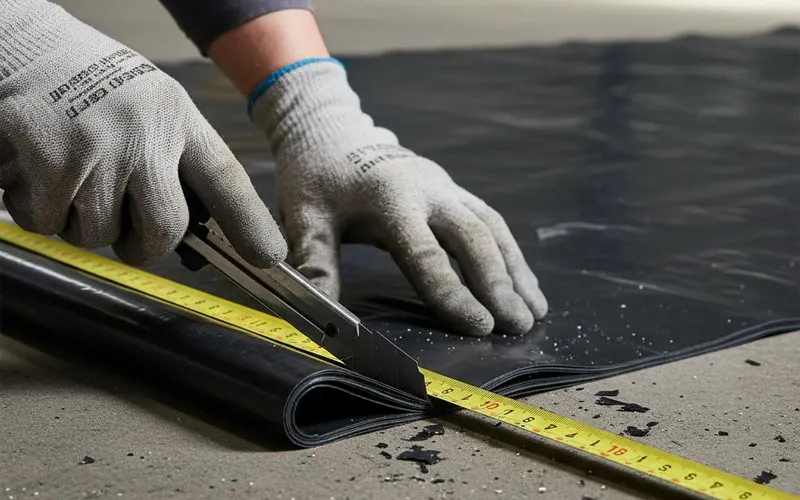
A successful installation begins with accurate measurements. Measure the crawl space floor, including its irregular sections, support posts, and areas where the liner needs to extend up the foundation walls. Purchase enough material to provide the overlaps and wall coverage specified by the manufacturer. Ordering only the exact floor dimensions can leave insufficient material for secure seams and perimeter treatment.
Once the ground is prepared, roll out the sheeting in manageable sections. Arrange the pieces so that their edges overlap according to the product instructions, then seal the seams with compatible tape when required. Overlaps and seals should remain intact during installation because open seams can provide pathways for ground moisture.
Cut openings carefully around plumbing, piers, and other permanent obstructions. Avoid making oversized cuts, which can leave exposed soil around penetrations. Where the system requires wall coverage, extend the liner up the foundation walls and secure it using the specified fastening method. Do not cover termite inspection gaps, drainage features, or other components that must remain accessible under local requirements.
During installation, avoid pulling the material so tightly that it tears around corners or penetrations. Secure the liner without creating unnecessary holes, and inspect the completed surface for gaps, loose seams, and damaged sections. If a tear occurs, repair it using a compatible patching method recommended by the manufacturer.
Is DIY Installation a Practical Option?
A crawl space moisture barrier DIY project can be manageable when the space is accessible, the soil is reasonably level, and there are no significant drainage or structural problems. Homeowners with suitable tools and enough room to work may be able to measure, cut, position, and seal a basic ground liner themselves.
However, restricted access, standing water, exposed electrical hazards, damaged insulation, and evidence of mold can make the work more complicated. Some crawl spaces also contain plumbing or structural issues that should be assessed before the area is covered. Entering a confined space without checking for hazards can expose workers to unsafe conditions, so professional assistance is appropriate when access or environmental conditions are uncertain.
For DIY crawl space moisture barrier installation, the key is to understand the limits of the project. Covering the soil is only one part of moisture management. If the crawl space has persistent humidity, water intrusion, or condensation, additional measures may be necessary to achieve a reliable result.
Additional Materials for a Complete Installation
The liner itself is only one component of a well-executed project. Compatible seam tape helps seal overlapping sections, while manufacturer-approved fasteners or termination bars may be needed to attach the material to foundation walls. Patches can repair accidental punctures, and protective accessories may help secure the liner around posts and other penetrations.
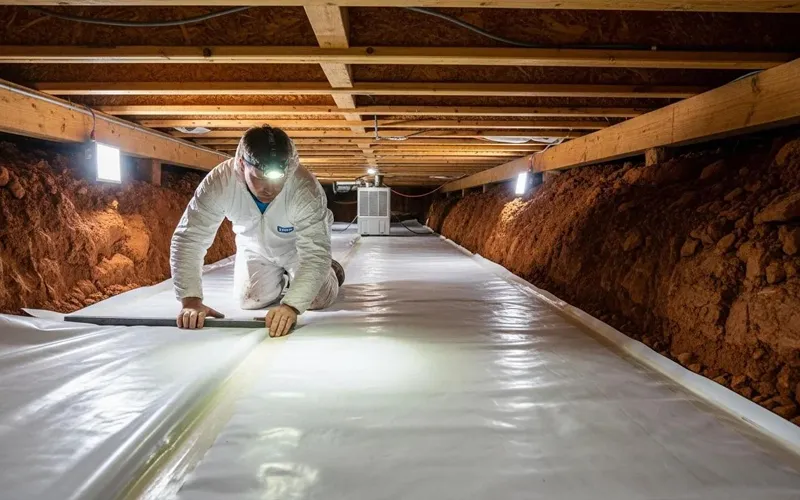
In an enclosed crawl space, other materials may be required, including insulation suitable for the assembly, air-sealing products, and a humidity control system. The specific requirements depend on the foundation design, local building codes, climate, and whether the crawl space is vented or conditioned. These components should be selected as parts of a coordinated system rather than purchased independently without considering compatibility.
Drainage materials may also be necessary when the property has a history of water accumulation. Their purpose differs from that of a vapor barrier: drainage systems manage liquid water, while the liner primarily limits water vapor entering from the ground. Treating these functions separately helps prevent the mistake of expecting plastic sheeting to solve every moisture problem.
Common Material Selection Mistakes
One common mistake is choosing the cheapest available plastic without considering how it will withstand the installation environment. A thin sheet may be difficult to maintain if the soil is rocky or the crawl space requires frequent access. In such cases, the initial savings may be offset by repairs or replacement.
Another mistake is focusing exclusively on thickness. A heavy liner can still fail to provide effective moisture control if its seams are poorly sealed, its edges are left unsecured, or water continues to enter the crawl space. Compatibility between the liner, tape, fasteners, and foundation surface matters just as much as the product’s stated thickness.
Homeowners should also avoid covering existing moisture problems without investigating their cause. Persistent dampness, water stains, or musty odors can indicate drainage defects, leaks, or elevated humidity. These conditions should be evaluated before installation so that the selected materials support a lasting solution rather than conceal an unresolved issue.
Finding the Best Material for Your Crawl Space
The best crawl space moisture barrier installation approach depends on the condition of the ground, the moisture level, the amount of maintenance access required, and the planned use of the space. Standard polyethylene can suit straightforward ground-covering applications, while reinforced and thicker liners may offer greater durability where the installation environment is more demanding.
Before making a purchase, compare thickness, reinforcement, dimensions, seam compatibility, wall attachment requirements, and manufacturer guidance. Also confirm whether local building codes require specific installation details or access for inspections. If the crawl space has persistent water intrusion or will be fully encapsulated, a professional assessment can help determine which additional drainage, sealing, and humidity control measures are necessary.
Careful material selection and proper installation work together to create a more effective moisture management system. By addressing the source of moisture, preparing the ground correctly, and choosing a liner suited to the conditions, homeowners can reduce ground vapor entry and make future crawl space maintenance more manageable.
Frequently Asked Questions
1. What is the best material for crawl space moisture barrier installation?
Polyethylene sheeting is a popular choice because it is affordable and helps reduce ground moisture. Reinforced or heavy-duty liners may be more suitable for rough soil and areas requiring greater durability.
2. How thick should a crawl space moisture barrier be?
A 6-mil liner may work for some basic applications, while 10-mil, 12-mil, or 20-mil liners can offer greater durability. The right thickness depends on soil conditions, installation requirements, and local building codes.
3. Does a crawl space moisture barrier prevent mold growth?
A moisture barrier helps reduce ground moisture that can contribute to mold growth. However, plumbing leaks, standing water, and high humidity must also be addressed to control moisture effectively.
4. How do you install a vapor barrier on a crawl space floor?
Clean the ground, remove sharp objects, and resolve existing water problems before laying the liner. Overlap and seal the seams according to the manufacturer’s instructions, secure the edges where required, and repair any tears.
5. Is DIY crawl space moisture barrier installation possible?
Yes, DIY installation may be suitable for accessible crawl spaces with relatively level ground and no major moisture problems. Professional assistance is recommended if the area has standing water, suspected mold, electrical hazards, or restricted access.
6. Can a crawl space moisture barrier stop standing water?
No, a vapor barrier reduces moisture evaporation from the soil but does not stop flooding or manage standing water. Drainage improvements, leak repairs, or other water management solutions may be necessary.
7. What materials are needed for crawl space moisture barrier installation?
Typical materials include polyethylene sheeting, compatible seam tape, patching materials, and suitable fasteners for wall attachment when required. Some projects may also need insulation, drainage components, and humidity control equipment.
8. What is the difference between a crawl space vapor barrier and encapsulation?
A vapor barrier usually covers exposed soil to reduce ground moisture. Encapsulation is a more comprehensive system that may include sealing the ground, foundation walls, and other openings, along with appropriate humidity control.
Want more Home Improvement ideas and tips? Explore helpful ideas and the latest trends on TrendsMore.com.