



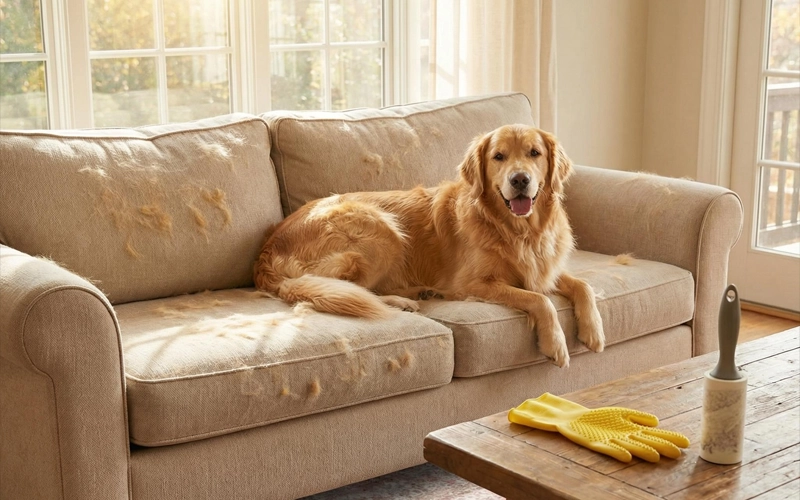
Living with a dog or cat often means finding fur on your favorite sofa, even after cleaning the room. Pet hair can collect along armrests, between cushions, and deep within upholstery fibers. Removing it becomes more challenging when the couch is made from delicate material that cannot withstand rough scrubbing or unsuitable cleaning products.
The best way to remove pet hair from a couch is to understand the upholstery and choose tools that are gentle on its surface. A vacuum cleaner, rubber glove, microfiber cloth, or lint roller can help collect stubborn strands without requiring expensive equipment.
Before cleaning, check the manufacturer’s care instructions. Some materials tolerate limited moisture, while others need dry cleaning methods to prevent discoloration, stains, or changes in texture.
Quick Answer: What Is the Safest Way to Remove Pet Hair From a Couch?
The safest approach is to vacuum loose fur first, then use a suitable fabric-safe tool to collect strands that remain attached to the upholstery.
Follow these steps:
- Check the couch’s care label before applying water or cleaning products.
- Vacuum the cushions, seams, and corners with an appropriate upholstery attachment.
- Use a clean rubber glove on compatible fabrics to gather stubborn strands.
- Pick up remaining surface hair with a microfiber cloth or lint roller.
- Allow any permitted moisture to dry completely before using the sofa.
Starting with dry methods and applying minimal pressure helps protect most upholstery types from unnecessary wear.
What Makes Pet Fur Hold on to Couch Upholstery?
Pet hair can cling to upholstery because of static electricity, fabric texture, and the way individual strands become caught between woven fibers. This makes some sofas more difficult to clean than others.
Microfiber, chenille, and other textured materials can trap fine strands in their surfaces. Synthetic upholstery may also develop static, particularly in dry indoor conditions, causing loose fur to cling rather than fall away easily.
The type of hair makes a difference, too. Short, coarse hairs may become lodged in the weave, while longer strands can gather around seams and cushion edges. Fine cat hair can be difficult to see until sunlight highlights it against the fabric.
Recognizing these differences helps you choose an appropriate cleaning technique instead of relying on excessive rubbing that could affect the upholstery.
Step-by-Step Guide to Cleaning Pet Hair From Upholstery
Following a consistent process makes cleaning easier and reduces the likelihood of damaging the sofa. Work on one section at a time so you can check your results before moving to the next area.
Step 1: Check the Couch’s Care Label
Locate the upholstery care tag or consult the manufacturer’s cleaning instructions before choosing a method. These guidelines indicate which products and techniques are suitable for your furniture.
Common upholstery codes include:
- W: Water-based cleaning products may be suitable.
- S: Solvent-based cleaning is recommended. Avoid water-based treatments unless the manufacturer permits them.
- WS: Either water-based or solvent-based cleaning may be allowed.
- X: Vacuuming or brushing only is generally recommended. Professional cleaning may be necessary for more intensive treatment.
Always follow the manufacturer’s specific instructions because recommendations can vary between fabrics and furniture models. If the label is missing or unclear, contact the manufacturer before introducing moisture or cleaning solutions.
Step 2: Vacuum Loose Hair First
Fit your vacuum cleaner with a suitable upholstery attachment and move slowly across the seat cushions, backrest, armrests, and other areas where your pet usually rests.
Remove detachable cushions when possible to reach the spaces underneath them. Use the crevice attachment for narrow gaps where fur tends to collect, and choose a suction setting appropriate for the material.

Avoid pressing the vacuum head too firmly against delicate upholstery. Once the main surfaces are clean, inspect the seams and corners for hair that may need a different tool.
Step 3: Use a Rubber Glove for Stubborn Fur
A clean rubber glove can help remove strands that remain attached after vacuuming. Its surface creates friction, encouraging loose hair to gather into small clumps that are easier to collect.
Put on the glove and move your hand gently across a small section of upholstery in one direction. Pick up the gathered fur before continuing, rather than rubbing repeatedly over the same area.

Begin with a dry glove and test it in an inconspicuous spot. If the material snags, pills, or changes appearance, stop immediately and choose a gentler alternative.
This technique is best reserved for fabrics that tolerate light friction. It should not be assumed safe for every delicate textile.
Step 4: Collect Fine Strands With a Microfiber Cloth
A microfiber cloth is useful for removing light surface hair, particularly from smooth upholstery that needs a gentle touch.
Use a clean, dry cloth and wipe slowly in one direction. Its fine fibers can collect loose strands without requiring the pressure associated with scrubbing.
For upholstery that permits water-based cleaning, a barely damp cloth may help with remaining hair. Test an inconspicuous area first and avoid leaving the cushion wet.
If the cloth begins to drag across the material or alter its texture, stop and check the manufacturer’s recommendations before continuing.
Step 5: Finish With a Lint Roller
A lint roller provides a convenient finishing touch after most of the fur has been removed. It works well on cushion edges, armrests, decorative pillows, and other accessible surfaces.
Roll lightly over the upholstery and replace the adhesive sheet when it becomes covered with hair. Excessive pressure is unnecessary and may cause problems on loosely woven materials.
For deep seams or narrow spaces, use the vacuum’s crevice attachment instead of forcing the roller into the gap.
Pet Hair Removal Methods Compared
Different tools serve different purposes, so combining them can be more effective than relying on a single method.
| Cleaning method | Best suited for | Main precaution |
| Upholstery vacuum | Loose fur, seams, and cushion gaps | Use a suitable attachment and suction setting |
| Rubber glove | Hair clinging to compatible, durable fabrics | Test first and avoid excessive friction |
| Microfiber cloth | Fine surface hair and smooth upholstery | Start dry and use gentle strokes |
| Lint roller | Final cleanup and accessible areas | Avoid snagging delicate fabric |
Choose the tool according to the upholstery rather than the amount of hair alone. A method that works well on a sturdy woven sofa may be unsuitable for velvet or another sensitive material.
How to Remove Dog Hair From a Couch Safely
Dogs can leave behind different types of fur depending on their coat. Short hairs may feel stiff and become lodged in the upholstery, while longer strands can gather around cushion seams and textured surfaces.
After vacuuming, examine the areas where your dog spends the most time. If stubborn fur remains, test a rubber glove on a small, hidden section before using it on the rest of the sofa.
For sectional furniture, clean one cushion at a time. This helps you identify areas that need extra attention without spreading loose hair across already-cleaned surfaces.
Regular grooming is another useful way to manage shedding. Brush your dog with a tool appropriate for its coat, following suitable grooming guidance for its breed and individual needs.
If your dog frequently rests on the sofa, a washable furniture cover can also reduce the amount of fur that reaches the upholstery.
How to Get Cat Hair Off a Couch Without Scratching the Fabric
Cat hair can be particularly noticeable on dark upholstery and smooth cushions. Fine strands may cling to the surface through static electricity, making ordinary wiping less effective.
Start with a soft upholstery vacuum attachment, then use a dry microfiber cloth if loose strands remain. Work carefully and inspect the surface under good lighting to identify areas that need further attention.
Avoid stiff brushes and abrasive cleaning pads on delicate materials. These tools may pull at threads or change the appearance of the upholstery.
Another practical solution is to place a washable blanket over your cat’s favorite resting spot. You can remove and wash the blanket according to its care instructions, reducing the need to clean the entire sofa as frequently.
The Best Way to Clean Different Couch Fabrics
The upholstery material determines which tools are appropriate. Before trying a new technique, consider both the fabric’s texture and its cleaning requirements.
Microfiber Sofas
Microfiber can hold fine hair close to its surface, particularly when static is present. Careful vacuuming is a useful starting point, while a compatible rubber glove may help collect remaining strands.
Because microfiber finishes and cleaning requirements vary, check the care label before using moisture. Apply light pressure and avoid soaking the material.
Chenille and Textured Upholstery
Chenille and other textured fabrics can trap fur between raised fibers, making ordinary wiping less effective.
Use a suitable upholstery attachment to remove loose strands. If hair remains, choose a soft tool approved for the fabric and follow the direction recommended by the manufacturer.
Avoid scraping the surface with hard rubber edges or pulling repeatedly at embedded strands. These actions may distort delicate loops or affect the fabric’s finish.
Velvet and Delicate Fabrics
Velvet needs extra care because its pile can change direction when pressed or rubbed. Begin with a gentle vacuum attachment designed for upholstery and avoid unnecessary contact with the surface.
Do not use damp rubber gloves, stiff brushes, or repeated rubbing unless the manufacturer’s instructions specifically allow them.

For expensive velvet furniture or specialty textiles with strict cleaning requirements, professional upholstery cleaning may be the most appropriate choice.
Leather and Faux Leather
Pet hair generally rests on the surface of leather and faux leather rather than becoming deeply embedded in woven fibers.
A clean, soft microfiber cloth is often sufficient to collect loose fur. Avoid abrasive tools, excessive moisture, and cleaning products that have not been approved for the material.
While removing the hair, check for scratches caused by pet claws. Some leather finishes and faux-leather surfaces can be marked by claws even when the fur itself causes no problem.
Common Mistakes That Can Damage Your Couch
Removing fur should not come at the expense of the upholstery. Avoid these common mistakes when cleaning your furniture.
Using too much water: Excess moisture can cause rings, discoloration, or dampness inside cushions. Follow the care label and use only the amount of moisture permitted for the material.
Scrubbing aggressively: Repeated friction may cause pilling, distort fibers, or push fine strands deeper into textured upholstery. Use controlled movements and stop if the fabric’s appearance changes.
Applying untested cleaning products: Fabric softeners, detergents, and household mixtures may leave residue or affect the finish. Use a treatment only when it is compatible with the upholstery and approved by the manufacturer.
Using sharp or abrasive tools: Metal scrapers and rough brushes can snag threads or damage surface finishes. Choose tools designed for the type of material you are cleaning.
Ignoring seams and cushion gaps: Fur left in hidden spaces can reappear when cushions are moved or someone sits down. Check these areas before finishing the cleaning session.
How to Prevent Pet Hair From Building Up Again
A few practical habits can reduce the amount of fur that collects on your sofa and make future cleaning less time-consuming.
- Brush your pet regularly. Use a grooming tool suited to its coat to help remove loose hair before it reaches the furniture.
- Use washable furniture covers. Protect frequently used cushions with removable blankets or covers that can be cleaned according to their care labels.
- Vacuum on a schedule. Weekly cleaning may be sufficient for light shedding, while pets that shed heavily may require more frequent attention.
- Keep a lint roller nearby. Use it for quick touch-ups on suitable surfaces before loose strands accumulate.
- Clean pet bedding regularly. Washing nearby beds and blankets helps remove loose fur from areas surrounding the sofa.
- Consider upholstery when buying furniture. Tightly woven performance fabrics and removable covers may simplify maintenance, although no material is completely resistant to pet hair.
Adjust your routine to your household. A pet that spends several hours a day on the couch may require more frequent cleaning than one that rarely uses the furniture.
Final Thoughts
Keeping a pet-friendly home does not mean accepting a sofa covered in fur. The key is to understand your upholstery, select suitable cleaning tools, and avoid methods that place unnecessary stress on the fabric.
With a little regular maintenance, washable covers, and appropriate grooming, you can keep pet hair under control without turning couch cleaning into a difficult chore. Always follow the manufacturer’s care instructions, especially when dealing with delicate or specialty materials.
Frequently Asked Questions
What Is the Easiest Way to Remove Pet Hair From Couch Cushions?
A vacuum with an upholstery attachment is a convenient starting point. For stubborn strands, use a fabric-compatible rubber glove or microfiber cloth, then finish with a lint roller if necessary.
Can I Use a Damp Sponge to Remove Pet Hair?
A barely damp sponge may collect loose hair from certain water-safe fabrics, but it is not suitable for every sofa. Check the care instructions, test a hidden area, and avoid leaving the upholstery wet.
Does Fabric Softener Help Remove Pet Hair?
Fabric softener is unnecessary for routine hair removal and may leave residue or affect some upholstery finishes. Vacuuming and a suitable manual cleaning tool are generally better starting points. Use fabric treatments only when approved by the furniture manufacturer.
How Often Should I Clean Pet Hair From My Couch?
For homes with light shedding, weekly vacuuming may be sufficient. If your pet spends much of the day on the sofa or sheds heavily, quick daily touch-ups can help keep fur under control.
What Is the Safest Tool for Delicate Upholstery?
A soft upholstery vacuum attachment is a sensible first choice for many delicate materials. However, the care label determines which methods are appropriate. Fabrics marked for professional cleaning may require specialist attention.
Can Pet Hair Damage Couch Fabric?
Pet hair itself does not usually damage upholstery. However, repeated aggressive cleaning can cause pilling, snagging, or discoloration. Gentle handling and appropriate tools help preserve the material.
How Do You Remove Pet Hair From Couch Seams?
Use a vacuum crevice attachment to remove trapped fur from couch seams and cushion gaps. Move slowly to avoid damaging the fabric.
Does a Rubber Squeegee Remove Pet Hair From a Couch?
Yes, a rubber squeegee can gather pet hair from some durable fabrics. Test it on a hidden area first to prevent snagging or damage.
Want more cleaning tips? Explore helpful cleaning ideas and the latest updates on TrendsMore.com.