



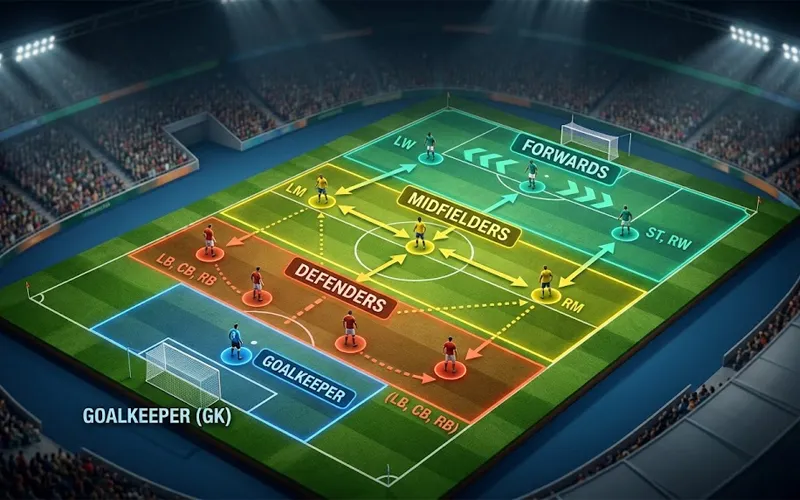
Football is a team game built around coordination, movement, and shared responsibility. Although players may have different jobs on the field, their roles are connected and depend on one another. A goalkeeper protects the goal, defenders help stop attacks, midfielders link different areas of the field, and forwards work mainly around the opponent’s goal. Learning these responsibilities gives beginners a much clearer understanding of how a team functions during a match. This guide to football positions explained explores the main roles, their responsibilities, and the ways those roles can change depending on the style of football being played.
The Goalkeeper’s Important Role in Protecting the Goal
The goalkeeper has a unique position because their primary responsibility is protecting the team’s goal. They watch the movement of the ball, make saves, organize players in front of them, and help prevent scoring chances. Inside their permitted penalty area, the goalkeeper can use their hands, while outside that area they generally follow the same ball-handling rules as other players.
The modern goalkeeper can also be involved in starting attacks. Instead of simply kicking the ball away after making a save, they may pass it to a defender or midfielder and help their team maintain possession. Good positioning, quick reactions, communication, and decision-making are therefore important parts of the role.
Defenders and Their Responsibilities
Defenders operate mainly between the goalkeeper and midfield. Central defenders usually occupy the middle of the defensive line, where they deal with opposing forwards, crosses, through passes, and attacks developing near the goal. They also need to communicate with teammates and maintain the team’s defensive shape.
Full-backs normally operate on the left or right side of the defense. Their role can involve stopping opposing wide players, covering open spaces, and supporting teammates when the opposition attacks from the wings. In modern football, full-backs can also move forward when their team has possession, creating additional passing options and helping attacks develop.
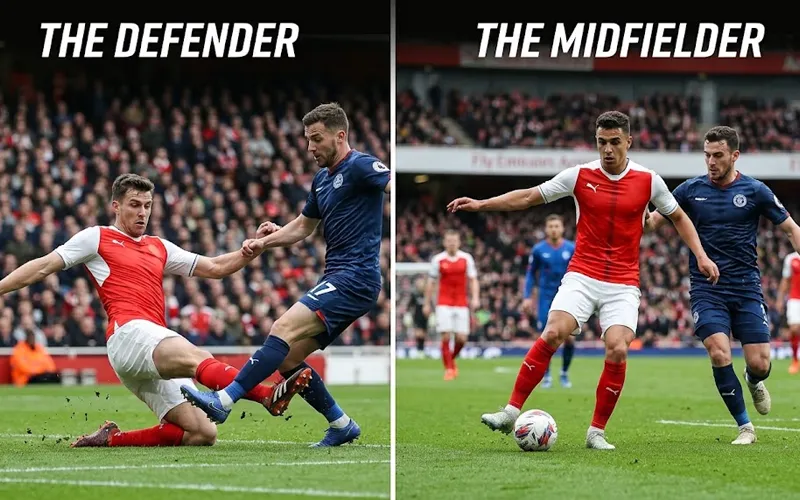
Understanding defensive football positions explained also means recognizing that defending is not simply about tackling. A defender may prevent an attack by closing down space, intercepting a pass, tracking a player, or positioning themselves correctly before a dangerous situation develops. Good defensive work often happens before an opponent even gets close to the goal.
Midfielders Connect the Whole Team
Midfield is often considered the connecting area of the pitch because these players operate between defense and attack. Their exact responsibilities depend on their position and the team’s tactical approach. A defensive midfielder may remain closer to the defenders and help protect the central area, while a central midfielder may focus on passing, movement, and controlling the tempo.
More advanced midfielders can operate closer to the forwards and look for opportunities to create chances. They may make forward passes, carry the ball into attacking areas, or move into open spaces. Because midfielders often receive the ball under pressure, awareness and accurate passing are particularly valuable qualities in this part of the team.
Forwards Create and Finish Attacks
Forwards normally spend more time in attacking areas and are expected to contribute to the creation of scoring opportunities. A striker or center forward often operates near the opponent’s goal and looks for opportunities to finish attacks. Wingers usually work in wider areas, using movement and pace to stretch the opposing defense.
Attacking players can have different styles. Some rely on speed and dribbling, while others are more focused on positioning and finishing. A forward may also create space for another teammate instead of taking the final shot. This is why attacking football involves movement and cooperation rather than simply waiting for the ball near the goal.
How Formations Change Player Roles
The positions on a football field are not completely fixed. Coaches use formations to organize players according to their preferred style and the situation of the match. A formation with several midfielders can provide greater control in the center, while a setup with more attacking players may create additional options near the opponent’s goal.
Players can also change positions during a match. A full-back may move forward to support an attack, a midfielder may drop deeper to help the defense, or a forward may move into a wider area to create space. This flexibility explains why simply memorizing position names is not enough to understand football tactics.
Association Football and Soccer Terminology
The phrase association football positions explained usually refers to the traditional eleven-a-side version of the sport that is called soccer in countries such as the United States and Canada. The basic roles include goalkeeper, defenders, midfielders, and forwards, although individual positions can have different tactical responsibilities.
People searching for football positions explained uk or english football positions explained are generally referring to association football as it is commonly called in the United Kingdom. Similarly, searches for football positions explained soccer and soccer football positions explained usually describe the same eleven-player sport. The terminology changes by region, but the basic principles of teamwork and positional responsibility remain similar.
American Football Uses a Different System
American football has a completely different positional structure from association football. When people look for nfl football positions explained, they are usually asking about a sport that divides players into offensive, defensive, and special teams units. Quarterbacks direct offensive plays, running backs carry or receive the ball, wide receivers work to catch passes, and offensive linemen protect the quarterback and create running opportunities.
Defensive players have their own specialized responsibilities. Defensive linemen work near the line of scrimmage, linebackers can defend against both running and passing plays, and defensive backs generally cover opposing receivers and respond to passing plays. Special teams players handle situations such as kickoffs, punts, and field-goal attempts. Because the sport uses highly specialized units, its position names and responsibilities are different from those found in soccer.
Youth and Beginner Football
For young players, learning several positions can be useful because it gives them experience with different parts of the game. Youth football positions explained in a simple way usually focuses on understanding where players begin, what area they are responsible for, and how they should support teammates. As children develop, coaches can introduce more detailed tactical ideas.
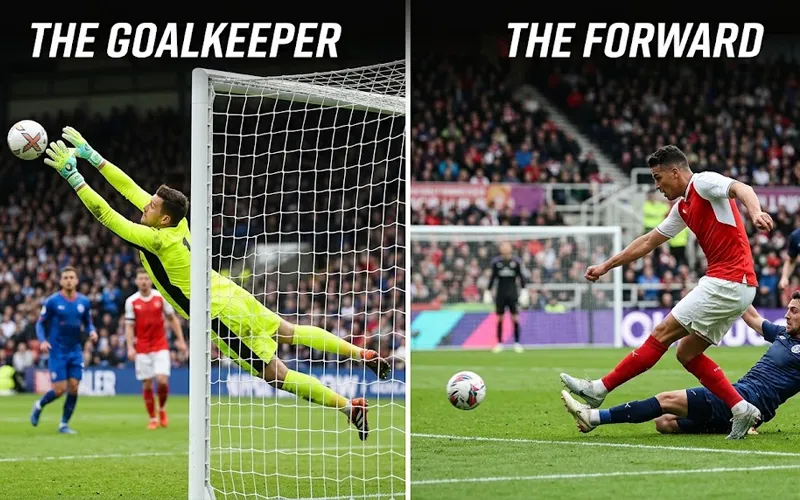
For anyone looking for football positions explained for kids, the simplest approach is to explain the field as a shared space. Players near their own goal focus more on protection, those in the middle help connect play, and attacking players work toward creating opportunities at the other end. This basic understanding can make more complicated tactics easier to learn later.
Flag Football and Smaller Formats
Football positions can also change when the number of players or rules are different. In flag football positions explained, players may have responsibilities involving the quarterback, receivers, running plays, and defensive coverage. The exact roles depend on the rules and formation used by a particular league or competition.
The same principle applies when looking at girls flag football positions explained. The fundamental responsibilities are based on the rules and team structure rather than a completely different set of positional concepts. In smaller formats, players may have to take on multiple responsibilities because there are fewer teammates available to cover different areas.
This is particularly noticeable in 6 man football positions explained, where a smaller number of players means that individuals can have broader responsibilities. A player may need to contribute in more than one area, making communication and awareness especially important.
Why Positional Understanding Matters
Knowing football positions helps viewers understand why players move in certain directions even when they are not close to the ball. A defender may move across the field to cover an open area, a midfielder may drop back to provide a passing option, or an attacker may move away from the goal to pull a defender out of position.
This understanding also helps new players learn the game more effectively. Once they know what their teammates are trying to accomplish, passing, movement, defending, and attacking become easier to understand. Football is not simply a collection of individual roles; it is a system in which every player’s movement can influence the decisions of others.
Frequently Asked Questions
1. What does football positions explained mean for beginners?
Football positions explained” refers to understanding the main roles players perform on the field, such as goalkeeper, defender, midfielder, and forward. Learning these roles helps beginners understand player movement and teamwork.
2. Why is football positions explained useful for understanding a match?
Football positions explained” helps viewers understand why players move into different areas of the field. It also makes formations, passing patterns, defensive movements, and attacking strategies easier to follow.
3. How can football positions explained help young players?
Football positions explained can help young players understand their responsibilities and how they should support teammates. It provides a simple foundation before they begin learning more advanced tactics.
4. Does football positions explained cover different types of football?
Football positions explained can refer to different versions of football, but the positions vary depending on the sport. Association football and American football, for example, have very different positional systems.
5. How many main positions are there in association football?
There are four broad positional groups: goalkeeper, defenders, midfielders, and forwards. Football positions explained in more detail may include specialized roles within each group, depending on the formation and tactical approach.
6. Can players change positions during a match?
Yes. Players can move into different areas depending on the team’s tactics and the situation during the match. This flexibility is an important part of football positions explained, because positions are not always completely fixed.
7. Are football positions the same in youth and professional games?
The basic positional ideas are similar, but youth football often uses simpler formations and responsibilities. Football positions explained for beginners usually focuses on helping players understand where they should be and how they can work with teammates.
8. What is the difference between soccer positions and American football positions?
Soccer mainly uses goalkeeper, defensive, midfield, and attacking roles, while American football separates players into offensive, defensive, and special teams units. Football positions explained therefore depends on which version of the sport is being discussed.
Conclusion
Understanding football positions provides a strong foundation for learning how the game works. The goalkeeper protects the goal, defenders organize the defensive area, midfielders connect different parts of the team, and forwards focus on attacking opportunities. However, these responsibilities are flexible and can change according to formations, tactics, player abilities, and the version of football being played.
Whether someone is watching association football, learning soccer for the first time, exploring American football, or introducing a child to the sport, positional knowledge makes the game easier to follow. Once the basic responsibilities are clear, it becomes much simpler to understand formations, player movement, teamwork, and the tactical decisions that shape a football match.
Want to read more useful sports insights? Explore practical guides, player updates, training tips, and the latest trends in the world of sports on TrendsMore.com.