



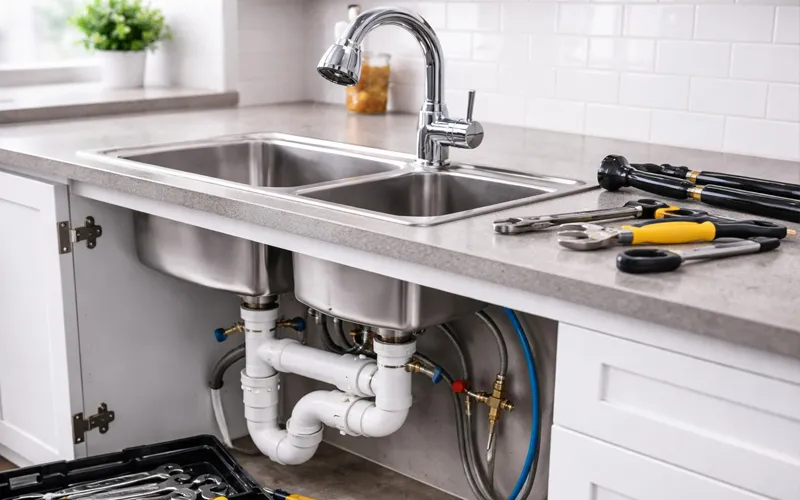
A kitchen sink gets used throughout the day, whether you are washing dishes, rinsing vegetables, or cleaning up after a meal. With regular use, small issues can start to appear, such as dripping taps, slow drainage, loose fittings, or unpleasant smells coming from the drain. These problems may not seem serious at first, but leaving them unattended can lead to wasted water and damage beneath the sink. Learning basic kitchen sink repair techniques can help you understand what has gone wrong and decide whether you can handle the issue yourself or need a plumber.
Most sink problems do not mean you need to replace the entire fixture. A worn washer, blocked pipe, loose connection, or damaged seal may be all that needs attention. Before buying replacement parts, take a moment to inspect the affected area and identify the source of the trouble. Understanding the way your sink works will make the repair process easier and help you avoid spending money on components you do not actually need.
Getting to Know the Main Sink Components
A kitchen sink has several parts that work together to keep water flowing properly. The basin holds water, the faucet controls its flow, and the drain opening carries wastewater away. Beneath the basin, pipes and fittings connect the drain to the household plumbing system. Most kitchen sink components are straightforward once you know what each one does.
If you are unfamiliar with the parts of a sink, start by looking at the fixture from above and then checking the area underneath the cabinet. You may find a strainer basket, mounting clips, sealing material, and a drain assembly. The exact arrangement depends on the sink’s design and installation method. For example, a double-basin sink usually has connecting pipes that allow wastewater from both sides to reach the drainage system.
When people search for parts of sink assemblies, they are often trying to identify a particular fitting before replacing it. The same applies to searches for parts of a sink or parts of the sink, which can refer to anything from the faucet handle to the drain strainer. Knowing the name and purpose of each sink part makes it easier to choose the correct replacement and explain the problem to a plumbing professional.
Common Sink Problems and What Causes Them
A dripping faucet, a slow drain, and water collecting inside the cabinet are among the most common problems homeowners encounter. Each symptom can have several causes, so it is worth checking carefully before attempting a fix. A faucet that continues dripping after being turned off may have a worn cartridge or washer, while moisture around a pipe joint could indicate a loose connection or deteriorated seal.
Drainage problems often develop when grease, food scraps, soap residue, and other debris accumulate inside the pipes. Unpleasant smells may come from trapped waste around the strainer or inside the drain. Sometimes, the cause lies farther down the plumbing system, especially if other fixtures are also draining slowly.
Good kitchen sink repair starts with identifying the actual cause rather than immediately replacing the most visible component. Dry the area, observe when the problem occurs, and check whether the water appears during normal use or even when the sink is switched off. These simple observations can help you narrow down the issue and choose a suitable solution.
How to Clear a Blocked Drain
Standing water can make even a simple kitchen task frustrating. If you want to learn how to fix kitchen sink drain problems, begin by checking the drain opening for visible food scraps or debris. Put on protective gloves, remove accessible waste, and clean the strainer if one is fitted. This simple step may be enough to improve drainage when the obstruction is close to the surface.
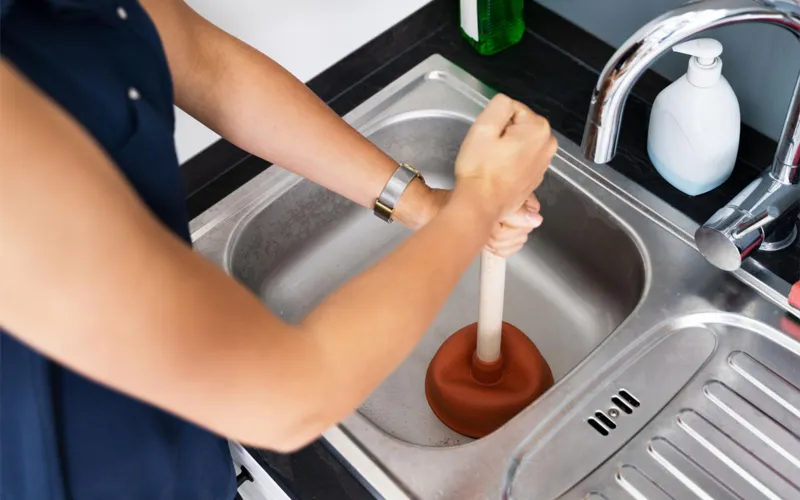
If water still drains slowly, try using a sink plunger. Make sure there is enough water to cover the rubber cup, create a firm seal around the drain, and use controlled movements. For a blockage farther inside the pipe, a suitable drain snake may help dislodge the material. Avoid forcing tools into the plumbing, as doing so can damage the fittings.
The sink drain parts beneath the basin may also need inspection if the blockage persists. A removable trap can collect grease and debris over time, but it should only be opened when you can work safely and have a container ready to catch the water inside. Never mix chemical drain cleaners or combine them with other cleaning products. If several fixtures are affected, sewage backs up, or the blockage keeps returning, a plumber can investigate the deeper drainage system.
Understanding the Pipes Beneath the Sink
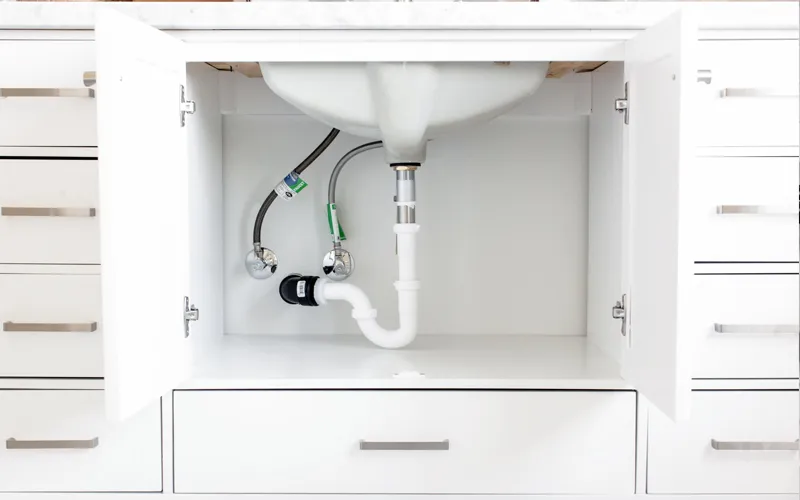
The plumbing underneath the basin has a few important components. The drain strainer catches larger pieces of waste, while the drain fitting connects the basin to the pipe below. A P-trap holds a small amount of water that helps prevent sewer gases from entering the home. Drainpipes then carry wastewater into the wider drainage network.
These parts of kitchen sink plumbing can help you work out where a leak is coming from. Water around the drain opening may indicate a failing seal, whereas moisture around a pipe joint could point to a loose fitting or worn washer. Supply lines are different because they deliver hot and cold water to the faucet. A leak from one of these lines may continue even when the sink is not being used.
Understanding the components of a sink is particularly useful when you need to distinguish between a water-supply problem and a drainage problem. If you are unsure which connection is leaking, dry the area thoroughly and run the faucet briefly while watching for fresh moisture. Avoid dismantling pipes until you have identified the likely source and know how to reassemble them safely.
Steps for Dealing With a Sink Leak
Water beneath the cabinet should never be ignored, even if the amount seems small. Start by emptying the cabinet and drying the affected area. Run the faucet briefly and check the supply hoses, drain connections, and trap joints to see where the first drops appear. A dry paper towel placed around a suspected connection can make a slow leak easier to spot.
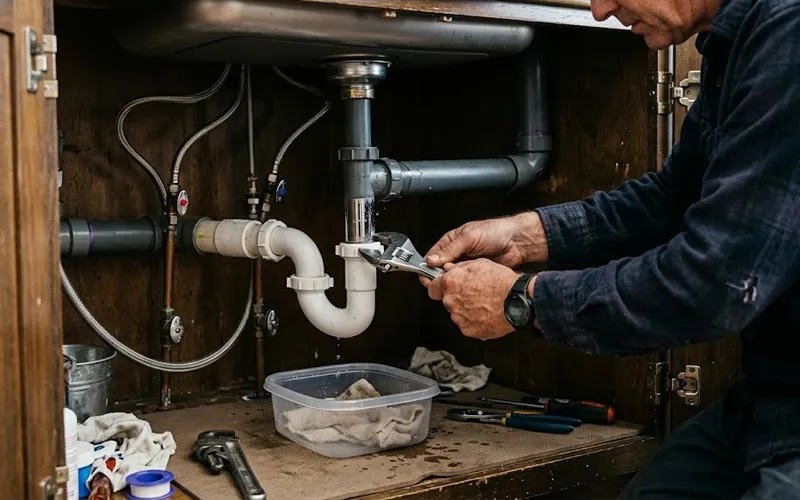
Once you have identified the source, turn off the appropriate shutoff valve before working on the water-supply connection. A slightly loose drain fitting may need careful adjustment, but avoid excessive force because plastic nuts and pipes can crack. If a washer or seal has deteriorated, replacing it is usually more effective than repeatedly tightening the same connection.
For this type of kitchen sink repair, use replacement parts that match the existing fitting and follow the manufacturer’s instructions. A cracked pipe, corroded supply hose, damaged basin, or faulty shutoff valve may require replacement rather than a minor adjustment. If water has soaked the cabinet floor or reached nearby electrical equipment, stop using the affected area and arrange professional help.
Repairing a Dripping Faucet
A faucet can drip from its spout, leak around the handle, or allow water to escape from a connection underneath the basin. The location matters because each type of leak may have a different cause. A dripping spout often points to a worn cartridge, valve seal, or washer, depending on the faucet design. Water around the handle may indicate a damaged internal seal.
Before starting this kitchen sink repair, shut off both hot and cold water supplies and open the faucet to release any remaining pressure. Cover the drain opening so small screws cannot fall inside, then follow the manufacturer’s instructions to access the faulty component. Take note of how the parts fit together before removing anything.
Replace the damaged component with a compatible part and reassemble the faucet carefully. Turn the water supply back on slowly, then check the spout, handle, and connections for leaks. If the faucet is badly corroded, difficult to dismantle, or still leaks after the repair, replacing the whole unit may be more practical than continuing to repair individual parts.
When Professional Help Is the Better Choice
Some plumbing issues are suitable for a simple DIY fix, while others need experience and specialized tools. A minor blockage or accessible faucet washer may be manageable at home. However, recurring clogs, cracked pipes, persistent leaks, and faulty shutoff valves can be more complicated than they first appear.
Many homeowners wonder, do plumbers fix sinks? Yes, plumbers commonly handle leaking faucets, blocked drains, damaged supply lines, faulty traps, and loose fittings. They can also investigate hidden leaks and determine whether a component needs repairing or replacing. If you have attempted basic troubleshooting without success, professional kitchen sink repair can help prevent further damage and reduce the chance of an incorrect fix.
It is especially important to call a plumber when wastewater backs up into the basin, several fixtures drain slowly, or a leak cannot be stopped. Professional assistance is also sensible if you cannot identify the source of the water or feel uncertain about dismantling the plumbing. Knowing how to repair a sink includes recognizing when the job is no longer a safe or practical DIY task.
Simple Habits That Help Prevent Future Problems
A little regular care can keep your sink working properly and reduce the likelihood of unexpected plumbing trouble. Avoid pouring cooking grease or oil down the drain, and scrape large food scraps into the rubbish or compost before washing dishes. A drain strainer can catch small pieces of waste, but it needs to be emptied and cleaned frequently to remain useful.
Check the cabinet beneath the sink occasionally for damp patches, unusual smells, corrosion, or visible damage to hoses and pipes. Clean residue around the faucet and basin, and pay attention to changes in drainage speed. If your sink has a garbage disposal, follow the manufacturer’s guidance for cleaning and everyday use rather than putting unsuitable materials into it.
These habits can reduce the need for kitchen sink repair and help you notice developing problems before they become expensive. Avoid overtightening fittings during routine checks, and replace damaged components promptly. Keeping the area beneath the sink dry and accessible also makes it easier to spot leaks early.
Final Thoughts
A troublesome sink does not always require a costly replacement. Dripping faucets, blocked drains, and minor connection leaks can often be resolved once you understand what is causing the problem. Taking time to inspect the fixture, choose compatible replacement parts, and follow safe repair steps can save both time and money.
Whether you are dealing with a slow drain or a leaking connection, begin with the simplest checks and avoid forcing damaged fittings. Regular maintenance will help keep the sink in good condition, while a qualified plumber can handle problems that require more advanced work. With the right approach, you can keep your kitchen sink reliable and ready for everyday use.
Frequently Asked Question
1. What are the most common kitchen sink problems?
Common problems include dripping faucets, clogged drains, leaking pipes, loose fittings, and unpleasant drain odors. Identifying the cause early can make kitchen sink repair easier and help prevent further damage.
2. How can I fix a clogged kitchen sink drain?
Remove visible debris from the drain strainer and try using a sink plunger. If the blockage persists, a drain snake may help. Contact a plumber if water continues to back up or multiple drains are affected.
3. Why is my kitchen sink leaking underneath?
A leak beneath the sink may come from loose pipe connections, worn washers, damaged supply hoses, or a faulty drain seal. Dry the area and check where fresh moisture appears to identify the likely source.
4. Which parts of a kitchen sink may need replacing?
Common replacement parts include faucet cartridges, washers, drain strainers, P-traps, seals, and supply hoses. The correct part depends on the sink design and the cause of the problem.
5. How do I repair a dripping kitchen faucet?
Turn off the hot and cold water supplies before inspecting the faucet. A worn washer, cartridge, or valve seal may need replacing. Follow the manufacturer’s instructions and check for leaks after reassembly.
6. Do plumbers fix kitchen sinks?
Yes, plumbers repair leaking faucets, clogged drains, damaged pipes, faulty traps, and loose fittings. They can also diagnose hidden leaks and recommend whether a component should be repaired or replaced.
7. When should I call a professional for kitchen sink repair?
Call a plumber if leaks continue after basic troubleshooting, pipes are cracked, wastewater backs up, or several fixtures drain slowly. Professional help is also advisable if you cannot safely identify or access the faulty component.
8. How can I prevent future kitchen sink problems?
Avoid pouring grease or oil down the drain, use a strainer to catch food scraps, and clean the drain regularly. Check the pipes and supply hoses beneath the sink for moisture, corrosion, or other signs of damage.
Want more DIY and repair ideas? Explore helpful tips and the latest trends on TrendsMore.com.