



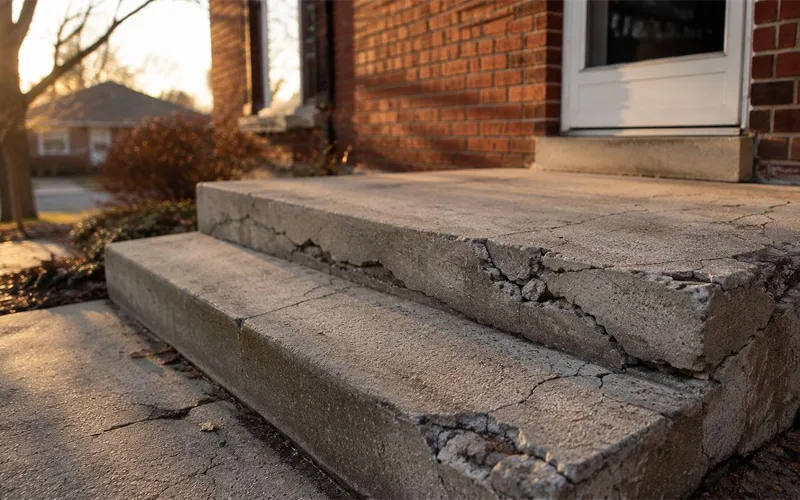
Concrete steps provide a stable entrance to a home, porch, patio, or garden. However, daily foot traffic, rain, temperature changes, and poor drainage can gradually damage their surface. Small cracks may develop into chipped corners, uneven edges, or crumbling sections if the problem is left untreated. Proper concrete step repair helps restore the appearance of damaged stairs and improves their usability. The right approach depends on the type of damage, the condition of the existing concrete, and whether the steps remain structurally stable.
What Causes Concrete Steps to Crack and Deteriorate?
Concrete can last for many years, but environmental conditions and installation problems may shorten its lifespan. Temperature changes cause concrete to expand and contract, which can gradually create cracks. Water entering these openings can weaken the surrounding material, while repeated freezing and thawing may cause surface layers to break apart in colder climates.
Poor drainage is another common cause of deterioration. When rainwater collects around the steps, moisture can penetrate the concrete and contribute to surface damage. Incorrect concrete mixing, inadequate curing during installation, ground movement, and excessive loads may also affect durability. Understanding the original cause is essential because repairing visible damage without correcting the underlying problem may lead to further deterioration.
For outdoor stairs, inspect the surrounding ground and drainage system before starting work. Check whether soil slopes toward the steps, gutters discharge water nearby, or puddles remain after rainfall. Correcting these conditions can reduce moisture exposure and help prevent future repairs.
How to Repair a Concrete Step at Home
Minor chips and shallow surface defects can often be repaired by a homeowner using suitable materials and basic tools. Start by examining the damaged area. If the step moves underfoot, has a deep crack, or appears to be separating from the structure, arrange a professional inspection rather than attempting a simple patch.

For a small, stable defect, follow these steps:
- Prepare the area: Wear safety glasses, gloves, and a suitable dust mask when removing damaged concrete. Use a hammer and chisel carefully to remove loose fragments without damaging sound material.
- Clean the surface: Brush away dust and debris. Follow the repair product instructions regarding whether the concrete should be dry or slightly damp.
- Apply bonding material if required: Some repair compounds need a compatible bonding agent to improve adhesion to the existing concrete.
- Mix the repair compound: Follow the manufacturer’s instructions for water ratios, mixing time, and application thickness.
- Fill the damaged area: Press the material firmly into the prepared space using a trowel. Remove air pockets and shape the surface to match the surrounding step.
- Finish and protect the repair: Smooth the material and recreate the original edge or surface texture. Protect the fresh repair from rain, direct sunlight, and premature use as directed by the product manufacturer.
Learning how to repair a concrete step properly means allowing enough time for the material to develop strength. The surface may appear dry before it is ready for foot traffic, so follow the stated curing period rather than judging readiness by appearance alone.
Fixing Cracks in Concrete Steps
Not all cracks require the same treatment. Concrete step crack repair should begin with checking the crack’s width, depth, location, and pattern. A narrow crack that has remained unchanged may be a minor surface defect, while a widening crack or one accompanied by uneven steps may indicate movement beneath the concrete.
For a small, stable crack, remove dirt and loose particles before applying a compatible concrete crack filler or repair sealant. Some products require the crack to be widened slightly to create a suitable shape for filling, while others are designed for direct application. Follow the product instructions rather than using the same preparation method for every filler.
More extensive cracked concrete step repair requires additional care. Cracks that pass through the full depth of a step, repeatedly reopen, or appear alongside settlement should be professionally assessed. Simply filling these openings will not correct ground movement or restore missing structural support.
If several cracks appear in a short period, inspect the entire staircase instead of treating each opening separately. The pattern of damage can help identify whether the problem is limited to the surface or affects the stability of the steps.
Repairing Broken Corners and Damaged Edges
Corners and front edges are vulnerable because they receive repeated impacts from footwear, tools, and heavy objects. Once a small piece breaks away, the exposed area may continue to chip if the surrounding concrete is weak.
Concrete step corner repair involves removing loose material until a firm surface remains. Clean the area thoroughly and use a repair mortar suitable for rebuilding corners and vertical surfaces. Depending on the product, a temporary form may be needed to hold the material in place while it sets.

For concrete step edge repair, recreate the original profile with a trowel or edging tool. Keep the repaired edge even with the surrounding concrete and preserve enough texture to provide safe footing. An overly smooth finish may become slippery when wet.
Broken concrete step repair becomes more complicated when a large section is missing or the damage extends through the entire step. A surface patch may not provide adequate strength in these circumstances. The damaged section may need partial rebuilding or replacement, depending on its condition and how it is supported.
Choosing the Right Repair Products and Materials
Repair materials should match the type of damage rather than being selected solely by price. Different products are designed for different applications, and using the wrong material can result in poor adhesion, shrinkage, or premature failure.
- Concrete repair mortar: Suitable for rebuilding chipped corners, damaged edges, and missing sections within the product’s specified thickness range.
- Concrete crack filler: Designed for filling certain narrow cracks. The correct formulation depends on the crack size, movement, and exposure conditions.
- Bonding agent: Helps compatible repair materials adhere to existing concrete when required by the repair system.
- Concrete resurfacer: Intended to renew suitable worn surfaces with a thin layer. It is not a substitute for repairing unstable steps or deep structural damage.
When comparing concrete step repair products, check whether they are approved for exterior use, the minimum and maximum application thickness, temperature requirements, and curing time. A concrete step repair kit can be convenient for small projects because it may contain several compatible materials, but its contents must suit the actual damage.
Reading concrete step repair adhesive reviews may help you understand application difficulties and customer experiences. However, reviews alone cannot establish whether a product is suitable for your staircase. Always check the manufacturer’s technical information and use materials intended to work together.
What Is the Best Concrete for Step Repair?
The best concrete for step repair depends on the depth of the damaged area and the amount of material that needs to be replaced. For small patches and chipped edges, a polymer-modified repair mortar is often easier to apply than an ordinary concrete mix. These products are formulated for repairs and may provide better adhesion when used correctly.
Deeper repairs require a product specifically designed for the required thickness. Some repair mortars can be applied in one layer, while others need multiple applications or a different preparation method. Check these requirements before purchasing the material.
Curing conditions also affect the final result. Very hot weather can cause some products to lose moisture too quickly, while low temperatures may slow strength development. Wind and direct sunlight can further affect exposed repairs. Choose suitable working conditions and follow the manufacturer’s guidance on curing and protection.
For larger sections that need rebuilding, consider whether the existing step is strong enough to support a repair. If the concrete has widespread deterioration or has lost its original support, replacing the damaged section may be more appropriate than applying another patch.
Repairing Water-Damaged Concrete Steps
Water-damaged concrete often develops a flaky surface, shallow pits, crumbling areas, or layers that break away under light pressure. Once the source of moisture has been identified, remove the cause before repairing the visible damage.
Start by checking gutters, downspouts, nearby paving, and the ground around the staircase. Direct roof drainage away from the steps and correct areas where water regularly collects. If water enters from beneath the stairs or through a nearby structure, further investigation may be necessary.
For repair water-damaged concrete steps, remove deteriorated material until a firm repair surface remains. Clean away dust and use a compatible repair compound according to its instructions. If the deterioration extends deep into the concrete or exposes reinforcing steel, seek professional advice to determine the extent of the damage.
After the repair has cured, a suitable concrete sealer may help reduce moisture absorption where recommended. However, sealing alone cannot repair weak concrete or correct drainage problems. Keeping the steps free from standing water is the more important long-term measure.
Front Porch and Exterior Step Repairs
Front entrance stairs need particular attention because they are used frequently and may become slippery during wet weather. Before repairing a porch, inspect the complete staircase for uneven heights, loose sections, damaged nosings, and changes in the walking surface.
Front step concrete repair should restore a consistent walking surface without creating raised patches or unexpected edges. If the steps have widespread but shallow surface wear, a compatible resurfacing product may improve their appearance. The existing concrete must still be stable, clean, and suitable for resurfacing.
For concrete front step repair, consider the finish as well as the appearance. The surface should provide adequate traction in wet conditions. Avoid polishing the concrete excessively or applying a coating that becomes slippery when exposed to rain.
Where a staircase meets a porch, wall, or foundation, inspect the connection carefully. Gaps or separation in these areas may indicate movement rather than ordinary surface wear. Such problems should be assessed before cosmetic work begins. Once the repair is complete, keep the entrance clear of loose debris and address drainage issues promptly.
Understanding Repair Costs and Before-and-After Results
The cost of repairing concrete steps depends on the extent of the damage, the materials required, the preparation involved, and whether professional labour is necessary. A small crack or chipped corner generally requires less work than a step with extensive deterioration or missing concrete.
DIY repairs may reduce labour costs, but the total expense should include tools, safety equipment, bonding materials, repair compounds, and any protective products required. If the damage involves settlement, structural movement, or extensive water penetration, the cost will depend on the underlying correction rather than the surface patch alone.

A concrete step repair before and after comparison can help document the improvement. Before starting, photograph the damaged areas clearly, including cracks, missing corners, and uneven surfaces. After the repair has cured, take photographs from similar angles and lighting conditions to make the difference easier to assess.
Appearance is only one part of the evaluation. Check whether the repaired area is firmly bonded, the edges are secure, and the walking surface is even. A visually attractive patch should not be considered successful if the original cause of damage remains unresolved.
When Should You Call a Professional?
Some damage requires more than a standard repair compound. Contact a qualified concrete professional if a step moves underfoot, several steps have settled unevenly, a crack continues through the full depth of the concrete, or large sections are separating from the staircase.
Professional assessment is also important when reinforcing steel becomes visible, concrete breaks away repeatedly despite previous repairs, or the stairs separate from a porch or building. These signs may indicate problems with structural support, corrosion, or ground movement.
Although DIY concrete step repair is suitable for many small surface defects, structural deterioration needs a more careful approach. A professional can inspect the damage and determine whether patching, partial reconstruction, improved support, or complete replacement is appropriate.
If the staircase is unstable or presents an immediate fall hazard, restrict access until it has been assessed. This is especially important for front entrances that are used daily by children, older adults, and visitors.
Final Thoughts
Long-lasting concrete repairs depend on identifying the type of damage, choosing compatible materials, and preparing the surface correctly. Small chips and stable cracks can often be repaired with suitable products, while deep cracks, unstable steps, and extensive deterioration may require professional attention.
Before finishing the work, make sure drainage problems have been addressed, the repaired surface has cured properly, and the stairs provide secure footing. Taking these precautions helps homeowners restore damaged steps and reduce the likelihood of recurring problems.
Frequently Asked Questions
1. How do you repair a damaged concrete step?
To repair a damaged concrete step, remove loose concrete, clean the area, and apply a suitable repair mortar. Shape the surface and allow it to cure according to the product instructions.
2. What is the best material for concrete step repair?
Polymer-modified repair mortar is often suitable for chipped corners and small damaged sections. For cracks or deeper damage, choose a product designed for that specific repair.
3. Can I repair cracked concrete steps myself?
Yes, you can repair small, stable cracks using a suitable concrete crack filler. However, deep, widening cracks or uneven steps may indicate structural problems that require professional inspection.
4. How do you fix a broken corner on a concrete step?
Remove loose fragments, clean the damaged area, and apply repair mortar suitable for rebuilding corners. Shape the edge to match the original step and follow the manufacturer’s curing instructions.
5. How long does concrete step repair take to cure?
Curing time depends on the repair product, temperature, and thickness of the patch. Some products allow light foot traffic within hours, while others require longer. Always follow the manufacturer’s instructions.
6. How can I prevent concrete steps from cracking again?
Improve drainage, direct rainwater away from the steps, and seal the surface if a suitable sealer is recommended. Repair small defects early and investigate any recurring cracks.
7. Is concrete resurfacing better than concrete step repair?
Resurfacing is useful for stable steps with shallow surface wear. Deeper cracks, loose concrete, and structural damage require proper repairs before any resurfacing is considered.
8. When should I hire a professional for concrete step repair?
Hire a professional if steps move underfoot, have deep cracks, show uneven settlement, expose reinforcing steel, or separate from a porch or foundation. These problems may require structural repairs rather than a simple patch.
Want more DIY and repair ideas? Explore helpful tips and the latest trends on TrendsMore.com.