



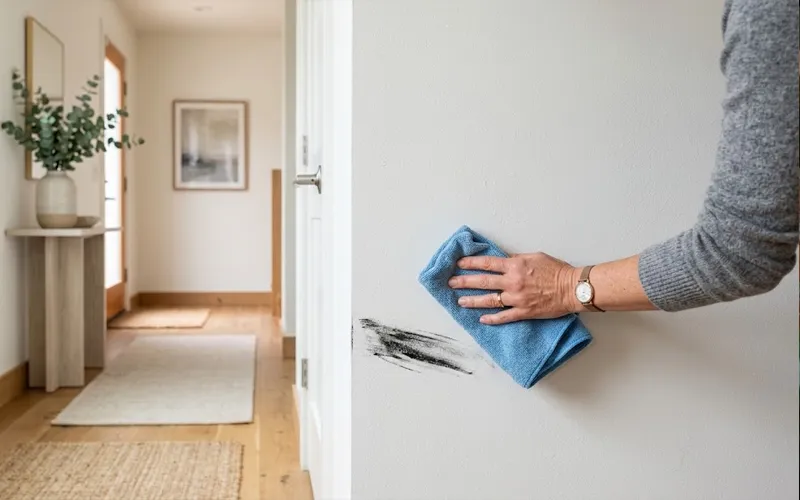
Scuff marks can make a clean room look untidy, especially when dark streaks appear near doorways, hallways, furniture, or staircases. These marks often come from rubber shoes, chair legs, bags, and other objects rubbing against painted surfaces. Fortunately, many can be removed with everyday household supplies without repainting the entire wall.
Learning how to remove scuff marks from walls begins with identifying the type of mark and understanding your paint finish. Light marks may disappear with warm water, while stubborn residue might need mild dish soap or another carefully tested cleaning method. Choosing the right approach helps remove unwanted marks while preserving the wall’s original color and appearance.
This guide covers practical cleaning methods, solutions for black scuffs, paint protection tips, and ways to prevent future marks. Each method starts with a simple approach so you can choose the safest option for your particular wall.
What Causes Scuff Marks on Painted Walls?
Scuff marks develop when shoes, furniture, plastic objects, or other materials rub against a painted surface and leave behind residue. These marks commonly appear in high-traffic areas where people move furniture, carry bags, or walk close to the walls. Although they may look like stains, many are simply deposits sitting on top of the paint.
The appearance of a mark can help you identify its cause. Gray or black streaks often come from rubber soles or furniture feet, while greasy fingerprints may come from hands. Crayon, pencil, and permanent marker marks are different because their pigments or inks may require specialized cleaning methods.
Your paint finish also determines how easily the surface can be cleaned. Satin and semi-gloss paints generally tolerate gentle washing better than flat or matte finishes. Before choosing a cleaning product, check the paint manufacturer’s instructions, particularly if the wall has a delicate finish or older paint.
Simple Ways to Clean Painted Walls
The best approach is to begin with the mildest suitable method and increase the cleaning strength only when necessary. Before you start, remove loose dust with a dry microfiber cloth and gather a clean towel, a small bowl, and your chosen cleaning solution.
1. Start With Warm Water
Warm water is often sufficient for fresh scuffs and light dirt. It is a sensible first choice when you are learning how to remove scuff marks from walls because it introduces very little risk when used carefully on washable paint.
Dampen a clean microfiber cloth with warm water and wring it out thoroughly. The cloth should feel slightly damp rather than wet. Gently wipe the mark using small circular movements, working from the outside toward the center to avoid spreading the residue.
Once the mark begins to fade, wipe away any remaining dirt with a clean section of the cloth. Dry the area with a soft towel and allow the paint to air-dry completely.
If the mark remains, avoid increasing the pressure. Move on to a mild cleaning solution instead, since repeated rubbing can affect the texture or sheen of some paints.
2. Use Mild Dish Soap
Dish soap is helpful when water alone cannot remove oily residue or dirt. Its cleaning agents loosen grime without requiring a strong chemical cleaner, making it a practical option for many washable painted surfaces.
Mix a few drops of mild dish soap into a bowl of warm water. Dip a microfiber cloth into the solution, wring it out, and gently clean the affected area. Use only enough moisture to treat the mark, especially around damaged paint, seams, and older plaster.
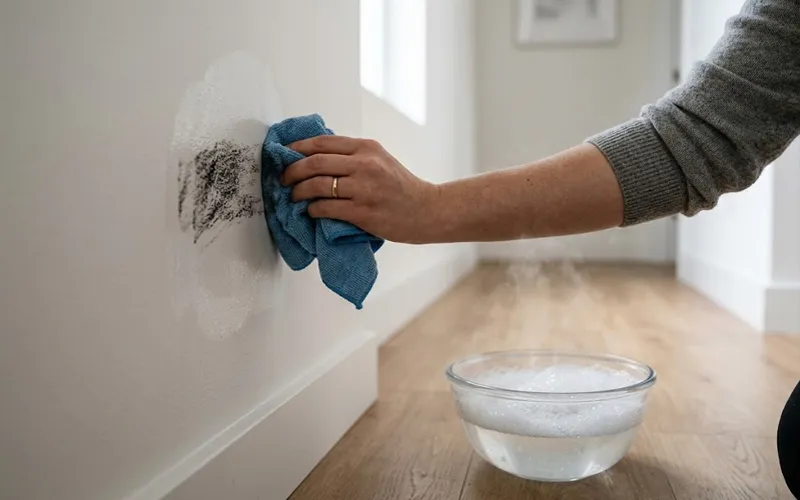
Afterward, wipe the area with another cloth dampened with plain water to remove the soap. Dry it with a clean towel and wait until the surface is completely dry before judging the result.
For people wondering how to remove marks from walls without damaging paint, this method is usually a better starting point than abrasive cleaning products. However, even mild soap should be tested first on delicate or unfamiliar finishes.
3. Try Diluted White Vinegar
White vinegar may help loosen certain types of dirt and residue, but it is not guaranteed to remove every rubber scuff. Because vinegar is acidic, it can affect some paint finishes, so use it cautiously rather than treating it as a universal wall cleaner.
If you are researching how to remove scuff marks from walls with vinegar, begin by mixing equal parts white vinegar and water in a small container. Dampen a soft cloth with the mixture and test it on a hidden section of the wall. Let the test area dry completely before checking for changes in color or sheen.
If the finish remains unchanged, gently dab or wipe the scuff with the cloth. Avoid spraying the mixture directly onto the wall or allowing it to soak into the paint. Once the mark has lifted, wipe the area with plain water and dry it.
Do not use vinegar on damaged paint or a delicate surface without checking the manufacturer’s recommendations. If mild dish soap has already removed the mark, there is no need to try vinegar as well.
4. Use Baking Soda With Caution
Baking soda is sometimes used to clean stubborn marks because its particles provide mild abrasive action. However, this can also scratch or dull painted surfaces, particularly flat and matte finishes. For that reason, it should not be your first choice.
If you are considering how to remove scuff marks from walls with baking soda, first confirm that the paint can tolerate this type of cleaning. Mix a small amount of baking soda with water to form a thin paste, then test it in an inconspicuous location.
If the manufacturer permits its use and the test causes no visible change, apply a tiny amount with a soft, damp cloth. Use minimal pressure and avoid rubbing the paste over a large area. Remove the residue promptly with a clean, damp cloth and dry the surface.
Stop immediately if the paint becomes lighter, shinier, rougher, or visibly damaged. In many cases, mild dish soap is the safer choice and will provide a satisfactory result without abrasive particles.
5. Consider a Melamine Cleaning Sponge
Melamine sponges, sometimes sold as cleaning erasers, can remove certain stubborn marks through gentle abrasion. They may work well on durable, washable paint, but they can also wear away the coating if used too aggressively.
Lightly dampen the sponge according to its instructions and test it on a hidden patch. Gently pass it over the scuff with almost no pressure, checking the surface after each movement. Stop once the mark disappears rather than continuing to scrub the same area.
Avoid this method on delicate matte or flat paint unless the manufacturer confirms that it is suitable. If paint color transfers to the sponge or the wall develops a shiny patch, discontinue use immediately.
How to Deal With Black Scuff Marks
Black scuffs are especially visible on white, cream, and other light-colored walls. They frequently come from rubber shoe soles, plastic objects, furniture feet, and items dragged against the surface. Fortunately, the dark appearance does not necessarily mean the paint has been permanently stained.
To understand what will take black scuff marks off walls, first consider whether the mark is removable residue or actual surface damage. Wipe away loose dust with a dry microfiber cloth, then try warm water. If the streak remains, use a small amount of diluted dish soap and gently clean the affected area.
After removing the residue, wipe away the cleaner and allow the wall to dry. Inspect the surface in good lighting to see whether the original color and texture have returned.
If a black mark remains unchanged, it may be a scratch, transferred paint, or damage to the wall coating. Continuing to scrub can make the problem worse. In that situation, a suitable touch-up paint may be more effective than another cleaning attempt.
Online discussions, including searches for how to remove scuff marks from walls on Reddit, may suggest everything from erasers to household cleaners. However, a method that works for one person may damage another person’s paint. Always consider the finish and test unfamiliar techniques before using them on a visible area.
Protect the Paint During Cleaning
Gentle technique matters just as much as the cleaning product. Applying too much pressure can flatten the texture of matte paint, create shiny patches, or remove part of the coating. This is why how to remove scuff marks from walls should always involve matching the cleaning method to the surface rather than choosing the strongest available product.
Avoid bleach, strong solvents, abrasive pads, and concentrated chemicals unless the paint manufacturer specifically recommends them. Never mix cleaning products. In particular, combining bleach with vinegar or other acidic cleaners can release dangerous chlorine gas.
Keep moisture away from electrical outlets, switches, and unprotected fixtures. Use a lightly damp cloth rather than soaking the wall, and avoid cleaning surfaces where paint is peeling or the plaster is exposed.
If you are unsure whether a product is suitable, check its label and the paint manufacturer’s care instructions. A small test patch in an inconspicuous location can help reveal changes in color, texture, or sheen before you clean a larger area.
What to Do When a Mark Will Not Disappear
Not every mark can be removed with cleaning. Furniture edges may scratch the coating, while sharp objects can chip the paint and expose the layer underneath. Recognizing this difference helps prevent unnecessary scrubbing and saves time.
After the wall dries, inspect the affected area under natural light. If the mark has faded but remains visible, one additional gentle cleaning attempt may help. However, stop if the paint looks chipped, the surface feels rough, or the original color appears to be missing.
For minor damage, clean the area gently and let it dry. Apply a compatible primer if needed, then use matching touch-up paint according to the product instructions. If possible, use paint from the original container to match the color and finish more closely.
Remember that older paint can fade over time, so fresh paint may look slightly different even when the color code matches. For larger damaged areas, repainting the entire wall may produce a more consistent appearance.
Common Cleaning Mistakes to Avoid
Several avoidable mistakes can turn a small scuff into a larger paint problem.
- Using excessive water: Too much moisture can leave streaks or affect weak and damaged paint.
- Scrubbing too hard: Aggressive rubbing may remove the mark but also damage the finish.
- Using abrasive products too soon: Baking soda and melamine sponges can dull delicate surfaces.
- Combining cleaners: Mixing chemicals can create hazardous reactions without improving the result.
- Cleaning a large area unnecessarily: Focus on the affected spot instead of repeatedly wiping the surrounding wall.
- Judging the result while wet: Paint may look darker or shinier until all moisture has evaporated.
Choose one suitable cleaning method at a time, remove its residue before considering another product, and allow the surface to dry fully between attempts. These precautions help you evaluate the result without causing additional damage.
How to Prevent Scuff Marks From Returning
Preventing new marks is easier than repeatedly cleaning the same areas. Start by identifying where scuffs appear most often, such as hallways, entryways, staircases, and the spaces behind dining chairs.
Attach suitable felt pads or protective bumpers to furniture legs that sit close to painted walls. Keep chairs and tables slightly away from the surface where possible, and lift heavy furniture instead of dragging it across the room. Doorstops can also prevent handles and doors from hitting the paint.
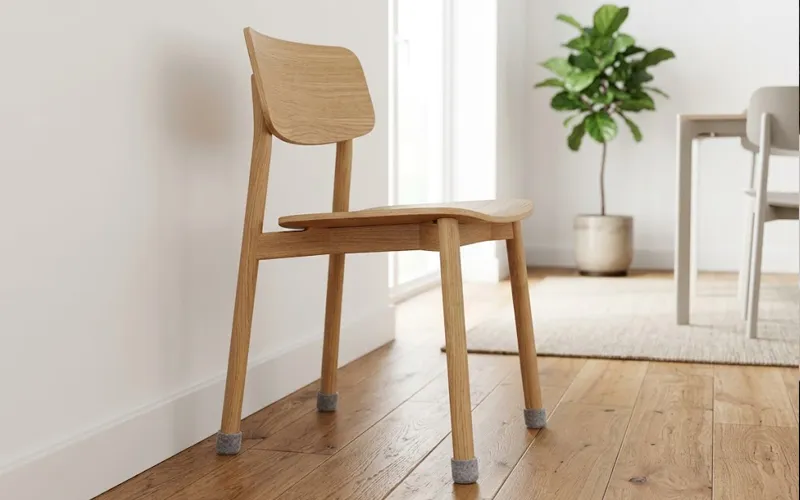
Regularly remove dust with a soft cloth, especially in busy areas where dirt can accumulate. Near entrances, consider adding a shoe rack or storage area to reduce contact between bags, shoes, and painted surfaces.
If you are choosing paint for a high-traffic room, consider a washable satin or semi-gloss finish where appropriate. Follow the manufacturer’s guidance on durability and cleaning, since not all paints with the same finish perform equally well.
These small changes reduce repeated contact with the wall and make routine maintenance easier.
Final Thoughts
Knowing how to remove scuff marks from walls can help you maintain a clean home without unnecessary repainting. Start with warm water, move to mild dish soap if needed, and reserve more abrasive methods for suitable surfaces after testing them carefully.
The most important rule is to remove the residue without damaging the paint underneath. If gentle cleaning does not work or the coating itself is scratched, stop scrubbing and consider a small touch-up instead. With careful cleaning and a few preventive measures, painted walls can stay looking fresh for longer.
Frequently Asked Questions
1. How do you remove scuff marks from walls without damaging paint?
Use a soft microfiber cloth dampened with warm water. If the mark remains, add a few drops of mild dish soap and wipe gently. Test the method on a hidden area first.
2. What removes black scuff marks from white walls?
Warm water and mild dish soap can remove many black scuffs caused by shoes or furniture. Wipe gently and dry the area. If the paint is scratched, touch-up paint may be necessary.
3. Can you use a Magic Eraser on painted walls?
Yes, a melamine cleaning sponge may remove stubborn marks from durable paint. However, it can dull matte finishes or remove paint, so test it in a hidden spot and use minimal pressure.
4. Does vinegar remove scuff marks from walls?
Diluted white vinegar may help loosen some dirt, but it can affect certain paint finishes. Check the manufacturer’s instructions and test a small area before using it.
5. Can baking soda remove marks from painted walls?
Baking soda may help with stubborn residue, but its abrasive texture can scratch or dull paint. Try warm water or mild dish soap first, especially on flat or matte walls.
6. Why do scuff marks remain after cleaning?
Some marks are caused by scratches, chipped paint, or transferred material that ordinary cleaners cannot remove. If gentle cleaning fails, let the wall dry and consider matching touch-up paint.
7. How do you remove shoe marks from walls?
Gently wipe shoe marks with a damp microfiber cloth. For stubborn streaks, use diluted dish soap, then wipe with clean water. Avoid hard scrubbing to protect the paint.
8. How can you prevent scuff marks on walls?
Use felt pads on furniture, keep chairs away from walls, install doorstops, and clean high-traffic areas regularly. Washable paint can also make future maintenance easier.
Want more Home Improvement ideas and tips? Explore helpful ideas and the latest trends on TrendsMore.com.