




Growing fresh tomatoes at home does not require a garden, greenhouse, or large outdoor space. With suitable containers, enough light, and consistent care, you can raise healthy tomato plants inside your home and enjoy fresh fruit even when outdoor conditions are unsuitable. If you have ever wondered, can you grow tomatoes indoors, the answer is yes. Beginners can successfully grow tomatoes in apartments, kitchens, spare rooms, and other bright indoor spaces by understanding a few essential growing requirements.
Indoor gardening also gives you more control over your plants. You can protect them from frost, heavy rain, strong winds, and sudden temperature changes. You can grow compact varieties on a plant stand, place containers near a sunny window, or use artificial lighting when natural sunlight is insufficient. Although indoor tomatoes need regular attention, a well-planned setup makes it easier to manage watering, feeding, pollination, and fruit development.
Tomatoes Indoors Successfully?
Yes, tomato plants can grow, flower, and produce fruit indoors when their basic needs are met. They require sufficient light, suitable temperatures, nutrient-rich growing medium, consistent moisture, and enough space for their roots and foliage. Among these requirements, lighting is often the most challenging because ordinary room lighting rarely provides enough intensity for healthy fruit production.
A bright, unobstructed window can be a good starting point, particularly if it receives several hours of direct sunlight. However, window direction, nearby buildings, seasonal changes, and local weather all affect the amount of usable light your plant receives. If the plant develops thin stems, pale leaves, or very little flowering, insufficient light may be one of the causes.
Choose a growing location where the temperature remains reasonably stable and the plant receives adequate airflow. Avoid placing it beside a frequently opened exterior door, a cold window, or a heating vent that blows hot, dry air directly onto the leaves. Before planting, consider the available space, the amount of natural light, and whether you can provide additional lighting if necessary.
Once these conditions are in place, can you grow tomatoes indoors and expect a useful harvest? Yes, although results depend on the variety, pollination, growing environment, and quality of care. Starting with one compact plant is a practical way to learn what works in your home before expanding your indoor garden.
Choosing the Best Tomato Varieties for Indoor Growing
The right tomato variety can make indoor gardening considerably easier. Large, vigorous plants often require substantial containers, sturdy supports, and plenty of room for their branches. Compact and dwarf varieties are usually more manageable because they take up less space and can adapt well to container cultivation.
Micro Tom and Tiny Tim are examples of dwarf varieties worth considering. Many cherry tomatoes are also suitable for indoor growing, especially varieties bred for containers or compact growth. Their smaller fruits can be convenient for salads, snacks, sandwiches, and everyday cooking. However, check the expected mature size of each variety because some cherry tomato plants grow much larger than others.
Determinate tomatoes generally grow to a more limited size and produce much of their crop over a relatively concentrated period. Indeterminate varieties continue growing and producing flowers along their stems when conditions remain favourable. The latter may provide an extended harvest, but they usually need more space, pruning or training where appropriate, and stronger support.
Before purchasing seeds, read the variety description and check its expected height, spread, container requirements, and approximate time to maturity. If you have a small windowsill, a dwarf variety is often the easiest choice. If you have a dedicated growing shelf with strong lighting, you may have more flexibility to experiment with larger plants.
Tomatoes Indoors From Seeds?
Starting tomatoes from seeds allows you to choose your preferred variety and follow the plant’s development from the beginning. It is also usually an economical option when you want to grow several plants.
Begin with a clean seed tray or small pots containing a quality seed-starting mix. Sow the seeds at the depth recommended on the packet, then gently moisten the mix. Keep it evenly moist rather than saturated, and place the containers in a warm location. Many tomato seeds germinate within approximately five to ten days under favourable conditions, although the timing varies with temperature, seed quality, and variety.
As soon as seedlings emerge, provide strong light. A suitable grow light can prevent seedlings from becoming tall and weak as they stretch towards a window. If you use natural sunlight, monitor the seedlings closely and adjust their position when necessary to prevent uneven growth.

Once the seedlings develop their first true leaves, you can transplant them into individual small pots if they are large enough to handle safely. Lift them gently by their leaves rather than squeezing their delicate stems. As they grow and develop stronger roots, move them into their final containers.
Use potting mix formulated for containers instead of dense garden soil. When transplanting, water the plant gently to settle the mix around its roots, and ensure excess water can drain away. Keep the young plant under suitable lighting while it establishes itself.
If you are asking how can you grow tomatoes indoors without previous gardening experience, start with just one or two seedlings. This makes it easier to monitor their progress, recognise watering problems, and learn when to provide additional nutrients. A healthy start gives the plant a better chance of flowering and producing fruit later.
Choosing the Right Pot, Soil, and Growing Location
Tomato roots need enough room to spread, absorb nutrients, and access oxygen. The container should therefore match the expected mature size of the variety rather than simply fitting the available windowsill.
Very compact dwarf varieties may grow in containers of around one to two gallons, depending on their specific requirements. Many larger tomato varieties perform better in containers holding at least five gallons. Larger plants may need even more space, so use the seed packet or supplier’s growing instructions to guide your decision.
Drainage holes are essential. Without them, excess water can collect around the roots and increase the risk of root damage. Place a saucer beneath the pot to protect furniture, but empty it after watering instead of allowing the container to stand in collected water.
Choose a lightweight potting mix designed for container plants. It should retain enough moisture for the roots while allowing excess water to drain. Dense garden soil can become compacted in a pot and may drain poorly, making it less suitable for indoor tomato cultivation.
Your growing location should provide enough light, reasonable airflow, and a stable temperature. Leave space between neighbouring plants so their leaves do not remain crowded together. If you use an indoor shelf, make sure it can support the weight of the containers, wet soil, and growing plants. Keep electrical cords and lighting equipment away from water, and position the pots where they cannot easily be knocked over.
Providing Enough Light for Healthy Growth
Light affects nearly every stage of tomato development, from seedling growth to flowering and fruit ripening. Plants that receive too little light may develop weak stems, widely spaced leaves, and fewer flowers. Even when a plant looks green and healthy, inadequate light can limit its ability to produce tomatoes.
Place the plant near the brightest suitable window available and observe how much direct sunlight reaches its leaves throughout the day. A window that appears bright to you may still provide insufficient light for productive tomato growth. If natural sunlight is limited, supplement it with a suitable plant light rather than relying on ordinary ceiling bulbs.
Rotate the container occasionally if light reaches the plant mainly from one direction. This encourages more balanced growth and reduces the tendency for stems to lean towards the window. However, avoid repeatedly moving the plant between locations with very different temperatures or light levels.
Monitor the plant as it grows because its lighting requirements must be considered alongside its increasing size. A light that adequately covers a small seedling may not illuminate the entire canopy of a mature plant. Good lighting should support strong stems, healthy foliage, and flowering rather than simply keeping the leaves green.
Tomatoes Indoors With Grow Lights?
Yes, dedicated grow lights can make indoor tomato gardening more reliable, especially when your home lacks strong natural sunlight. Full-spectrum LED grow lights are a practical option because they can provide useful light for both vegetative growth and flowering while generally producing less heat than many traditional high-intensity lighting systems.
Select a light suitable for the size and number of plants you intend to grow. Follow the manufacturer’s recommendations for hanging height, coverage, and daily operating time. The correct distance depends on the light’s intensity and design; placing it too far away may reduce its effectiveness, while positioning it too close may stress the foliage.
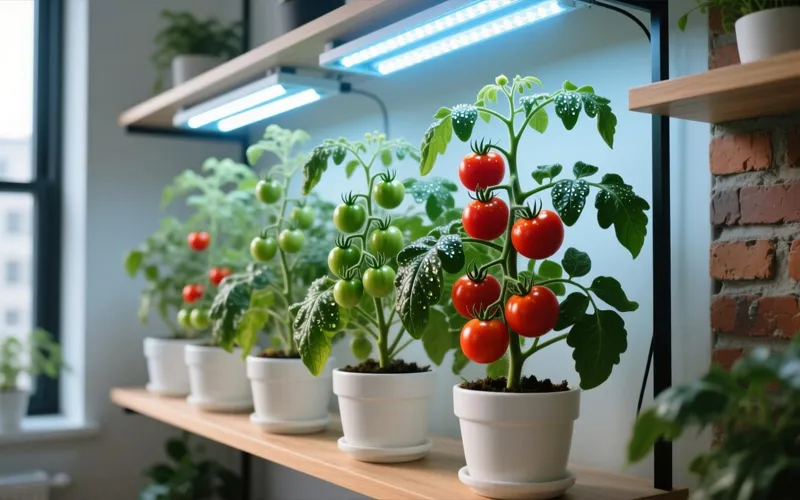
Many indoor growers provide approximately 12 to 16 hours of light daily, adjusting the schedule according to the equipment, natural sunlight, and plant response. Tomatoes also need a regular dark period, so keeping the light switched on around the clock is unnecessary.
If you want to know whether can you grow tomatoes indoors with LED lights, remember that not every LED bulb is designed for plant growth. Look for a product intended for growing plants, with sufficient coverage and intensity for the mature plant. As the tomato grows taller, adjust the light and check that the upper and lower leaves receive appropriate illumination.
Good lighting works best alongside proper watering, nutrition, and pollination. It cannot compensate for waterlogged roots, unsuitable temperatures, or an unhealthy growing medium, so maintain the rest of the plant’s care routine as well.
Watering and Feeding Indoor Tomato Plants
Tomato plants need consistent moisture, but their roots should not remain waterlogged. The amount of water they require depends on container size, plant maturity, room temperature, humidity, and lighting intensity.
Check the potting mix with your finger before watering. If the upper layer has begun to dry, assess whether the deeper mix also needs moisture. When watering is necessary, apply enough water to moisten the root zone thoroughly and allow the excess to drain through the holes. Avoid following a rigid daily schedule because a small pot under strong lighting may dry much faster than a large container in a cooler room.
Uneven watering can contribute to blossom-end rot, a condition that creates a dark, sunken patch on the bottom of developing fruit. This problem is associated with inadequate calcium delivery to the fruit and can occur even when calcium is present in the soil. Inconsistent moisture, damaged roots, and excessive fertiliser can contribute to the problem. Maintaining steady soil moisture is more useful than automatically adding calcium supplements.
Tomatoes also need nutrients for healthy leaves, flowers, and fruit. Fresh potting mix may contain enough nutrients for early growth, but these supplies gradually decline. Use a suitable fertiliser according to its label, and adjust feeding as the plant develops.
Avoid applying more fertiliser than recommended. Excessive nitrogen can encourage abundant leafy growth while reducing flowering and fruit production. If leaves become discoloured or growth slows, assess the watering routine, light levels, root condition, and feeding history before assuming that the plant needs extra nutrients.
How to Pollinate Tomatoes Grown Indoors
Tomato flowers contain both male and female reproductive parts, allowing many varieties to self-pollinate. Outdoors, wind and insects help move pollen within the flowers. In a closed indoor environment, these natural movements may be limited, so some plants benefit from gentle assistance.
When flowers are open, lightly tap the flowering stems or gently shake the plant to help release pollen. You can also use a small, soft brush to transfer pollen within an open flower. Another option is to use an electric toothbrush near the flower stem to create a gentle vibration without touching the delicate petals directly.
Repeat this process occasionally while the plant is flowering rather than disturbing the flowers constantly. Handle the stems carefully to avoid breaking them, and provide reasonable airflow around the foliage.
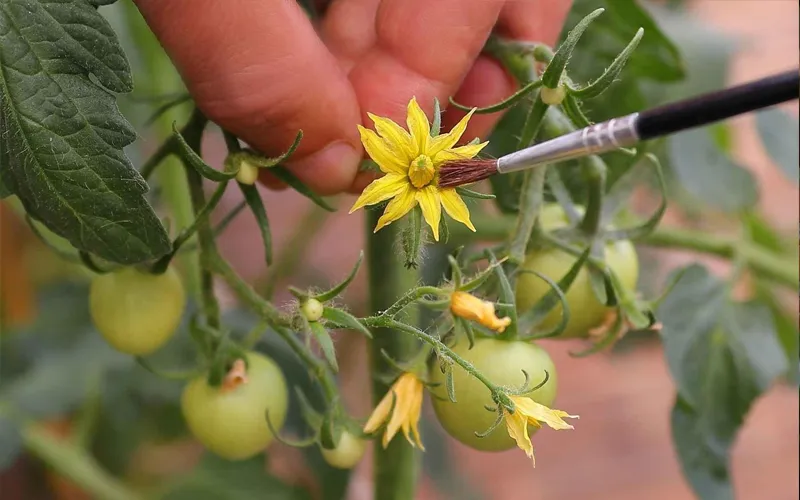
Temperature and humidity also influence fruit set. Excessive heat, cold conditions, and persistently high humidity can interfere with pollen release or successful fertilisation. If flowers repeatedly fall without developing fruit, review the lighting, temperature, watering, and pollination conditions together.
Once pollination succeeds, the base of the flower begins to enlarge as the fruit develops. Continue providing consistent care during this stage because sudden changes in moisture or environmental conditions can affect fruit quality.
Tomatoes Indoors in the Winter?
Winter is a suitable time to grow tomatoes indoors if you can maintain adequate light and warmth. A heated home can protect plants from frost, but shorter days and weaker sunlight may slow growth and reduce flowering. A window that provides sufficient light during summer may not be adequate during the colder months.
If you are wondering can you grow tomatoes indoors in the winter, begin by identifying the brightest suitable location in your home. Supplement natural sunlight with a grow light if the plant develops weak growth or receives too little direct light. Keep containers away from cold drafts and avoid placing leaves directly against very cold window glass.
Most tomatoes grow well at moderate indoor temperatures, commonly around 65–80°F (18–27°C) during the day, although the ideal range varies by variety and conditions. Protect plants from sudden temperature changes and avoid placing them directly beside radiators or other heat sources.
Water carefully because plants may use moisture more slowly when light levels fall and growth slows. Check the potting mix before watering rather than assuming that the plant needs water every day. If the soil remains wet for several days, review drainage, room temperature, and lighting.
For gardeners asking whether can you grow tomatoes indoors in winter or can you grow tomatoes indoors over winter, the most important factors are adequate lighting, stable temperatures, and careful moisture management. With these conditions in place, winter growing can be productive rather than simply a way to keep a plant alive until spring.
Can You Grow Tomatoes Indoors Year Round?
Growing tomatoes indoors throughout the year is possible, but one plant is not guaranteed to produce continuously. Tomatoes have natural growth and production cycles, and their productivity can decline as they age. Indoor conditions allow you to control light, temperature, watering, and nutrition, but they do not eliminate the plant’s biological limits.
If your goal is to learn can you grow tomatoes indoors year round, establish a consistent lighting schedule and monitor the plant’s health throughout its growth cycle. Provide support as stems become heavier, remove dead or diseased foliage when appropriate, and keep the growing area clean. Healthy leaves are important because they produce the energy needed for fruit development.
You can also stagger planting times. For example, start a new batch of seedlings while an established plant is flowering or producing fruit. When the older plant becomes less productive, the younger plants may be approaching maturity. This approach can provide a more consistent supply than relying on a single plant indefinitely.
Gardeners who ask can you grow tomatoes indoors all year round or can you grow tomatoes indoors all year should understand that continuous harvesting requires more than simply keeping a plant indoors. The variety, light intensity, pollination, temperature, and general plant health all influence the quantity and timing of the crop.
A useful strategy is to maintain a simple planting calendar and record when seeds are sown, when flowers appear, and when the first fruit ripens. These records can help you plan future plantings and identify which varieties perform best in your home.
Common Problems When Growing Tomatoes Indoors
Indoor tomato plants can experience several problems, and identifying the likely cause is the first step towards correcting them.
Yellowing leaves: This may result from overwatering, nutrient deficiencies, insufficient light, or naturally ageing lower leaves. Check the soil moisture and drainage first, then assess the lighting and recent feeding routine. Remove only leaves that are dead, diseased, or no longer useful to the plant.
Weak or stretched stems: Seedlings and mature plants may become leggy when they receive insufficient light. Move them to a brighter suitable location or improve their artificial lighting. Ensure the light covers the growing tips and surrounding foliage.
Flowers falling without fruit: This may indicate unsuitable temperatures, poor pollination, excessive humidity, or insufficient light. Check the growing environment and gently assist pollination when flowers are open.
Dark patches on developing fruit: Blossom-end rot often appears as a dark, sunken area at the bottom of a tomato. Maintain consistent moisture and review root health and fertiliser use. Do not assume that adding calcium alone will solve the problem.
Pests on leaves: Aphids, spider mites, and whiteflies can affect indoor tomato plants. Inspect the undersides of leaves and new growth regularly. If pests appear, isolate the affected plant when practical and use a treatment labelled for the pest and edible plants, following all directions carefully.
Avoid changing several things at once unless the plant faces an urgent problem. Make sensible adjustments, observe the response, and keep notes. This helps you identify the real cause instead of applying unnecessary treatments.
How Long Can You Grow Tomatoes Indoors?
The lifespan and productive period of an indoor tomato plant depend on its variety, growing conditions, and general health. Some plants produce fruit for several months, while certain indeterminate varieties may continue growing and producing for much longer when they receive sufficient light, nutrition, and support.
For gardeners asking how long can you grow tomatoes indoors, it helps to distinguish between the time needed to produce the first harvest and the length of time the plant remains productive. Many varieties produce their first ripe fruit approximately 60 to 100 days after transplanting, although the timing varies. Some dwarf and cherry varieties mature sooner, while other varieties need more time.
The seed packet is the best starting point for estimating maturity because it provides information specific to the variety. Remember that insufficient light, unsuitable temperatures, and poor pollination can delay flowering and ripening indoors.
You do not need to keep one plant indefinitely to enjoy regular harvests. If an older plant produces fewer tomatoes or becomes difficult to manage, you can replace it with a younger plant grown from seed. Starting new plants at suitable intervals can make indoor production easier to manage over time.
Tomatoes Indoors in the UK?
Yes, indoor tomato growing is possible in the UK, including during colder months. The main challenge is often the limited daylight available during autumn and winter. A bright window may be sufficient for a compact plant during sunnier periods, but supplementary lighting can become important when natural sunlight is weak.
If you are researching can you grow tomatoes indoors UK, choose a variety suited to your available space and keep the plant in a reasonably warm room. Avoid unheated areas that become very cold overnight, and check for drafts near windows and exterior doors.
A windowsill, conservatory, or indoor growing shelf may provide enough space for a small plant, depending on its light exposure and temperature. Larger varieties can also be grown indoors, but they need suitable containers, stronger support, and more room for their foliage.
Heating patterns can vary considerably between UK homes, so monitor the actual growing conditions instead of relying on how comfortable the room feels. A thermometer can help you identify temperature fluctuations that might affect flowering and fruit development.
With appropriate lighting, a suitable variety, and consistent care, indoor tomatoes can be a practical option for people living in flats or houses without gardens.
Simple Tips for a Better Indoor Tomato Harvest
A few consistent habits can make indoor tomato gardening easier and more rewarding.
- Start small: Grow one or two plants until you understand their lighting, watering, and feeding needs.
- Check the soil before watering: Avoid keeping the root zone constantly saturated.
- Inspect leaves regularly: Look for pests, unusual spots, yellowing, or weak growth.
- Support developing stems: Use a suitable stake or plant support when the variety needs it.
- Maintain cleanliness: Remove fallen leaves and clean tools and containers between plantings.
- Keep simple records: Note watering, feeding, flowering, and harvesting dates to identify patterns.
- Be patient: Flowers need time to develop into ripe fruit, and harvest timing varies by variety and growing conditions.
People searching for can you grow tomatoes indoors home and garden advice can apply these same principles whether they live in a small apartment or have a dedicated indoor growing area. The most useful setup is one that matches the space, lighting, and time you can realistically provide.
Do not expect every flower to produce a tomato or every plant to deliver the same harvest. Focus on healthy growth, make adjustments when needed, and learn from each growing cycle. Once you understand how your plants respond to their environment, you can gradually introduce more varieties or experiment with staggered planting.
Final Thoughts
So, can you grow tomatoes indoors successfully as a beginner? Absolutely. A suitable variety, well-draining container, quality potting mix, adequate light, and consistent care can help you grow healthy tomato plants without an outdoor garden. You can use natural sunlight, supplement it with LED grow lights, and assist pollination when indoor conditions limit the movement of pollen.
Start with a compact variety and a manageable growing setup. Pay attention to soil moisture, plant health, temperature, and flowering rather than following a rigid routine that may not suit your home. If you want to harvest tomatoes throughout the year, consider starting replacement seedlings before older plants become unproductive.
Indoor gardening takes patience, but it also gives you an opportunity to learn how plants respond to their environment. With careful observation and a few practical adjustments, you can enjoy growing fresh tomatoes at home and develop a routine that works for your available space and growing conditions.
Frequently Asked Questions
1. Can you grow tomatoes indoors successfully?
Yes, you can grow tomatoes indoors using suitable pots, quality potting mix, adequate light, and consistent watering. Compact varieties are ideal for beginners.
2. Can you grow tomatoes indoors with grow lights?
Yes, full-spectrum LED grow lights help tomato plants grow and produce fruit when natural sunlight is insufficient. Most plants need around 12–16 hours of light daily.
3. Can you grow tomatoes indoors in the winter?
Yes, tomatoes can grow indoors during winter if they receive enough light and remain in a warm, stable environment. Protect plants from cold drafts.
4. Can you grow tomatoes indoors year round?
Yes, you can grow tomatoes indoors all year by maintaining suitable growing conditions. Planting new seedlings at intervals can help provide more consistent harvests.
5. How long do indoor tomatoes take to produce fruit?
Many tomato varieties produce ripe fruit around 60–100 days after transplanting, depending on the variety, lighting, temperature, and care.
6. What are the best tomato varieties for indoor growing?
Tiny Tim, Micro Tom, and compact cherry tomato varieties are good choices because they can grow successfully in containers and smaller spaces.
7. How do you pollinate indoor tomato plants?
Gently tap the flowering stems or shake the plant lightly to help release pollen. This can improve fruit development when natural air movement is limited.
8. What size pot is best for growing tomatoes indoors?
Dwarf varieties may grow in one- to two-gallon pots, while many larger tomato plants need containers of at least five gallons with proper drainage.
Want more garden ideas and tips? Explore helpful ideas and the latest trends on TrendsMore.com.