




Walk past a patch of zinnias on a warm afternoon and you will often see wings flickering above the petals. That scene is becoming rarer. Habitat loss, heavy pesticide use and tidy, flowerless lawns have squeezed butterfly populations in many regions, which makes small private gardens more valuable than ever as refuelling stops.
The good news is that you do not need acres of land. If you know what flowers are best for a butterfly garden, even a balcony or a single sunny bed can become a dependable feeding station. This guide covers the fifteen strongest performers, the reasons butterflies favour them, a simple planting plan, seed tips, drawing ideas and a gentle note on memorial flowers. Pick a handful and start this weekend.
Short Answer First
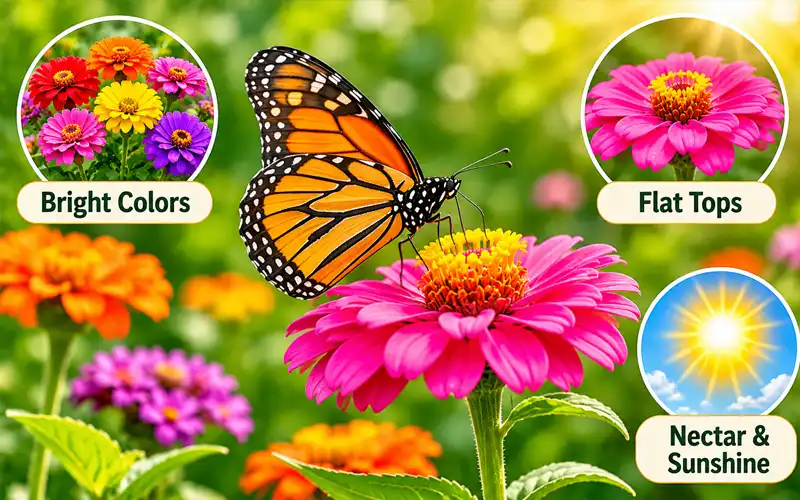
The best butterfly flowers, and every reliable butterfly attracting plant, share three traits. They hold plenty of sweet nectar, they offer a flat or clustered surface where a butterfly can stand while feeding, and they keep blooming for weeks rather than days. A plant that ticks all three will outperform a prettier one that does not. The fifteen picks further down were chosen with exactly this test, so you can plant from the list with confidence.
How Butterflies Pick Their Flowers
Bright Colors They Notice
Butterflies see a wider colour range than people do, including ultraviolet patterns hidden from us. In practice they home in on red, orange, yellow, pink and purple blooms from a distance. A bold block of one shade reads like a billboard from the air, which is why three or four plants of the same colour beat a scattered rainbow.
Flat Tops and Clusters
Butterflies are not hoverers like hummingbirds. They prefer to land, steady themselves and drink slowly. Wide daisy-style faces and dense clusters made of dozens of tiny florets give them a stable platform, while very deep trumpets can be awkward for smaller species to reach into.
Nectar, Scent and Sunshine
Butterflies are cold-blooded, so they hunt for flowers in warm, bright spots where they can heat their flight muscles. Fragrance guides them the last few inches, and sugar-rich nectar rewards the trip.
Butterfly Garden Flowers List of 15 Best Picks
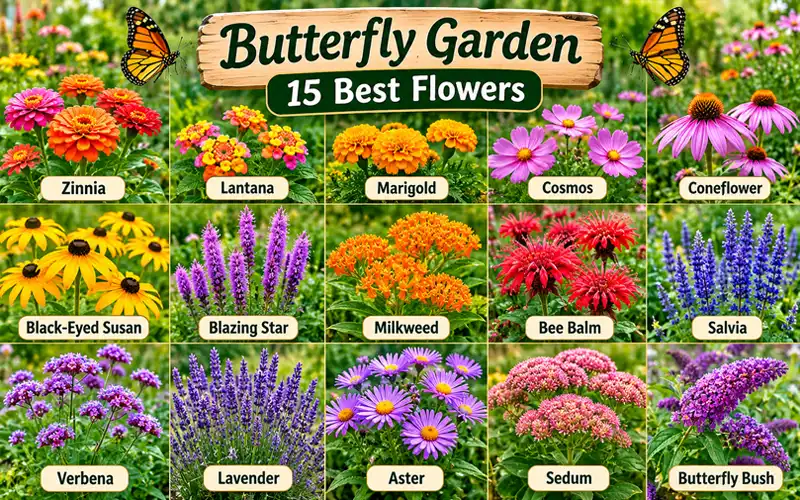
Each pick below gives its common butterfly flower name, its botanical name for ordering, the butterflies it tends to draw and one practical tip, while the table that follows covers colour, size and bloom time at a glance. The list deliberately mixes annuals, perennials and a shrub, so something is always in flower from spring until the first frost.
Zinnia for Instant Color
Zinnia elegans is the fastest route to a crowded garden, because it sprouts within days and blooms heavily from seed. Swallowtails, monarchs and fritillaries land on it all season. Pinch the first buds on tall types to encourage branching, and cut spent flowers often so the plant keeps producing new ones.
Lantana for Season-Long Blooms
Lantana camara carries tight clusters that shift colour as they age, so a single plant offers a mixed palette. Giant swallowtails, red-spotted purples and Gulf fritillaries favour it. It shrugs off heat and drought, so water only when the soil is dry a few inches down. In frost-free areas it grows into a woody shrub.
Marigold for Easy Beginnings
Tagetes forgives almost any beginner mistake and suits both pots and borders, with compact French types for edging and taller African types for the back. Skippers and honeybees work its blooms. Choose single or semi-double forms, since packed pom-pom types hide their nectar behind extra petals.
Cosmos for Airy Height
Cosmos bipinnatus floats on feathery stems that sway in the slightest breeze, adding movement to a bed. Painted ladies and sulphurs visit often. Poor soil actually suits it, since rich soil produces leaves instead of flowers, so skip fertiliser. Let a few heads ripen, because it self-sows readily.
Coneflower for Late Summer
Echinacea purpurea lifts petals around a spiky orange cone and keeps going when earlier bloomers fade. American ladies, great spangled fritillaries and red admirals queue for it. This tough prairie perennial copes with heat and dry spells once established. Leave the seed heads standing through autumn, since birds feed on them.
Black-Eyed Susan for Golden Landings
Rudbeckia hirta wears golden petals around a chocolate centre and gives beds an almost meadow-like look. Pearl crescents, viceroys and blues land on it. It reseeds generously, so one planting becomes a colony within two seasons. Space plants about a foot apart for airflow, which helps prevent leaf spots.
Blazing Star for Tall Spikes
Liatris spicata sends up fuzzy wands that open from the top down, a shape quite unlike the daisies around it. Monarchs, wood nymphs and Peck’s skippers cling to the spikes. It grows from a corm, so plant it in clusters of at least five, because a lone spike looks lost.
Milkweed for Monarch Families
Asclepias tuberosa, called butterfly weed, glows orange, while swamp milkweed (Asclepias incarnata) offers rose-pink clusters for damper beds. Both feed monarch caterpillars as well as adult butterflies, so one planting serves two life stages, and hairstreaks visit too. Milkweed resents transplanting because of its deep taproot, so choose its permanent spot carefully and check which species are native to your area.
Bee Balm for Fiery Clusters
Monarda didyma crowns its stems with shaggy, firework-like heads that stay in flower for six weeks or more. Tiger swallowtails and silver-spotted skippers visit freely. It spreads by underground runners, so give it room or confine it with an edging. Thin crowded stems in spring and choose mildew-resistant cultivars when you can.
Salvia for Cool Blue Tones
Salvia farinacea and its relatives raise slim spikes that add a calm contrast against the hot oranges and yellows nearby. Swallowtails and sulphurs sip from them steadily. Shear the spikes back by about a third after the first flush, and a second wave of blooms will follow within weeks.
Verbena for Flat Landing Pads
Verbena bonariensis stands on wiry, see-through stems, so you can plant it among shorter flowers without blocking them. Trailing hybrids also spill nicely from baskets. Great spangled fritillaries and swallowtails hover over its tiny florets. Expect it to seed around gently, giving you free plants next year.
Lavender for Fragrant Borders
Lavandula angustifolia forms silvery mounds that scent the whole border on warm days. Eastern tailed-blues, whites and swallowtails come for the fragrance, and you can dry the stems for sachets. Prune lightly after flowering, but never cut into old bare wood, which seldom regrows.
Aster for Autumn Nectar
New England aster (Symphyotrichum novae-angliae) erupts in daisies when little else is flowering, which makes it vital fuel for migrating monarchs, buckeyes and viceroys. Plants grow tall and floppy, so cut them back by half in early June to keep them compact and sturdy. Divide clumps every few years in spring to maintain vigour.
Sedum for Dry Spots
Sedum spectabile, often sold as Autumn Joy, builds fleshy grey-green rosettes topped with broccoli-like heads that deepen to rust. Skippers, bees and the odd late monarch use it as a dependable stopover. Its leaves store water, so it thrives in rocky beds and neglected corners. Leave the dried heads over winter for structure.
Butterfly Bush for Big Impact
Buddleja davidii throws arching cones that scent the air for months, and many butterfly species stop by, which is how it earned its name. In some regions it escapes gardens and becomes invasive, so look for sterile, non-invasive cultivars or smaller dwarf forms, and check local guidance before planting. Prune hard in late winter to keep it tidy and flowering.
Flowers That Attract Butterflies and Hummingbirds
Hummingbirds favour red and orange tubes, which is why several plants already on your list serve double duty. Bee balm, salvia, lantana and the butterfly bush all offer enough nectar to tempt both visitors at the same bloom.
Plant these four in a loose group near a window or seating area and you may watch both visitors within the same minute. Add a nearby shrub or fence as a perch, since hummingbirds like to rest between feeding runs.
Caterpillar Food Plants Worth Adding
Nectar feeds adults, but a garden only becomes a nursery when caterpillars have something to eat. Milkweed from the list above covers monarchs. For swallowtails, add dill, parsley and fennel, which double as kitchen herbs; plant extra so there is plenty for people and larvae alike. Many caterpillars are picky and feed on a single plant group, so variety increases the number of species you can host.
Expect chewed leaves. Short-lived damage is a sign that the garden is working, and plants usually regrow. Tuck host plants toward the back of the bed so ragged foliage does not dominate the view.
Planning Your Butterfly Garden Project Step by Step
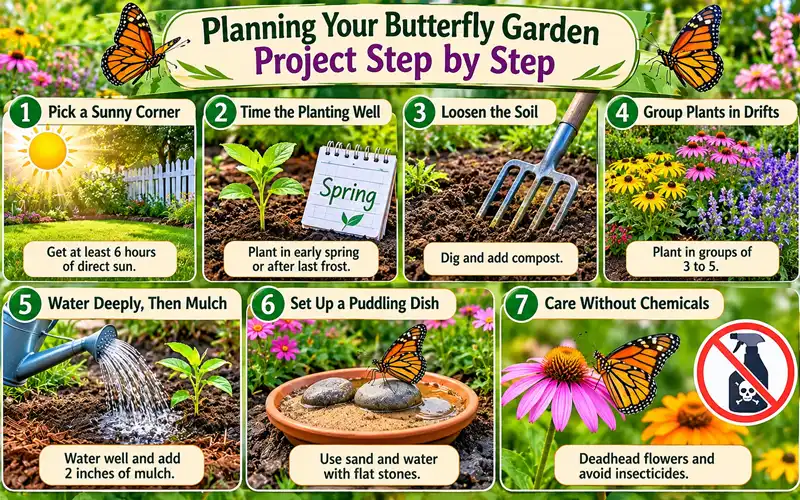
Follow these seven steps in order and you can finish a small butterfly garden project in a single weekend.
1. Pick a Sunny Corner
Choose a spot that receives six or more hours of direct sun. Shelter from strong wind matters just as much, so look for a wall, fence or hedge on the windward side. Even a 4-by-6-foot bed works.
2. Time the Planting Well
Plant nursery seedlings in early spring or just after the last frost, so roots settle before summer heat. Seeds can follow a few weeks later. In warm climates, autumn planting gives roots a gentler start and flowers ready for next season. Check your local hardiness zone or average frost dates before buying, since lavender and coneflower favour cooler regions while lantana and zinnia relish heat.
3. Loosen the Soil
Clear weeds and turf, then loosen the top eight inches of soil with a fork. Mix in a few inches of compost if the ground is heavy or sandy. Most of the plants above prefer good drainage, so avoid spots where water pools after rain.
4. Group Plants in Drifts
Place tall plants such as blazing star at the back, mid-height coneflowers in the middle and low edgers at the front. Plant each variety in groups of three to five, spaced about a foot apart so the clumps knit together. Mix early, mid and late bloomers so something is always open.
5. Water Deeply, Then Mulch
Give new plants a slow, deep soak twice a week for the first month, then taper off. Deep watering encourages roots to chase moisture downward. Add two inches of mulch, keeping it off the stems, to conserve water and suppress weeds.
6. Set Up a Puddling Dish
Fill a shallow dish with sand, add water until the sand is damp, and set a few flat stones on top. Butterflies sip minerals from wet soil, a habit called puddling. Place it in sun near the flowers and refresh it every couple of days.
7. Care Without Chemicals
Deadhead spent blooms weekly to encourage more flowers. If aphids appear, rinse them off with water or let ladybirds do the job. Insecticides and weed killers can poison butterflies and caterpillars, so keep them out of the area, including drift from neighbouring lawns.
Growing Butterfly Flowers Seeds at Home
Raising butterfly flowers seeds is cheaper than buying plants and opens up varieties that garden centres rarely stock.
Sow Straight Into Beds
Fast, sturdy seeds such as zinnia, cosmos and marigold can go straight into prepared soil after the last frost. Press them lightly in, cover with a thin layer, and keep the surface damp until sprouts appear, usually within a week or two. Thin seedlings to the spacing on the packet, since crowded plants flower less.
Start Indoors for Slow Types
Slower or fussier seeds benefit from a head start. Sow them in trays beside a bright window six to eight weeks before the last frost. Milkweed and some prairie perennials need cold stratification, which means chilling the seeds in damp paper in the fridge for several weeks to mimic winter before sowing.
Choose Mixes or Single Packs
Seed mixes are cheap and cover many bloom times, but you cannot control layout or height. Single packs let you design drifts deliberately. A good compromise is to sow single varieties in the main beds and scatter a pollinator mix in rougher corners, checking that the mix lists regionally adapted species and nothing invasive.
Gentle Butterfly Flowers for Funeral Tributes
Many families look for butterfly flowers for funeral services, and the approach can be simple and respectful.
Meaning Behind the Wings
In many cultures the butterfly stands for transformation, hope and the lasting presence of someone loved. A caterpillar becoming a winged creature offers comfort at a hard moment, which is why butterfly motifs appear on memorial cards, jewellery and floral tributes. Families often choose them to celebrate a life rather than only mourn it.
Arrangement Ideas for Memorials
A florist can shape white lilies, roses or soft pastel blooms into a butterfly outline on a stand, or tuck small paper or silk butterflies into a wreath. Another gentle option is a planted tribute, such as a butterfly garden bed created in the person’s name, which keeps giving long after the service. Ask about colour, since whites, pale blues and lavenders suit most traditions.
Mistakes That Keep Butterflies Away
Some habits quietly undo good planting. Nursery plants are sometimes pre-treated with systemic insecticides that remain in the nectar, so ask the grower before buying. Heavy fertiliser pushes leafy growth at the expense of flowers, and a rich bed often blooms less than a lean one.
Autumn over-tidying is another common error. Fallen leaves and hollow stems shelter chrysalises and eggs through winter, so leave a corner untouched until spring warms up.
Frequently Asked Questions
Which Bloom Draws the Most Visitors
No single plant wins everywhere. The best performer is usually whichever blooms longest in your climate and suits local species. Ask a nearby nursery or native plant society which flowers their butterflies visit.
When Will Butterflies Arrive
Passing butterflies often find fresh blooms within days, but a settled population can take a full season as word spreads and caterpillars develop. Steady blooms across the whole season speed the process.
Can Pots Replace a Yard
Yes. Choose containers at least 12 inches wide with drainage holes and plant compact choices from the list. Water more often than in beds, since pots dry quickly.
Is Partial Shade Enough
Most butterfly flowers want sun, but a few will still bring visitors in partial shade. Aim for at least four hours of direct light and expect fewer butterflies than in a sunny bed.
Do Natives Always Win
Natives often support more local species and need less care, but well-chosen non-natives still supply nectar. A mix of both works well, provided none are invasive in your area.
Final Thoughts
Knowing what flowers are best for a butterfly garden saves years of trial and error. Start with three plants from the list, one annual, one perennial and one host plant, and add more each season. Keep the bed sunny and leave a damp patch for drinking. Butterflies reward patience, and the first one that lands on your own flowers will make every hour of work feel worthwhile.