



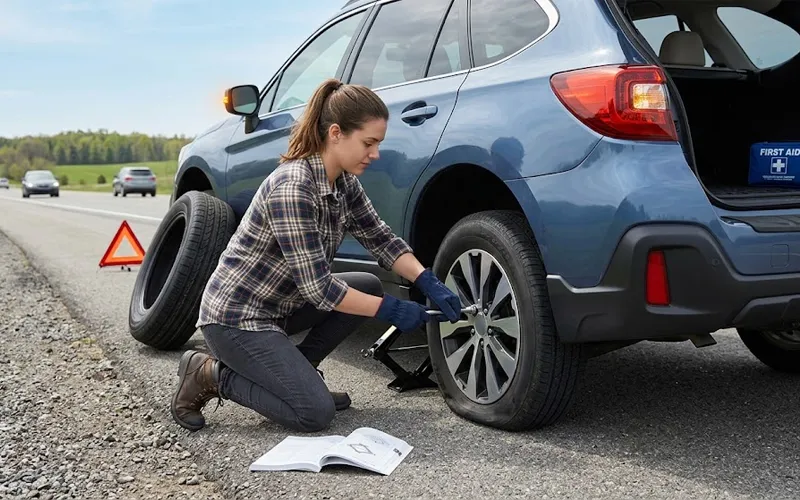
A flat tire can interrupt a journey at any time, leaving drivers unsure about what to do next. Understanding how to change a flat tire is a useful practical skill, particularly when a suitable spare tire and the correct tools are available. However, replacing a wheel is not simply a matter of removing one tire and fitting another. The process involves several stages, including preparing the vehicle, identifying the correct equipment, removing the wheel correctly, and checking the replacement before continuing the journey.
Find a Suitable Stopping Location
Where the vehicle stops can make a significant difference to the safety of the repair. If you feel the tire losing pressure while driving, slow down gradually and avoid sudden changes in direction. Look for a firm, reasonably level area away from moving traffic. Once stopped, switch on the hazard lights, engage the parking brake, and turn off the engine.
Anyone searching teach me how to change a flat tire safely should first understand that roadside repairs should only be attempted when the surrounding conditions allow enough space to work. Darkness, heavy traffic, poor weather, soft ground, or a narrow road shoulder can make changing a tire unsuitable. In such circumstances, obtaining professional roadside help can be a safer course of action.
Gather the Correct Equipment
After reaching a suitable location, identify the equipment supplied for your vehicle. A traditional setup usually includes a jack, lug wrench, and spare wheel, while some vehicles use an emergency sealant and inflation system instead. The owner’s manual can explain the equipment included with the vehicle and show where individual components are stored.
For people researching how to change a flat tire on a car, this preparation stage is particularly important because vehicles do not all have identical wheel designs or lifting systems. The manual can also provide information about wheel-nut specifications and restrictions that apply to a temporary spare.
Loosen the Wheel Fasteners
Before raising the vehicle, examine the wheel and locate its lug nuts or other fasteners. Remove a wheel cover if the vehicle requires this, then place the lug wrench securely over each nut. Turn each fastener enough to break its initial resistance, but leave the nuts attached to the wheel.
Keeping the tire on the ground during this stage prevents the wheel from rotating freely. Drivers following how to change a flat tire step by step should complete this part before using the jack. If the vehicle has locking wheel nuts, the matching key should be used rather than attempting to force the fastener with an unsuitable tool.
Position and Operate the Jack
The jack must be placed at the lifting point specified by the vehicle manufacturer. These points are designed to support the vehicle safely during a wheel change, whereas other areas may be unsuitable and could suffer damage. Raise the vehicle slowly until the flat wheel has enough clearance to come away from the ground.
A jack should never be treated as a platform for working underneath the vehicle. It is intended for lifting during the wheel-changing procedure, not for supporting a person beneath the vehicle. This distinction is an essential part of understanding how to change a flat tire safely.
Remove the Damaged Wheel
With sufficient clearance beneath the tire, remove the loosened wheel nuts and keep them together where they cannot roll into traffic or become lost. Grip the wheel securely and pull it outward from the hub. If it does not move easily, avoid using excessive force or placing fingers between the wheel and nearby components.
Once removed, place the damaged wheel in a stable position. It can later be inspected to determine whether the tire can be repaired or needs replacement. The condition of the wheel itself should also be considered because impact damage can sometimes affect more than the tire.
Fit and Secure the Spare
Position the spare wheel against the hub and align the mounting holes correctly. Start each wheel nut by hand so that the threads engage properly. This reduces the possibility of damaging the fasteners during installation.
After the nuts have been started, lower the vehicle according to the manufacturer’s procedure and complete the tightening process. Many vehicles use a diagonal or crisscross sequence to distribute clamping pressure around the wheel. If the manufacturer provides a specific torque value, it should be followed with an appropriate torque wrench where possible.
Drivers looking for how to change a flat tire instructions should remember that correct fastening is part of the installation itself, rather than an optional final adjustment.
Understand Different Types of Tire Emergencies
A spare tire is not always the right solution for every type of tire problem. A severely damaged wheel, sidewall failure, missing equipment, or another mechanical problem may require professional inspection. This is why searches for how to change a flat tire without a jack need to be approached carefully. A conventional spare cannot normally be installed safely without suitable equipment for lifting the vehicle, and improvised supports can create dangerous instability.
Online resources may also appear under searches such as aaa how to change a flat tire steps or nhtsa how to change a flat tire steps. Such resources can provide general educational information, but the instructions supplied for the specific vehicle should take priority when they differ.
Check the Spare Before Driving
Installing the wheel is not the final consideration. Before moving away, check that the replacement is seated correctly and that the wheel fasteners have been tightened according to the vehicle’s requirements. Return the jack and wrench to their proper storage locations and make sure the damaged wheel is secured if it is being transported.
Temporary spare tires can have different operating limitations from standard tires. Some are intended for restricted speeds and shorter distances, so the markings on the tire and information in the owner’s manual should be checked before driving. This is also why a simplified search such as how to change a flat tire in 5 easy steps cannot cover every situation a driver may encounter.
Bicycle Tires Require a Different Method
Car wheels and bicycle wheels use completely different systems, so the same procedure should not be applied to both. Someone searching how to change a flat tire on a bike may need instructions involving a quick-release mechanism, thru-axle, rim brakes, disc brakes, inner tube, or tubeless setup.
Likewise, how to change a flat tire on a bicycle normally involves removing the bicycle wheel, releasing the tire from the rim, examining the tube or tire, fitting the replacement component, and reinstalling the wheel. The exact method depends on the bicycle’s design, making its manufacturer’s or component-specific instructions useful.
Learn the Procedure Before You Need It
A practical way to prepare for an unexpected tire problem is to become familiar with the vehicle’s equipment before starting a journey. Searching how to change a flat tire steps can introduce the general sequence, while a how to change a flat tire step by step guide can help explain individual stages in greater detail.
Drivers may also encounter resources using phrases such as michelin how to change a flat tire steps, michelin how to change a flat tire, aaa how to change a flat tire, or aaa how to change a flat tire safely. These searches can lead to different educational resources, so information should be checked against the instructions and specifications provided for the particular vehicle.
Frequently Asked Questions
1. How can I learn How to change a flat tire safely?
Start by moving the vehicle to a safe, stable location away from traffic. Turn on the hazard lights, apply the parking brake, and check that you have the correct jack, lug wrench, and spare tire before beginning the wheel change.
2. What tools are needed for How to change a flat tire?
Most vehicles require a suitable jack, lug wrench, and properly inflated spare wheel. Some models may use a tire repair kit instead, so checking the owner’s manual beforehand can help you understand which equipment is designed for your vehicle.
3. When should I avoid How to change a flat tire on the roadside?
A roadside wheel change should be avoided when there is not enough working space or when traffic, darkness, severe weather, soft ground, or another hazard creates an unsafe environment. In such circumstances, professional roadside assistance may be more appropriate.
4. Is How to change a flat tire difficult for a beginner?
The basic process can be learned by most drivers, but it requires careful attention to vehicle-specific lifting points, wheel fasteners, and tightening requirements. Practicing the procedure in a controlled location can make the process easier to understand before an actual emergency occurs.
5. What is the first thing I should do after getting a flat?
The first priority is to reduce speed gradually, maintain control, and find a suitable stopping location. Once safely stopped, secure the vehicle and assess the surroundings before preparing the equipment.
6. Can I drive normally after replacing the damaged wheel?
Not always. Some spare tires are temporary and may have speed or distance restrictions. Before continuing, check the spare tire markings and the vehicle owner’s manual to understand its limitations.
7. What should I do if the wheel will not come off?
Avoid using excessive force or unsuitable tools. Make sure all fasteners have been properly loosened and that the vehicle is securely positioned. If the wheel remains stuck or another mechanical problem is visible, professional assistance can prevent further damage or injury.
8. How can I prepare for a future tire emergency?
A useful way to prepare is to inspect the spare tire periodically, confirm that the required tools are present, and learn the approved lifting points for the vehicle. Knowing How to change a flat tire before an emergency occurs can also help you respond more calmly and methodically.
Conclusion
A roadside tire problem is easier to manage when the driver understands the equipment, recognizes the vehicle’s requirements, and knows when a repair should not be attempted. Preparation can include checking the spare’s condition, becoming familiar with the jack’s approved position, and keeping essential tools accessible. The most useful approach is not to rush through the process, but to follow the correct procedure for the vehicle and respond appropriately to the conditions around it. With that preparation, drivers can deal with an unexpected tire problem in a more informed and responsible way.
Explore practical automotive guides, car tips, maintenance advice, and the latest vehicle trends on TrendsMore.com.