



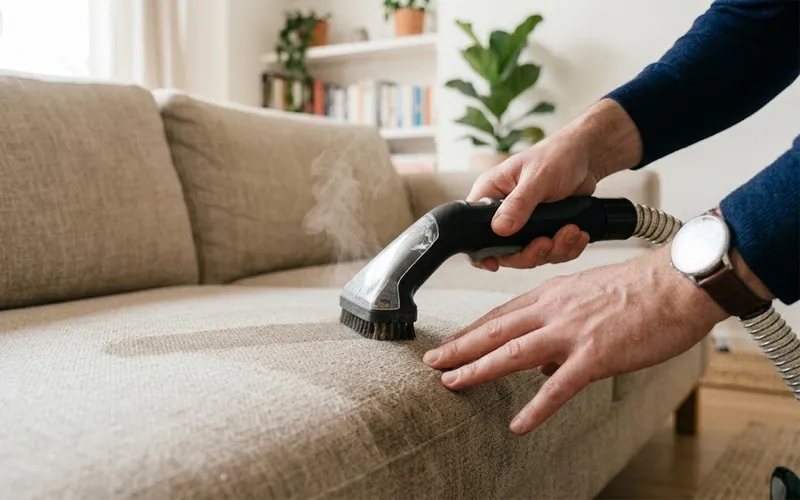
A clean sofa can make a living room feel fresher, more comfortable, and more inviting. Sofas are used every day, so they naturally collect dust, crumbs, pet hair, body oils, and small stains over time. Regular vacuuming helps with loose dirt, but it may not be enough to refresh the upholstery thoroughly. Using steam on the right type of fabric can lift dirt and refresh the sofa while using very little water. However, heat and moisture must be controlled carefully because some upholstery materials can shrink, fade, develop water marks, or lose their original texture.
Understanding how to clean a sofa with a steamer starts with knowing whether the upholstery is suitable for steam, preparing the surface correctly, and using the equipment in a controlled way. A careful process can produce a cleaner sofa while reducing the risk of unnecessary fabric damage.
Check Whether Your Sofa Is Suitable for Steam
The first step is to identify the type of upholstery you are dealing with. Sofa fabrics can include cotton blends, polyester, microfiber, velvet, linen, leather, and other synthetic or natural materials. Their reactions to heat and moisture can be very different.
Look for the manufacturer’s cleaning label, usually found underneath a cushion or attached to the sofa frame. The instructions may indicate whether the material can be cleaned with water-based methods. If the manufacturer specifically advises against steam or moisture, do not assume that a quick steam treatment will be safe.
If steam cleaning is permitted, choose a hidden section for an initial test. Apply a small amount of steam according to the equipment instructions and allow the area to dry completely. Check whether the fabric has changed color, texture, softness, or shape. This small test is especially important for older sofas and upholstery with delicate finishes.
Prepare the Sofa Before Using Steam
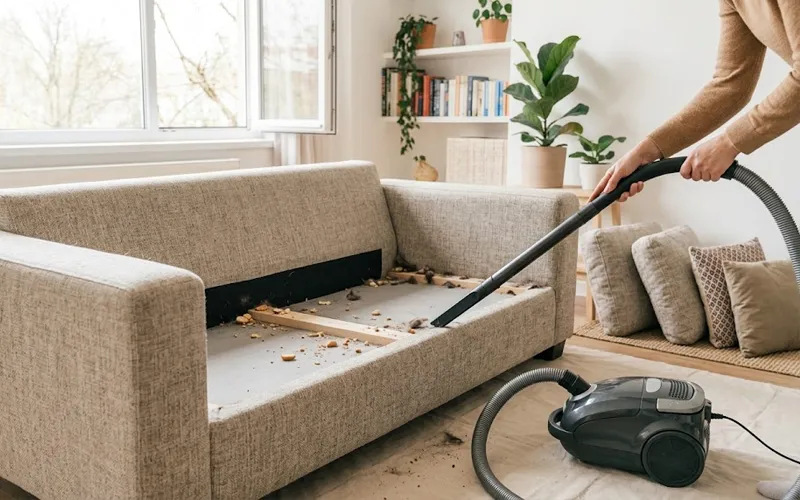
Proper preparation makes steam cleaning more effective because the machine does not have to deal with layers of loose debris first. Remove cushions, throws, pillows, and anything else sitting on the sofa. Vacuum the main upholstery, cushion surfaces, seams, corners, and areas underneath removable cushions.
Pay attention to trapped debris around piping and stitching. These areas often collect crumbs and dust that are easy to miss during a quick vacuum. Removing this material first helps prevent it from becoming damp and harder to remove later.
If the sofa has a noticeable stain, identify what caused it before treating it. Food, grease, ink, pet accidents, and drink stains may require different cleaning approaches. Follow the upholstery manufacturer’s recommendations rather than applying several products together. Mixing cleaning chemicals can create unwanted reactions and may make a stain more difficult to handle.
How to Clean a Sofa With a Steamer Safely
Once the sofa is prepared, set up the steamer according to the manufacturer’s instructions. Use the appropriate attachment for upholstery if one is provided. Avoid experimenting with settings simply because a higher temperature appears to offer stronger cleaning power.
Keep the nozzle moving instead of leaving concentrated steam on one section for an extended period. Work across the upholstery in small areas using controlled passes. The purpose is to loosen dirt and refresh the fabric, not to saturate the padding underneath.
Pay attention to how the material responds as you work. If the upholstery becomes excessively damp, pause the cleaning process and allow the area to dry. A controlled amount of moisture is easier to manage than a sofa that has been heavily saturated.
For larger sofas, work systematically from one section to another. This makes it easier to notice areas that have already been treated and prevents unnecessary repeated passes over the same fabric.
Focus on High-Contact Areas
Not every part of a sofa becomes dirty at the same rate. Armrests, seat fronts, headrests, and frequently used cushions usually experience more contact with skin, clothing, food, and everyday dust.
Instead of repeatedly steaming these areas for long periods, give them controlled attention. Several light passes can be more appropriate than holding the nozzle over a stubborn area. If loosened dirt needs to be removed, use a clean cloth only when it is compatible with the upholstery and recommended by the care instructions.
Aggressive rubbing should also be avoided. Friction can affect the surface of some fabrics, spread a stain, or change the appearance of the fibers. Steam is most useful when it loosens material that can then be removed gently.
Can You Steam Clean a Couch With a Clothes Steamer?
A common question is, can you steam clean a couch with a clothes steamer? In some cases, a clothes steamer may be useful for lightly refreshing upholstery that is approved for steam. However, clothing steamers are primarily designed for garments, so their steam delivery and attachments may not be optimized for deep furniture cleaning.
A clothes steamer may work better for light surface refreshing than for heavily soiled upholstery. It should never be treated as a universal solution for every sofa material. The shape of the nozzle, amount of steam produced, and distance from the fabric can all affect the result.
If you use a clothes steamer, follow its operating instructions and the sofa manufacturer’s care guidance. Avoid prolonged steaming in one place and stop if the fabric shows an unexpected change.
Choosing the Best Steam Cleaner for Furniture
The best steam cleaner for furniture is not necessarily the machine with the highest temperature or strongest steam output. Upholstery requires control because excessive heat and moisture can be more harmful than helpful.
When comparing machines, look for adjustable steam settings, upholstery-friendly attachments, manageable handling, and clear instructions for fabric surfaces. A smaller machine may be easier to control on cushions and tight areas, while a larger unit can be useful for extensive furniture cleaning.
It is also important to understand the difference between steam-only equipment and machines that use water extraction. Some upholstery cleaners are designed to spray cleaning solution and extract moisture, while steam cleaners primarily use heated vapor. Choosing the right type depends on the sofa material and the kind of cleaning you need.
Why You Should Not Use an Iron on a Sofa
People sometimes search for how to steam clean a couch with an iron, but an iron is not designed to clean upholstered furniture. Direct contact with a hot iron can flatten fibers, leave shiny marks, create burns, or damage synthetic materials.
An iron also concentrates heat over a small area, which increases the chance of creating a permanent mark. Even when an iron produces steam, that does not make it equivalent to an upholstery cleaning machine.
For furniture, use equipment intended for fabric surfaces and follow the manufacturer’s recommended method. Avoid improvising with household appliances that are designed for a completely different purpose.
How to Clean a Couch Without a Steam Cleaner
If you are wondering how to clean a couch without a steam cleaner, you can still improve its condition with a careful manual cleaning routine. Start by vacuuming thoroughly to remove loose dust, crumbs, hair, and debris.
For upholstery that permits water-based cleaning, use a suitable fabric-cleaning product according to its instructions. Apply only the amount required rather than soaking the entire sofa. Work gently and avoid spreading moisture unnecessarily into the padding.
Afterward, increase ventilation so the upholstery can dry properly. Fans can help improve air movement, while cushions can be positioned in a way that allows air to reach more surfaces. The cleaning process may vary depending on the type of sofa fabric and its specific care needs.
Is Renting a Steam Cleaner Worth It?
For occasional deep cleaning, a steam cleaner for couch rental can be an alternative to purchasing equipment. Renting can give you access to a larger machine when you only need it for a specific cleaning project.
Before renting, check that the machine is suitable for upholstery rather than only carpets or hard flooring. Ask about the correct attachment, recommended cleaning solution, and moisture-extraction process if the machine uses water.
Read the operating instructions before starting. A powerful machine can create problems when too much water or cleaning solution is applied. The goal should be effective cleaning with manageable moisture, followed by adequate drying time.
Dry the Sofa Thoroughly After Cleaning
Proper drying is just as important as cleaning the upholstery. Even when the fabric feels dry to the touch, moisture may still be trapped inside the cushion or padding.
Improve ventilation in the room and use fans to encourage air circulation when appropriate. Keep cushions separated rather than stacking them together while damp. Avoid covering the sofa with blankets or replacing cushions tightly against one another until they are sufficiently dry.

Proper drying helps prevent musty smells and reduces the chance of moisture remaining trapped inside the upholstery. If the sofa stays noticeably damp for an unusually long time, allow additional airflow before normal use.
What Should You Expect From Steam Cleaning?
The results of steam cleaning depend on the condition and age of the sofa. Before-and-after results can sometimes show a noticeable difference, especially when surface dirt has built up over time. However, steam cannot reverse every type of damage.
Old stains may have permanently changed the fibers or color of the fabric. Grease marks, dye transfer, ink, sun fading, and worn upholstery may remain visible even after careful cleaning. A clean sofa should not necessarily be expected to look brand new.
A good result means that suitable dirt and surface buildup have been reduced while the fabric’s original appearance remains intact. If the material begins to discolor, shrink, become unusually stiff, or develop another unexpected change, stop cleaning rather than applying additional heat.
When Professional Sofa Cleaning May Be Better
Some sofas are better handled by a professional upholstery cleaner. This can be particularly useful when the material is delicate, heavily soiled, expensive, antique, or difficult to identify.
Professional cleaners can assess the upholstery and select a method based on the fabric, construction, and type of contamination. This may be preferable when home equipment cannot provide enough control or when the potential cost of damaging the sofa is high.
Professional cleaning may also be worth considering when odors or stains have penetrated deeply into cushions rather than remaining on the surface.
Final Thoughts
Steam cleaning can be a useful way to refresh a sofa when the upholstery is compatible with heat and moisture. Safe steam cleaning depends on how you handle the fabric, not just on the steam itself. Before you begin, read the sofa’s care label and clear away dust, crumbs, and other loose dirt. Work gently in small areas, keep the moisture under control, and allow the sofa to dry completely before using it again. Do not assume that a powerful machine or higher temperature will automatically produce better results.
Whether you use a dedicated upholstery cleaner, a suitable steamer, a rental machine, or a non-steam cleaning method, careful preparation and proper fabric care will help you clean more effectively while protecting the sofa’s appearance and condition.
Frequently Asked Questions
1. How to clean a sofa with a steamer safely?
Check the care label first, vacuum the sofa, and test a hidden area. Use short steam passes and avoid soaking the fabric.
2. Can I use a clothes steamer to clean my sofa?
Yes, but only on upholstery that allows steam. A clothes steamer is better for light refreshing than deep cleaning.
3. What fabrics should not be steam cleaned?
Delicate and heat-sensitive fabrics may be damaged by steam. Before you start cleaning, read the care instructions provided by the manufacturer.
4. How long does a sofa take to dry after steam cleaning?
Drying time varies by fabric and humidity. Good ventilation and fans can help the sofa dry faster.
5. Can steam cleaning remove old sofa stains?
When learning how to clean a sofa with a steamer, remember that steam may reduce surface stains but cannot remove permanent discoloration or fabric damage.
6. How often should you steam clean a sofa?
Steam cleaning can be done occasionally when the fabric permits it. Regular vacuuming is usually more important for routine care.
7. Is steam cleaning better than cleaning a sofa by hand?
It depends on the upholstery. Steam works well for suitable fabrics, while manual cleaning may be safer for delicate materials.
8. What if my sofa becomes too wet during steam cleaning?
Stop cleaning and allow the sofa to dry with good airflow. Do not add more steam until the upholstery is sufficiently dry.
Want more cleaning tips? Explore helpful cleaning ideas and the latest updates on TrendsMore.com.


