



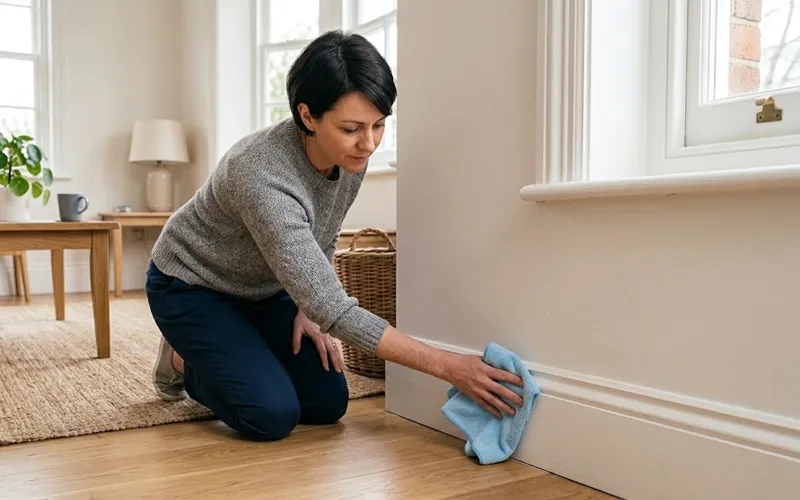
Baseboards collect dust, pet hair, fingerprints, and scuff marks that can make a clean room look untidy. Because they sit close to the floor, they are often overlooked during regular household cleaning. Over time, dirt becomes harder to remove, especially in busy hallways, kitchens, and homes with pets. Learning to clean baseboards easily can help you maintain a fresh-looking home without spending hours scrubbing or damaging the paint.
For everyday cleaning, a microfiber cloth, warm water, and mild dish soap are usually enough. The key is to remove loose dust first, use the right tools, and avoid excessive moisture. With a simple routine, you can remove ordinary dirt and deal with stubborn marks while protecting the finish of your baseboards.
Why Do Baseboards Get Dirty?
Baseboards collect dirt because they sit near the floor, where dust, hair, and small particles accumulate. Foot traffic, open windows, pets, and air circulation contribute to this buildup. Shoes and furniture can also leave dark marks along the lower edges of walls.
Kitchen baseboards may develop greasy residue, while bathroom trim can show moisture-related stains. Light-colored surfaces make these marks particularly noticeable. Regular cleaning prevents grime from building up and reduces the need for intensive scrubbing later.
Supplies You Need for Cleaning
Before starting, gather a microfiber cloth, a soft-bristled brush, a vacuum cleaner with a brush attachment, warm water, mild dish soap, and a dry towel. These supplies are generally suitable for routine cleaning on painted baseboards.
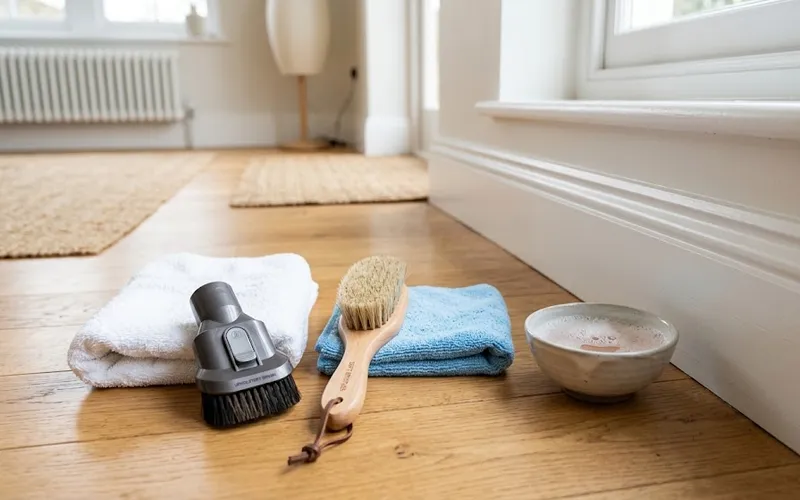
A suitable baseboard cleaner may help with stubborn dirt that soap and water cannot remove. Choose a product designed for your baseboard material and paint finish, and always follow its label instructions. Test the solution on a small, hidden area before applying it to the entire surface.
A baseboard cleaning tool with soft bristles or a washable microfiber pad can also make the task easier. Choose one that reaches narrow edges without scratching the paint or forcing excess moisture into joints.
The Best Way to Clean Baseboards Easily
Start by removing loose dust with a vacuum brush attachment or a dry microfiber cloth. Work along the top edge, corners, and the narrow space where the baseboard meets the floor. Dusting first prevents loose particles from spreading when you begin wet cleaning.
Mix a few drops of mild dish soap into a bowl of warm water. Dip a microfiber cloth into the solution and wring it out thoroughly until it is damp rather than wet. Wipe the surface gently in small sections, using a soft brush to clean decorative grooves and detailed edges.
After washing each section, remove any soap residue with a clean cloth lightly dampened with plain water. Dry the surface with a soft towel to prevent moisture from collecting around joints or along the bottom edge. Following these steps helps you clean baseboards easily without unnecessary scrubbing or harsh chemicals.
How to Clean Baseboards Without Removing Paint
The safest approach depends on the paint finish and its condition. Flat and matte paints can be more sensitive to rubbing than many satin or semi-gloss finishes, so delicate surfaces require extra care.
If you want to know how to clean baseboards without removing paint, apply the cleaning solution to your cloth instead of spraying it directly onto the trim. This gives you better control over moisture and prevents liquid from running into seams or behind the baseboards.
Avoid abrasive pads, stiff brushes, and concentrated cleaning products that may dull the finish. If paint starts transferring onto your cloth, stop cleaning that area. The paint may be old, poorly bonded, or sensitive to moisture. Allow the surface to dry and assess whether repair or repainting is needed.
How to Remove Stubborn Marks
Shoe marks, furniture scuffs, and dried stains may need more attention than ordinary dust. Begin with a damp microfiber cloth and mild soapy water. For marks that do not disappear immediately, hold the cloth against the area briefly to soften the residue, then wipe gently.
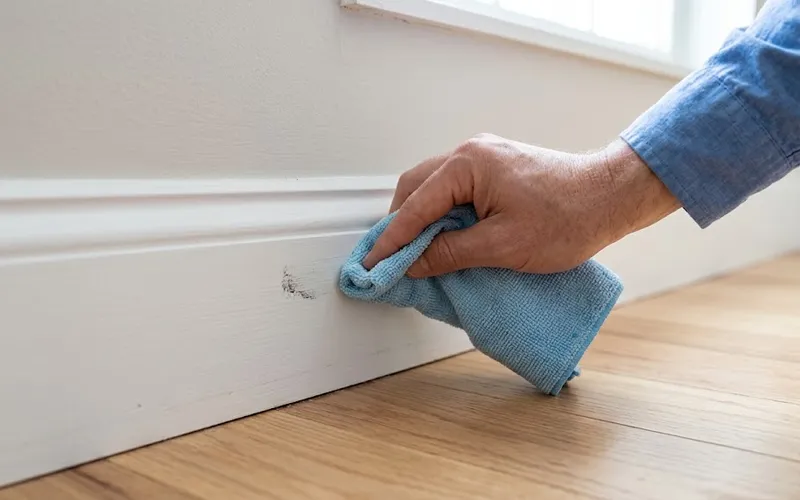
If you are wondering how to clean baseboards with Magic Eraser, remember that a melamine sponge works through abrasion. Although it may remove certain scuffs, it can also dull paint or leave a visibly different patch. Test it in an inconspicuous area first and use very light pressure.
For sticky residue, mild dish soap is a sensible starting point. Some marks may require a specialized product, but check its compatibility with your paint before use. Never mix cleaning products, especially bleach and ammonia-based cleaners, because their combination can release dangerous gases.
Use a Baseboard Cleaner Spray Carefully
A Baseboard Cleaner Spray can be convenient when dealing with greasy residue, fingerprints, and stubborn surface dirt. However, not every spray is suitable for every paint finish, so read the label before applying it.
For better control, spray the product onto a microfiber cloth when the manufacturer’s instructions allow this method. Wipe a small section at a time, then remove any remaining residue as directed on the label. Avoid soaking the trim, particularly around joints and areas where the paint is already peeling.
If a cleaner does not remove a mark after gentle treatment, avoid repeatedly applying more product or increasing pressure. The stain may need a different treatment, or the surface itself may be damaged.
Clean Baseboards While Standing Up
Cleaning close to the floor can cause discomfort if you need to bend or kneel repeatedly. An adjustable duster or long-handled microfiber tool provides an easy way to clean baseboards standing up, especially in large rooms and long hallways.

Choose a tool with a soft, washable pad that can reach the front surface and top edge of the trim. Use it dry for routine dust removal. For deeper cleaning, use a lightly damp pad only if the tool is suitable for wet use and its instructions permit it.
Long-handled tools work well for routine maintenance but may not remove dried stains or dirt from decorative grooves. Keep a microfiber cloth available for areas that need more precise cleaning.
Baseboard Cleaning Hacks That Save Time
Simple baseboard cleaning hacks can reduce the time and effort required to maintain your home. One useful approach is to dust higher surfaces first and clean the baseboards before mopping or wiping the floor. This allows falling dust and debris to be collected during the final floor-cleaning step.
Work around the room in one direction rather than moving randomly between walls. Keep your cloths, brush, and cleaning solution together in a small caddy so you can reach everything without repeatedly stopping.
For routine dust removal, a Swiffer baseboard cleaner or a compatible Swiffer duster attachment can be useful, depending on the model. Follow the manufacturer’s instructions and use an appropriate pad for the surface. These tools are convenient for light dust but may not remove greasy buildup or dried scuff marks, which usually need a damp cloth and gentle cleaning solution.
For homes with pets or frequent foot traffic, dry dusting between deeper cleaning sessions helps prevent dirt from sticking to the surface. This simple habit makes it easier to clean baseboards easily whenever a more thorough wipe is needed.
How Often Should You Clean Baseboards?
For most households, dusting baseboards weekly or every two weeks is a practical routine. A more thorough wipe with a suitable cleaning solution can be done monthly or whenever visible dirt appears. Homes with pets, children, or busy hallways may need more frequent attention.
Kitchen baseboards may require additional cleaning because cooking residue can settle on nearby surfaces. In bathrooms, check for persistent dampness or discoloration rather than repeatedly wiping the same area. If moisture keeps returning, investigate its source before it causes further damage.
Adjust your schedule according to how quickly the baseboards collect dirt. Regular light maintenance is usually easier than removing a thick layer of accumulated grime.
Common Cleaning Mistakes to Avoid
Using too much water can allow moisture to enter joints, affect vulnerable paint, or damage nearby materials. Always wring out your cloth and dry the surface after cleaning. Avoid scrubbing harder simply because a mark is difficult to remove, as excessive pressure can leave scratches or uneven patches.
Another mistake is treating damaged surfaces as ordinary dirt. Peeling paint, soft wood, swelling, and recurring mold may indicate moisture problems or deterioration. These conditions need further inspection and possibly repair rather than stronger cleaning products.
Choose the mildest suitable cleaning method first and follow product instructions when using specialized cleaners. Careful treatment helps preserve the finish and prevents a simple cleaning task from becoming a repair project.
Conclusion
The best way to clean baseboards easily is to remove loose dust first, use a mild cleaning solution for everyday dirt, and treat stubborn marks carefully. Microfiber cloths and soft brushes are usually sufficient for painted surfaces, while long-handled tools can make regular maintenance more comfortable.
Choose cleaning products that suit your paint finish, avoid excessive moisture, and follow a consistent cleaning schedule. These habits help keep baseboards looking fresh, reduce dirt buildup, and make future cleaning sessions quicker without unnecessary paint damage.
Frequently Asked Questions
1. What Is the Best Way to Clean Baseboards Easily?
The best way is to remove loose dust with a microfiber cloth or vacuum brush, then wipe the surface with warm water and mild dish soap. Dry the baseboards afterward to protect the paint.
2. How Often Should You Clean Baseboards?
Dust baseboards weekly or every two weeks, depending on how quickly they collect dirt. Wipe them with a suitable cleaning solution monthly or whenever visible marks appear.
3. How Do You Clean Baseboards Without Removing Paint?
Use a soft microfiber cloth and a small amount of mild soapy water. Avoid abrasive sponges, harsh chemicals, and excessive scrubbing, especially on flat or matte paint.
4. What Is the Best Cleaner for Painted Baseboards?
Mild dish soap mixed with warm water is usually sufficient for everyday dirt. For stubborn stains, choose a cleaner compatible with your paint finish and test it on a hidden area first.
5. How Do You Remove Scuff Marks From Baseboards?
Wipe scuff marks gently with a damp microfiber cloth and mild soapy water. If the marks remain, try a suitable cleaner after testing it in an inconspicuous spot.
6. Can You Clean Baseboards Without Bending Down?
Yes, a long-handled microfiber duster or adjustable cleaning tool can help you clean baseboards easily while standing up. Use a soft pad to remove dust without scratching the paint.
7. Can You Use a Magic Eraser on Painted Baseboards?
Yes, but use caution because a Magic Eraser is mildly abrasive and may dull or remove some paint finishes. Test it in a hidden spot and apply very light pressure.
8. How Can You Keep Baseboards Clean for Longer?
Dust them regularly, clean spills and scuff marks promptly, and wipe them before mopping the floor. Regular light maintenance prevents dirt buildup and reduces the need for intensive scrubbing.
Want more cleaning tips? Explore helpful cleaning ideas and the latest updates on TrendsMore.com.


