



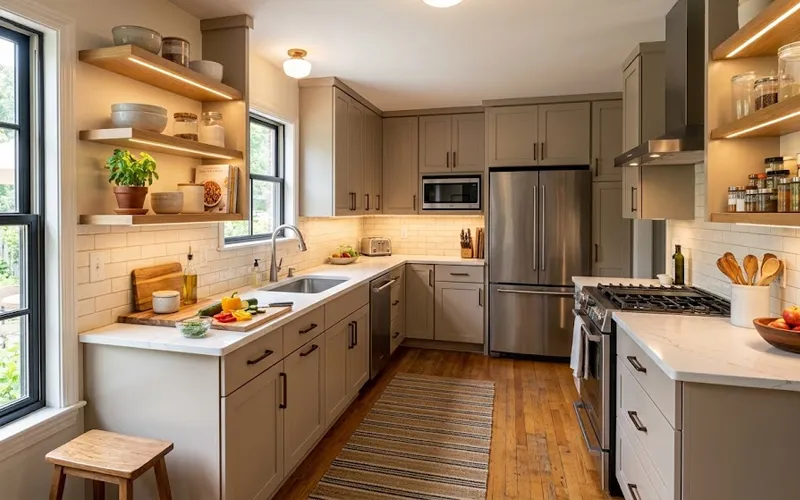
The kitchen is one of the most frequently used spaces in a home, so even small improvements can have a noticeable effect on daily life. However, improving a kitchen does not always require removing cabinets, replacing countertops, changing plumbing, or rebuilding the entire layout. In many homes, the existing structure is still useful but needs better organization, updated finishes, improved lighting, or a more practical arrangement. With the right approach, homeowners can make meaningful changes while keeping most of the original kitchen intact. These kitchen improvements without remodeling can improve appearance, functionality, storage, and comfort without the disruption normally associated with a full renovation.
Before starting any project, it helps to evaluate the kitchen as it currently exists. Look at the condition of the cabinets, walls, work surfaces, lighting, storage areas, and frequently used appliances. Some features may only need cleaning or maintenance, while others may benefit from a cosmetic update. Separating actual problems from simple preferences makes it easier to decide where time and money should be spent.
1. Refresh Cabinet Doors and Hardware
Cabinetry usually occupies a large visual area in a kitchen, which makes it one of the most effective places to begin a cosmetic improvement. If the cabinet boxes are strong, level, and free from serious moisture damage, replacing the complete system may not be necessary. Cabinet doors can sometimes be cleaned, repaired, painted, stained, or refinished depending on the material and existing finish.
Proper preparation is important when painting cabinets. Grease, dust, and cooking residue should be removed before sanding or priming. The correct primer and paint should be selected for the cabinet material, and adequate drying time should be allowed between coats. Rushing preparation can lead to peeling, uneven coverage, or visible brush marks.
Hardware offers another opportunity for a relatively simple update. Handles and knobs can be replaced with designs that better suit the current style of the kitchen. Before purchasing new hardware, homeowners should measure the distance between existing screw holes if they are replacing pulls rather than knobs. This small step can prevent unnecessary drilling and make installation much easier.
Cabinet improvements can also include adjusting loose hinges, replacing worn-out catches, or repairing doors that no longer close evenly. These functional repairs may seem minor, but they can make everyday cabinet use noticeably smoother. For homeowners interested in 2026 kitchen cabinets, current design ideas can also provide inspiration for door profiles, hardware finishes, and practical storage features without requiring a complete cabinet replacement.
2. Improve Task Lighting
Lighting affects how easily people can prepare food, read labels, clean surfaces, and perform other kitchen tasks. A single ceiling light may illuminate the room but still leave important work areas in shadow. Improving task lighting can therefore provide a functional benefit rather than simply changing the appearance of the room.
Under-cabinet lighting is useful because it directs illumination toward the countertop where many food-preparation activities take place. LED strips, bars, and compact fixtures are available in different formats, allowing homeowners to choose an option appropriate for the cabinet design. Some systems can be plugged in, while others may require electrical installation.
The color temperature of the light is another consideration. Cooler light can provide a crisp working environment, while warmer light can create a softer atmosphere. The best choice depends on the existing lighting, wall colors, countertop materials, and the way the kitchen is used.
Lighting should also be positioned carefully. A fixture placed directly behind a person can create shadows across the work surface. Good task lighting should illuminate the working area rather than simply make the room brighter.
3. Make Better Use of Empty Wall Space
Unused wall space can provide additional function without taking up valuable floor area. This is particularly useful in smaller kitchens where adding another cabinet may make the room feel crowded. A narrow shelf can hold cookbooks, selected dishes, containers, or decorative objects without requiring major construction.
Wall-mounted rails can also provide accessible storage for frequently used utensils. However, open storage works best when only useful or visually consistent items are displayed. Too many objects can make a kitchen appear disorganized even when the items are technically arranged.
A blank wall can also be used for visual balance. Artwork, a simple clock, a framed print, or another appropriately sized feature can give the kitchen more personality. When choosing wall additions, consider heat, moisture, and cleaning requirements. Items positioned near cooking areas may collect grease more quickly and should therefore be easy to maintain.
These Small kitchen improvements without remodeling can be especially valuable in compact spaces because they add function without making the floor plan feel crowded. Even a narrow shelf or carefully positioned storage rail can make frequently used items easier to access.
4. Refresh the Backsplash Surface
The backsplash protects walls from splashes, grease, and moisture, but it also contributes significantly to the visual style of a kitchen. If an existing backsplash is structurally sound but looks dated, a surface-focused update may be possible.
Depending on the material, options may include repainting with a suitable coating, refinishing, or installing an appropriate removable covering. Not every backsplash material can safely receive the same treatment, so the existing surface should be identified before selecting a product.
Preparation is especially important in areas exposed to cooking residue. The surface needs to be clean, dry, and free from loose material before any new finish is applied. If tiles are cracked, loose, or affected by moisture behind the surface, a cosmetic solution may not be sufficient.
A backsplash update can also be used to introduce a different visual element without changing the cabinets or worktops. Subtle patterns may complement a traditional kitchen, while simple geometric or textured finishes can support a contemporary design.
5. Maintain and Restore the Countertop
Countertops receive constant use and are exposed to heat, moisture, food, cleaning products, and everyday wear. Before deciding that a countertop needs replacement, homeowners should determine whether the problem is cosmetic or structural.
Some surfaces can benefit from deep cleaning, polishing, resealing, or professional refinishing. Natural stone may require periodic sealing, while laminate, wood, quartz, and other materials have different maintenance requirements. Using a cleaner that is inappropriate for the surface can cause discoloration or damage, so care instructions should be checked first.
Small scratches or marks may sometimes be repaired depending on the material and severity. Major cracks, swelling, separation, or water damage require closer inspection because they may indicate a problem that cannot be solved through surface treatment alone.
Countertop maintenance should also include keeping the area suitable for food preparation. Items that are rarely used can be moved elsewhere, leaving the primary work zone available for cooking. This is not simply a decorative change; an unobstructed preparation area can make everyday tasks easier and safer.
6. Improve the Inside of Cabinets and Drawers
Kitchen storage often appears insufficient because the available space is poorly organized rather than because there is genuinely too little space. Interior organizers can help homeowners use existing cabinets more efficiently without changing their external appearance.
Shelf risers can create additional levels for plates, bowls, or containers. Drawer dividers can separate utensils and prevent smaller items from becoming mixed together. Vertical organizers can make it easier to store cutting boards, baking trays, and similar flat objects.
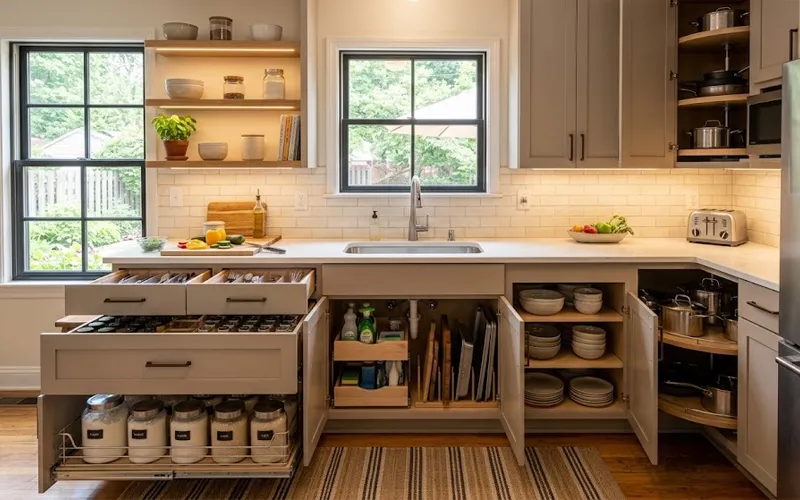
Deep cabinets can also benefit from pull-out solutions that bring stored items closer to the user. This can reduce the need to reach behind multiple objects to find something. However, organizers should be selected according to the dimensions of the cabinet rather than purchased simply because they are popular.
A useful storage system begins with an assessment of what is actually stored in the kitchen. Frequently used items should generally be easier to reach, while seasonal or rarely used equipment can occupy less accessible areas. This approach makes the organization more practical over time.
7. Introduce Natural Materials and Useful Accessories
Decorative details can make a kitchen feel more comfortable without requiring permanent structural changes. Natural materials such as wood, ceramic, woven fibers, and stone-inspired accessories can add texture to a room dominated by hard surfaces.
Wooden boards, ceramic containers, woven baskets, fabric runners, and small decorative objects can be introduced according to the kitchen’s existing style. The purpose is not to fill every available surface but to create a balanced environment.
Plants can also contribute to the atmosphere of a kitchen when suitable natural light is available. Small herbs can provide both decorative and practical value, although their care requirements should be considered before placing them near a cooking area.
Accessories should also be chosen with maintenance in mind. Items positioned near the stove or sink may encounter grease, steam, and water more frequently. Easy-to-clean materials are therefore generally more practical in high-use areas.
8. Use Current Design Trends Selectively
Homeowners do not need to completely remodel their kitchens to incorporate contemporary design ideas. Small kitchen trends 2026 can provide useful inspiration for making limited spaces feel more organized and purposeful. Current design thinking often places greater emphasis on efficient storage, flexible use of space, visual simplicity, and comfortable materials.
The important point is to adapt trends rather than copy them exactly. A homeowner may like the appearance of open shelving, for example, but an existing kitchen may function better with closed storage because of frequent cooking or limited time for cleaning.
The latest Kitchen cabinet trends 2026 can similarly influence smaller projects. Door profiles, handle styles, interior organization, and combinations of finishes can provide ideas for updating an existing kitchen without removing the entire cabinet system.
Advice found in Kitchen improvements without remodeling reddit discussions can also highlight practical experiences with painting, storage, lighting, hardware, and other small updates. However, any recommendation should be considered in relation to the materials, age, and condition of the individual kitchen rather than followed simply because it worked for someone else.
Using trends selectively also reduces the risk of creating a kitchen that quickly feels dated. Permanent changes should generally be based on long-term suitability, while trend-focused elements can be introduced through smaller and easier-to-change details.
9. Select Cabinet Colors According to the Room
Color is capable of changing the perceived atmosphere of a kitchen, but the right choice depends on more than current popularity. The 2026 kitchen cabinet color trends include warm neutrals, earthy greens, muted tones, and natural shades that can create a softer appearance.
Before selecting a color, homeowners should examine the amount of daylight entering the kitchen. A shade that looks light and balanced in a bright showroom can appear significantly darker in a room with limited natural light. Existing flooring, backsplash, walls, appliances, and countertops should also be considered because all of these surfaces influence the final result.
Testing samples is one of the safest ways to evaluate a color. A small painted area can be viewed in morning, afternoon, and evening light before the homeowner commits to the entire cabinet set.
Color can also be used strategically. Lighter shades may help a compact room feel more open, while deeper colors can add visual weight and definition. The goal should be to create a combination that works with the existing kitchen rather than selecting a shade solely because it is currently fashionable.
10. Plan Improvements According to the Budget
The Kitchen improvements without remodeling cost can vary considerably depending on the condition of the kitchen and the type of work being performed. Replacing a few handles requires a very different budget from refinishing cabinets, installing lighting, or hiring a professional for surface restoration.
Creating a project budget before purchasing materials helps homeowners avoid unnecessary spending. It can be useful to separate expenses into materials, tools, professional labor, delivery charges, and unexpected costs. Even small projects can become more expensive when additional preparation or repairs are discovered after work begins.
Homeowners can also complete improvements in stages. A cabinet project might be completed first, followed by lighting or storage upgrades later. This makes it easier to evaluate each change before committing to the next one.
Safety should remain part of the budget decision. Electrical work, plumbing modifications, structural repairs, and certain surface treatments may require qualified professionals. Saving money by performing unsuitable work without the necessary skills can lead to additional repair costs later.
Make Improvements Based on How the Kitchen Is Used
The most useful improvements are usually connected to real problems rather than simply the desire to make a kitchen look different. A household that cooks frequently may benefit from better task lighting and more accessible storage. A kitchen used mainly for quick meals may need fewer cooking-specific changes and more emphasis on clear surfaces and comfortable movement.
Observing daily routines can reveal problems that are easy to overlook. If several people regularly use the same drawer, its organization may need attention. If food preparation always happens in one location, that area may benefit from better lighting or improved access to frequently used tools.
This practical approach also helps homeowners decide which changes are unnecessary. A cabinet that operates correctly, a countertop that remains structurally sound, and a layout that supports daily activities may not need replacement simply because newer designs exist.
Use Remodel Trends as Inspiration Rather Than a Requirement
The latest 2026 kitchen remodel trends can be useful when deciding how to update an existing space, but following every trend is rarely necessary. Design trends are most valuable when they help homeowners discover better ways to use their kitchens.
For example, ideas associated with 2026 kitchen cabinets may inspire changes to handles, finishes, door details, or internal storage without requiring complete cabinet replacement. Similarly, contemporary approaches to lighting or organization can be adapted to an existing floor plan.
A timeless kitchen usually comes from balancing current design ideas with the home’s architecture, the owner’s preferences, and practical requirements. Trends can provide direction, but the final decisions should be based on what will remain useful and comfortable for years.
Choosing Practical Improvements Over a Full Renovation
Not every kitchen requires a major renovation to feel noticeably better. A room may have a solid layout and functional cabinets but still feel inconvenient because of poor lighting, cluttered storage, worn hardware, or outdated surface finishes. Identifying these smaller problems makes it possible to focus effort where it will have the greatest practical effect.
It is also useful to consider the relationship between different improvements. Better cabinet organization can make a countertop easier to keep clear, while improved lighting can make food preparation more comfortable. A carefully selected cabinet color can work with an existing backsplash and flooring rather than forcing changes throughout the room.
This connected approach prevents individual upgrades from looking unrelated. Instead of treating every improvement as a separate project, homeowners can consider how materials, colors, storage, lighting, and accessories work together.
Final Thoughts
A kitchen can become more functional and attractive without undergoing a complete renovation. Cabinet refinishing, hardware changes, task lighting, wall storage, backsplash improvements, countertop care, interior organization, natural accessories, selective trend updates, suitable colors, and careful budgeting each address a different aspect of the room.
The strongest kitchen improvements without remodeling are not necessarily the most expensive ones. Their value comes from solving specific problems and making better use of what already exists. By evaluating the kitchen carefully and improving one area at a time, homeowners can create a space that feels more organized, comfortable, efficient, and visually current while avoiding the unnecessary expense and disruption of a full remodel.
Frequently Asked Questions
1. What are the easiest kitchen improvements without remodeling?
Simple upgrades include changing cabinet hardware, improving lighting, organizing storage, refreshing surfaces, and adding useful wall storage.
2. Can kitchen improvements without remodeling improve a small kitchen?
Yes. Better storage, drawer organizers, wall shelves, and under-cabinet lighting can make a small kitchen more practical without changing its layout.
3. How much do kitchen improvements without remodeling cost?
Costs vary by project. Hardware and organizers are usually affordable, while cabinet refinishing, lighting installation, and professional repairs may cost more.
4. Are kitchen improvements without remodeling worth it?
Yes. Kitchen improvements without remodeling can improve appearance, storage, lighting, and everyday functionality while avoiding the cost and disruption of a full renovation.
5. What kitchen upgrades provide the best value?
Better lighting, cabinet organization, updated hardware, surface maintenance, and practical storage improvements can provide noticeable results without major construction.
6. How can I update kitchen cabinets without replacing them?
Existing cabinets can often be cleaned, repaired, painted, refinished, or updated with new handles and knobs if their basic structure is still sound.
7. Should I follow current kitchen design trends?
Use trends as inspiration rather than rules. Choose colors, materials, lighting, and storage ideas that suit your existing kitchen and long-term needs.
8. When is a full remodel necessary?
Kitchen improvements without remodeling may not be enough when there are serious structural, plumbing, electrical, moisture, or major layout problems.
Want to read more articles like this? Explore more kitchen and bathroom improvement ideas, practical tips, design inspiration, and the latest updates on TrendsMore.com.


