



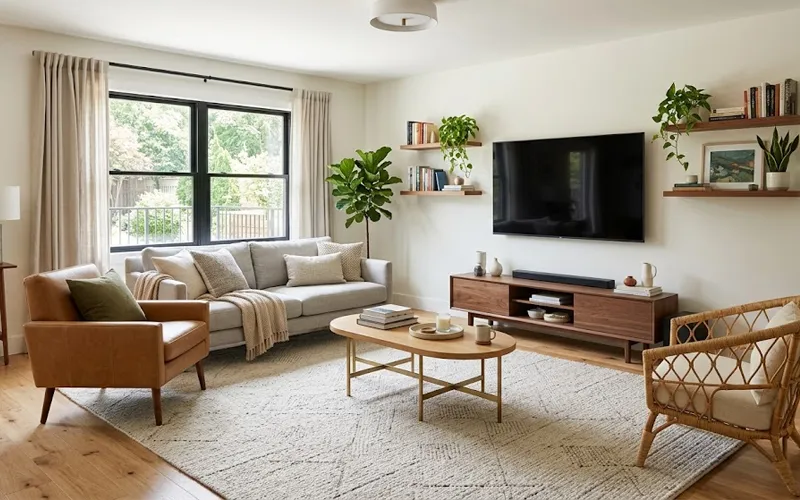
A well-placed rug can instantly make a room feel warmer, more balanced, and more inviting. When it is positioned correctly, it can define a seating area, make furniture feel more connected, improve the visual balance of a space, and create a more comfortable atmosphere. However, even a beautiful rug can look awkward when it is placed without considering the furniture, room size, and walking areas. Learning how to arrange furniture around a rug gives you a simple way to create a layout that looks intentional while still being practical for everyday use.
The right arrangement does not mean that every piece of furniture must sit completely on the rug. Different rooms require different approaches. A living room, bedroom, and open-plan space may all need different rug positions depending on the furniture and available floor area. The key is to create a clear relationship between the rug and the furniture without blocking doors, walkways, or other important parts of the room.
Start With the Main Furniture
Start by looking at the room and finding the furniture that takes up the most visual space. In a living room, the sofa is often the main focus, while in a bedroom, the bed usually becomes the central piece. Use this furniture as a starting point when deciding where to place the rug. Starting with this piece makes it easier to decide where the rug should sit instead of trying to position everything at once.
Think about the function of the area as well. A rug underneath a dining table should support the chairs when they are pulled out, while a living room rug should help define the seating zone. When arranging a bedroom, placing the rug around the bed can add warmth and create a soft, comfortable surface underfoot. Once the main purpose is clear, furniture placement becomes much easier to plan.
How to Arrange Furniture Around a Rug for Living Room
When considering how to arrange furniture around a rug for living room spaces, focus on creating one visually connected seating area. The sofa, chairs, coffee table, and rug should work together rather than appearing like separate objects scattered across the floor.
When you have a spacious living room, choose a large rug that can fit most of the main seating pieces together. This creates a defined zone and can make a large space feel more organized. When space is limited or the rug is smaller than needed, you can still create a balanced look by placing the front legs of the sofa and chairs on the rug. This keeps the seating visually connected while leaving the back portion of the furniture on the floor.
The coffee table should normally sit comfortably within the rug area. There should also be enough space around the seating for people to walk naturally without having to squeeze between furniture pieces. A good layout should look balanced from different viewpoints, including the entrance to the room.
Planning Rug Placement in the Living Room
Good rug placement living room design is not simply about centering the rug in the middle of the floor. The best placement depends on how the furniture is arranged and how the room will be used. If the sofa is slightly offset because of a doorway, fireplace, window, or television, the rug may also need to move with the furniture.
Before buying a rug, check the size of your seating space so it fits the area properly. The rug should have enough width to relate to the main furniture without appearing like a small island underneath one item. At the same time, leaving some visible flooring around the outer edges can help maintain a sense of proportion.
In an open-plan home, a rug can also separate the living area from a dining or kitchen zone without using walls or partitions. Because of this, a rug can improve the overall look of a room while also adding a practical touch.
Rug Placement Living Room With TV
A television changes the way furniture is normally positioned because comfortable viewing becomes an important part of the layout. With rug placement living room with TV, the seating should first be arranged so that people can comfortably see the screen. The rug can then be positioned underneath or around that seating zone.
The sofa will generally face the television, while additional chairs can be placed at an angle if the room allows. Avoid positioning furniture so close together that movement becomes difficult. The rug does not need to extend all the way to the TV console. Its main purpose is to visually anchor the seating area in front of the screen.
If the TV is mounted on a wall, the rug can still remain centered with the seating rather than the television itself. This distinction can be helpful when the room has an unusual shape or when the TV is positioned away from the exact center of the wall.
Understanding Rug Under Couch Rules
There are no universal rug under couch rules, because room sizes and furniture styles vary, but some principles are useful. The rug should look intentional rather than appearing as though it was simply pushed underneath the sofa.
When you have enough space, placing the entire sofa on a large rug can create a balanced and connected look. This approach works especially well in spacious seating areas. For a smaller rug, place it so the sofa’s front legs sit on the rug, while the rear legs stay directly on the floor. This creates a visual connection without requiring a very large floor covering.
Another important consideration is the position of the rug in relation to the sofa. If the rug ends exactly at the sofa’s sides, the arrangement can look cramped. Allowing the rug to extend beyond the furniture usually creates a more complete appearance. The exact amount of extension depends on the room and rug size, so proportion is more important than following one fixed measurement.
How to Arrange Furniture Around a Rug in a Bedroom
Bedroom layouts require a slightly different approach because the bed is usually the dominant piece of furniture. When thinking about how to arrange furniture around a rug in a bedroom, consider both appearance and comfort. The rug should provide a soft landing area without making the room difficult to navigate.
Place a large rug under the bed, leaving enough space for it to reach out on both sides and at the bottom. This creates a defined sleeping area and gives the room a finished look. In a smaller bedroom, a rug may instead be placed near the lower portion of the bed or along one side where it is most useful.
Bedside tables, wardrobes, benches, and other furniture should also be considered. A rug that works with the bed but interferes with a wardrobe door or blocks a walking path may not be the most practical choice.
Rug Placement in Bedroom With King Bed
Because a king bed is wide, it usually needs a generously sized rug to look proportionate. Rug placement in bedroom king bed layouts often works well when the rug extends noticeably beyond both sides of the mattress and continues toward the foot of the bed.
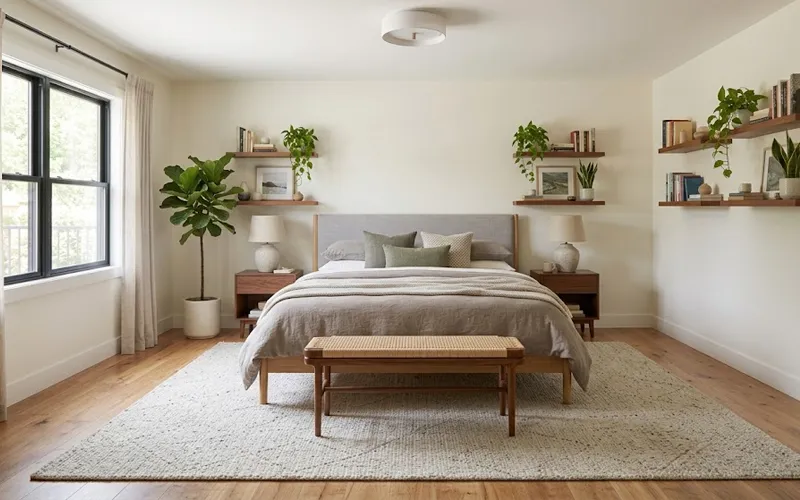
For a large bedroom, the rug can extend far enough to sit beneath the bed and bedside tables, creating a broad foundation for the entire sleeping area. If the room is more limited, positioning the rug under the lower part of the bed can still provide softness and visual balance without covering unnecessary floor space.
The position should also leave enough clearance around wardrobes and doors. A visually attractive rug is only successful if the bedroom remains easy to use.
Rug Placement in Bedroom With Queen Bed
A queen bed gives you more flexibility because it takes up less floor space. For rug placement in bedroom queen layouts, a medium or large rug can often be positioned beneath the lower portion of the bed, allowing the rug to extend on both sides.
In a compact room, a smaller rug or runner can be placed at the foot or beside the bed. This can add comfort without covering most of the available floor. If you have bedside tables, consider whether you want them sitting on the rug or remaining on the floor. Either approach can work when the arrangement is planned according to the room’s proportions.
The important point is to avoid choosing a rug simply because it fits underneath part of the bed. Its size should make the entire bedroom arrangement feel balanced.
Choose the Rug Size Before Finalizing the Layout
Rug size has a direct effect on furniture placement, so it is worth measuring before making a purchase. Start by measuring the area you want to define rather than measuring only the empty floor.
For a living room, consider the complete seating zone. For a bedroom, measure around the bed and determine how much rug you want visible on each side. Also account for doors, cabinets, drawers, and walking routes. This prevents the common mistake of buying a rug that technically fits the room but does not work with the furniture.
If you already own the rug, you can use painter’s tape to mark its approximate dimensions on the floor. This simple method makes it easier to test different furniture positions before doing any heavy lifting.
Consider Traffic Flow and Everyday Use
A furniture arrangement may look attractive in a photograph but still be inconvenient in everyday life. When deciding how to arrange furniture around a rug, always consider how people will enter, leave, sit, and move through the room.
Keep major walking routes clear, especially near doors and frequently used furniture. Make sure chairs can be pulled out without hitting another piece of furniture and that drawers and cabinet doors can open properly. In a living room, leave comfortable access between the seating area and other parts of the home.
It is also worth checking whether the rug itself lies flat. Curled corners or uneven edges can become annoying and may create a tripping hazard. A properly positioned and secured rug should support the room’s function rather than create another obstacle.
Match the Rug Shape to the Furniture
The shape of the rug can influence the overall character of a room. Rectangular rugs are versatile and work naturally with sofas, beds, and longer furniture arrangements. Round rugs can be useful for softening a room filled with straight lines or highlighting a small seating area.
A rug does not always have to follow the exact shape of the furniture. A little difference in color or style can make the overall look more attractive. However, the scale should still feel appropriate. A tiny round rug beneath a large sectional, for example, may not provide enough visual support for the seating area.
Consider the room’s architecture as well. A long rectangular room may benefit from a rug that follows its length, while a compact square seating area may work better with a shape that emphasizes its central arrangement.
Rug Placement With an L-Shaped Sofa
An L-shaped sofa presents a different challenge because its two sections occupy more floor area than a standard sofa. When planning rug placement living room L-shaped couch arrangements, the rug should support the main seating zone instead of looking attached to only one section of the sofa.
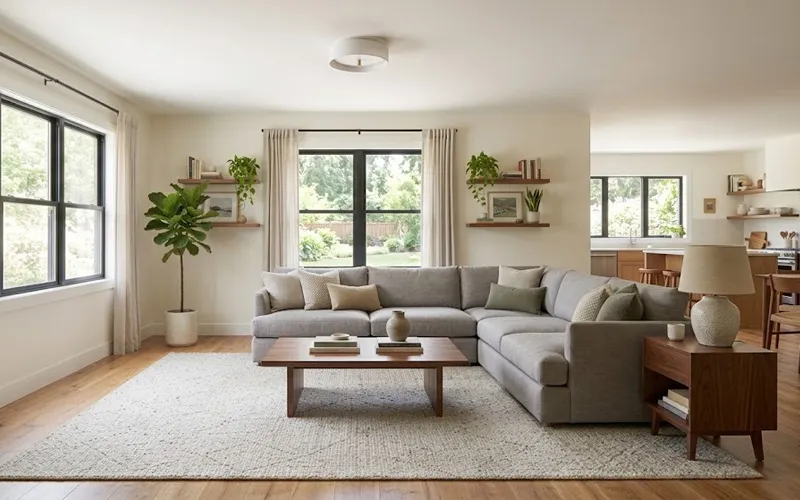
If the rug is large enough, it can sit beneath the central portion of the L-shaped sofa and coffee table, helping the complete seating arrangement feel unified. With a smaller rug, placing it beneath the front section where the two sides of the sofa meet can still establish a clear center for the seating area.
Avoid forcing a small rug deep underneath one arm of the sofa while leaving the other section completely disconnected. The position of the coffee table and the direction people enter the seating area can help determine the most natural placement.
Check the Layout From Different Angles
Once the furniture is positioned, walk around the room and view the arrangement from several directions. Check it from the entrance, from the main seating position, and from other commonly used areas.
This final check can reveal problems that are not obvious when you are standing directly above the arrangement. A rug may look centered from the sofa but appear too close to a doorway. A chair might seem perfectly positioned but make a walking path unnecessarily narrow.
Small adjustments can improve the overall result. Moving the rug a few inches or slightly changing the angle of a chair may be enough to make the room feel more natural.
Common Mistakes to Avoid
One common mistake is choosing a rug that is too small for the furniture arrangement. Another is placing the rug according to the center of the room while ignoring the actual seating or sleeping zone. These choices can make furniture appear disconnected even when each individual item looks good.
Another problem is overcrowding. Adding too many furniture pieces around a rug can make the defined area difficult to use. A well-arranged room needs clear pathways and enough empty space around the main furniture to feel comfortable and open.
It is also easy to focus entirely on appearance and forget practical details. Doors, drawers, walkways, electrical outlets, and frequently used furniture all need to remain accessible. A successful rug arrangement should combine visual balance with everyday functionality.
Final Thoughts
Learning how to arrange furniture around a rug becomes much easier when you stop treating the rug as an isolated decoration and instead use it to support the purpose of the room. The best placement depends on the furniture, room dimensions, rug size, traffic flow, and the way the space is actually used.
Whether you are arranging a standard sofa, planning a TV seating area, working with an L-shaped couch, or positioning a rug beneath a king or queen bed, there is no single arrangement that works for every home. Measure first, start with the main furniture, keep important pathways clear, and adjust the rug until the complete layout feels connected and comfortable.
With these principles in mind, how to arrange furniture around a rug is less about following rigid decorating rules and more about finding a practical relationship between furniture and floor space. A well-planned rug can define the room, improve comfort, and make even existing furniture feel more thoughtfully arranged.
Frequently Asked Questions
1. How to arrange furniture around a rug in a small living room?
Choose a rug that connects the main seating pieces without taking over the room. Placing the front legs of the sofa and chairs on the rug can help create a balanced and open layout.
2. How to arrange furniture around a rug with a sectional sofa?
Place the rug under the central seating area and coffee table so the sectional feels connected. Leave enough open space around the edges for comfortable movement.
3. How to arrange furniture around a rug in a bedroom?
Place the rug under the bed or beneath its lower section, depending on the room size. Make sure it provides comfortable space around the bed without interfering with doors or wardrobes.
4. How to arrange furniture around a rug in an open-plan room?
Use the rug to visually define the living area and separate it from nearby spaces. Keep the sofa and other seating aligned with the rug for a more organized appearance.
5. What size rug works best with a sofa?
When considering how to arrange furniture around a rug, choose one that extends beyond the sofa and gives the main seating area enough visual support.
6. Do all furniture legs need to be on the rug?
No. When deciding how to arrange furniture around a rug, you can place the front legs of the sofa and chairs on it when the rug is too small for all four legs.
7. Should a rug be centered in the room or with the furniture?
It is usually better to align it with the main furniture arrangement. Knowing how to arrange furniture around a rug means focusing on the function and balance of the seating area rather than only the room’s center.
8. How do you make furniture and a rug look balanced?
Good how to arrange furniture around a rug planning involves choosing the right size, keeping walking paths clear, and making sure the rug supports the main furniture without overcrowding the room.
Want more furniture and decor ideas? Explore helpful tips and the latest trends on TrendsMore.com.


