



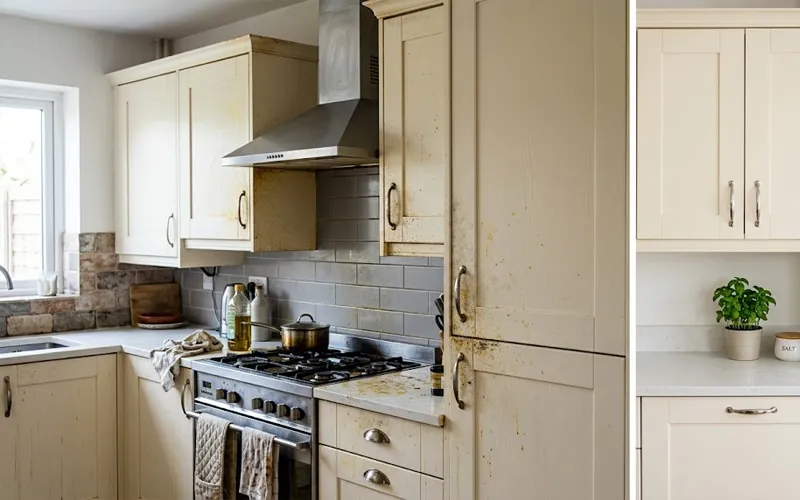
Kitchen cabinets often collect grease, oil, and food splashes during everyday cooking. Over time, these marks mix with dust and form a sticky layer that makes cabinet doors look dull and dirty. The problem is especially noticeable around handles, above the stove, and near cooking areas. Fortunately, you do not always need expensive cleaning products or professional help to restore their appearance. With the right cleaning method, suitable household ingredients, and a little patience, you can remove grease while protecting the cabinet finish.
Learning how to remove grease from kitchen cabinets starts with understanding the cabinet material and the type of dirt you are dealing with. Painted, wooden, laminate, and glossy cabinets can react differently to water and cleaning solutions. Choosing a gentle method helps loosen stubborn grease without causing scratches, discoloration, or damage to the surface.
Why Kitchen Cabinets Become Greasy
Grease builds up when cooking oils, steam, and tiny food particles settle on nearby surfaces. Frying, roasting, and preparing oily foods can spread these particles across cabinet doors and handles. Although fresh splashes are usually easy to clean, grease becomes harder to remove when it remains on the surface for weeks or months.
Cabinets located close to the stove usually collect the most residue because they are exposed to heat and cooking vapors. Areas around handles can also become sticky because they are touched frequently during food preparation. Regular cleaning prevents this buildup from becoming a thick layer that requires extra effort to remove.
Prepare Your Cabinets Before Cleaning
Before applying any cleaning solution, remove items from nearby countertops and check what type of material your cabinets are made from. Look for the manufacturer’s cleaning instructions if they are available. This is particularly important for natural wood, painted finishes, and cabinets with a protective coating.
Start by wiping away loose dust and crumbs with a soft, dry microfiber cloth. Then test your chosen cleaning solution on a small, hidden area and allow it to dry before cleaning the entire surface. Avoid soaking cabinet doors, using abrasive scrubbers, or applying strong chemicals without checking whether they are suitable for the finish. These precautions help prevent scratches, peeling, swelling, and unwanted changes in color.
Use Warm Water and Dish Soap for Everyday Grease
Warm water mixed with a small amount of mild dish soap is one of the easiest ways to remove everyday kitchen grease. Dish soap is designed to help break down oily residue, making it a useful option for many washable cabinet surfaces. It is also a practical starting point when you want to clean cabinets without purchasing a specialized degreaser.
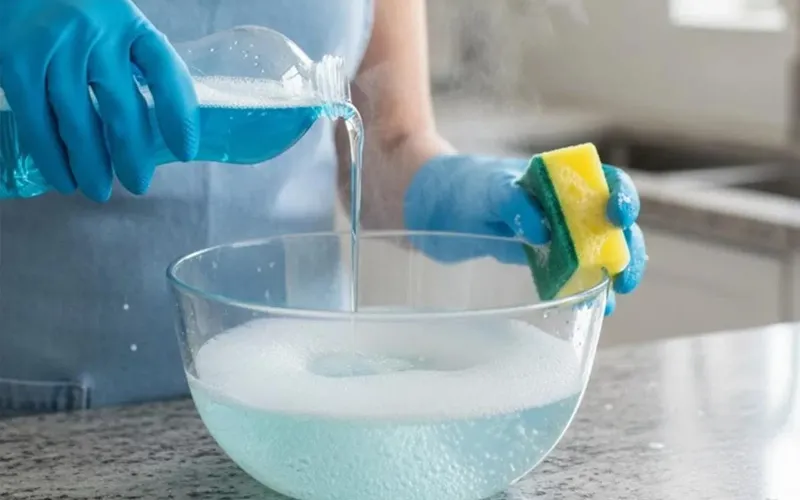
Mix a few drops of dish soap into a bowl of warm water and dampen a microfiber cloth with the solution. Wring the cloth thoroughly so it does not drip, then wipe the greasy areas using gentle, circular movements. Pay attention to corners, edges, and the areas around handles where residue tends to collect. After cleaning, wipe the surface again with a separate cloth lightly dampened with clean water to remove soap residue. Dry the cabinets immediately with a soft towel to prevent moisture from remaining on the surface.
Remove Stubborn Grease with a Gentle Cleaning Solution
Some cabinet surfaces develop a sticky layer that ordinary wiping cannot remove easily. In these cases, repeat the dish soap method and allow the damp cloth to rest against the greasy area briefly before wiping. This gives the solution time to loosen the residue without exposing the cabinet to excessive moisture.
For suitable, washable surfaces, a small amount of a manufacturer-approved kitchen degreaser may help with heavier buildup. Always follow the product instructions and test it in an inconspicuous area first. Avoid mixing cleaning products, especially bleach with ammonia or acidic cleaners, because dangerous fumes can develop. If the grease remains after gentle cleaning, repeat the process rather than scrubbing aggressively. Several light cleaning passes are generally safer than one forceful attempt.
Cleaning Kitchen Cabinets in the UK
For homeowners researching how to remove grease from kitchen cabinets UK, the same basic approach works well: start with mild dishwashing liquid, warm water, a soft cloth, and careful drying. Many everyday cleaning products available in UK supermarkets can help remove grease, but their suitability depends on the cabinet’s material and finish rather than the product’s location or brand.
When choosing a kitchen degreaser, read the label to confirm that it is suitable for your cabinet surface. Some products intended for ovens, extractor fans, or heavy-duty kitchen equipment may be too strong for painted, wooden, or glossy cupboard doors. Follow the recommended dilution, ventilation, and contact-time instructions. If you live in a hard-water area, use a clean cloth with fresh water for the final wipe and dry the surface thoroughly to reduce visible water marks.
For stubborn grease around cooker-side cabinets, clean small sections at a time instead of applying a large amount of liquid across the whole door. This gives you better control over moisture and makes it easier to check whether the finish is reacting to the cleaner.
How to Clean Grease from Wooden Cabinets
Knowing how to remove grease from kitchen cabinets wooden surfaces requires extra care because wood and wood finishes can be sensitive to moisture and harsh chemicals. Natural wood, sealed wood, and painted wooden cabinets do not all respond to cleaning products in the same way. Excess water can enter joints, damage the finish, or cause swelling, while strong cleaners may remove protective coatings.
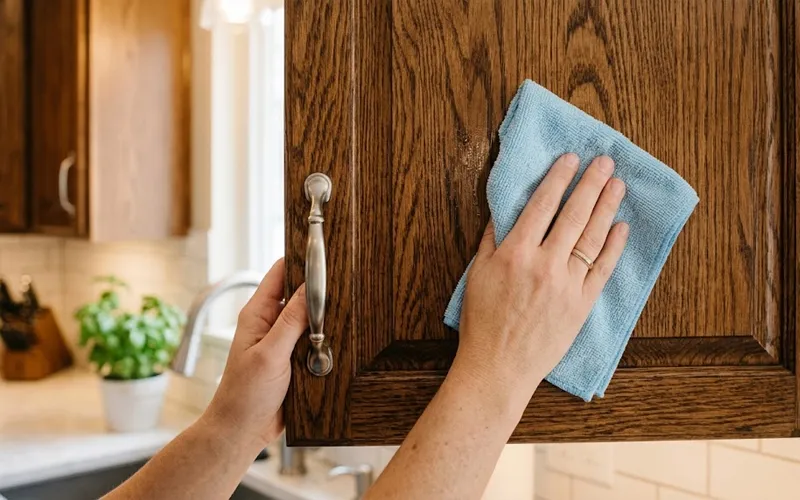
For sealed wooden cabinets, begin with a soft cloth lightly dampened with a mild dish soap solution, provided the manufacturer’s instructions allow it. Gently wipe the greasy area without letting water sit on the surface. Use another lightly dampened cloth to remove any remaining soap, then dry the cabinet immediately with a clean towel. Avoid soaking the wood or spraying large amounts of cleaner directly onto cabinet doors.
Do not assume that vinegar, baking soda, or strong degreasers are safe for every wooden finish. Abrasive powders and rough sponges can leave marks, while acidic solutions may affect certain coatings. If the cabinets are unfinished, antique, waxed, or showing signs of peeling, consult the manufacturer’s guidance or a professional before using a cleaning solution.
Common Cleaning Mistakes to Avoid
One of the most common mistakes is using too much water in the hope of removing grease faster. Excess moisture can damage cabinet edges, joints, and wood-based materials. Another mistake is scrubbing with steel wool, rough scouring pads, or abrasive powders, which may leave scratches or remove paint and protective coatings.
Strong chemicals can also create problems when they are not designed for the surface being cleaned. Avoid mixing different products or using an unfamiliar cleaner without testing it first. Leaving soap or degreaser on the cabinet can cause streaks or a dull appearance, so always follow the recommended rinsing instructions. Gentle cleaning, proper drying, and patience usually provide better results than aggressive scrubbing.
How to Prevent Grease from Building Up Again
Keeping cabinets clean becomes easier when grease is removed before it has time to harden. Wipe fresh splashes as soon as the surface is safe to clean, and give frequently touched areas extra attention during your regular kitchen cleaning routine. Cabinet doors beside the stove and around cooking equipment may need more frequent care than cupboards located farther away.
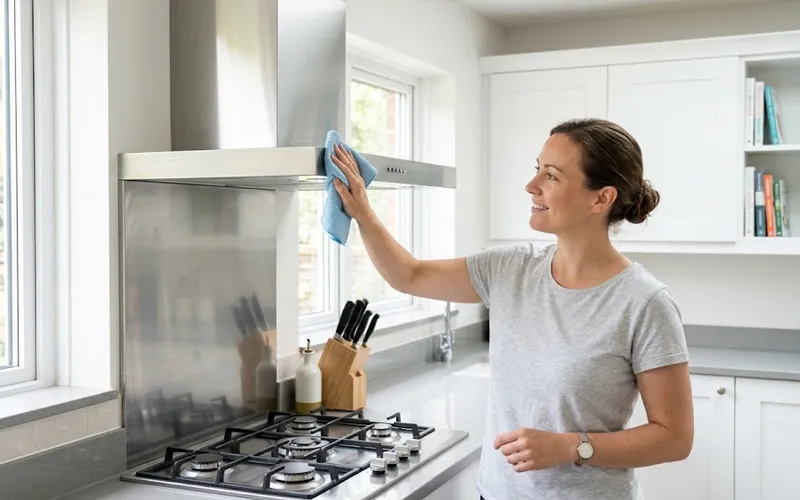
Use your extractor hood or kitchen ventilation while cooking to help reduce airborne grease and moisture. Clean the hood’s grease filters according to the manufacturer’s instructions, since dirty filters can reduce extraction performance. You can also wipe cabinet handles and nearby surfaces regularly with a suitable mild cleaning solution. These simple habits help maintain the cabinet finish and reduce the need for intensive cleaning sessions.
Final Thoughts
Removing grease from kitchen cabinets does not have to be difficult or expensive. Mild dish soap, warm water, a soft microfiber cloth, and thorough drying are often enough to deal with everyday buildup. For heavier residue, repeat the gentle cleaning process or choose a suitable degreaser after checking the product instructions and testing the surface.
The most important step is to match your cleaning method to the cabinet material. Wooden and painted cabinets need particular care, while laminate and other washable finishes may tolerate a wider range of cleaning products. With regular maintenance and the right approach, you can keep your kitchen cabinets looking cleaner without damaging their finish or replacing them.
Frequently Asked Questions
1. What is the best way to remove grease from kitchen cabinets?
Mix a few drops of mild dish soap with warm water. Wipe the cabinets with a soft microfiber cloth, remove soap residue with a clean damp cloth, and dry thoroughly.
2. How do you remove stubborn grease from kitchen cabinets?
Use a mild dish soap solution and repeat the cleaning process gently. For heavy buildup, try a cabinet-safe degreaser after testing it on a hidden area.
3. How do you remove grease from wooden kitchen cabinets?
Use a lightly dampened microfiber cloth with mild soapy water if the wood finish allows it. Avoid soaking the wood, harsh chemicals, and abrasive scrubbers, and dry the surface immediately.
4. Can vinegar remove grease from kitchen cabinets?
Vinegar may help with some cleaning tasks, but it can damage certain cabinet finishes. Check the manufacturer’s instructions before using it, especially on wooden, painted, or delicate surfaces.
5. How do you clean greasy kitchen cabinets without damaging the paint?
Use warm water, mild dish soap, and a soft cloth. Avoid rough sponges, strong chemicals, and excessive moisture that could cause paint to peel or lose its finish.
6. What is the best kitchen cabinet degreaser in the UK?
The best option is a degreaser specifically labeled as safe for your cabinet material. Check the product instructions and test it on a small, hidden area before cleaning the entire surface.
7. How often should you clean grease off kitchen cabinets?
Wipe fresh grease splashes as soon as it is safe to do so. Clean cabinet doors and handles regularly, especially those near the stove, to prevent sticky buildup.
8. Why do kitchen cabinets feel sticky even after cleaning?
Sticky cabinets may have leftover grease or soap residue. Clean the area again with a properly diluted mild dish soap solution, wipe with a clean damp cloth, and dry thoroughly.
Want more cleaning tips? Explore helpful cleaning ideas and the latest updates on TrendsMore.com.


