



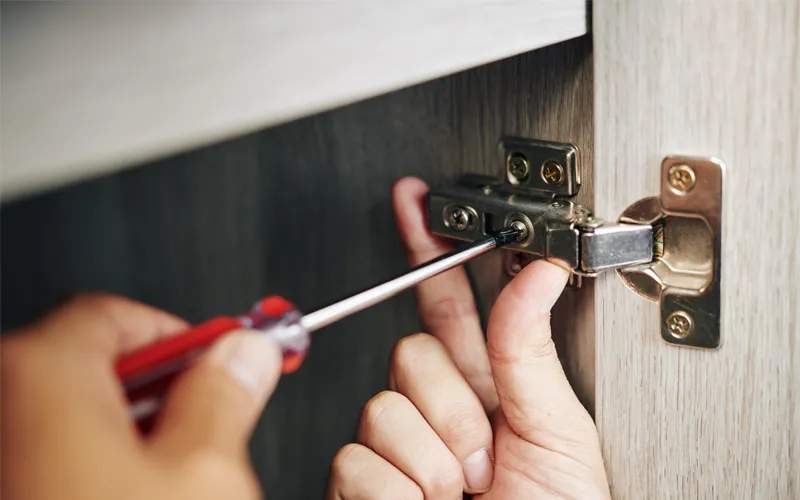
Kitchen cabinet doors are opened and closed many times every day, so it is normal for their hinges to become loose over time. You may notice that a cabinet door hangs unevenly, moves when touched, fails to close properly, or begins to pull away from the cabinet frame. These problems can make your kitchen look untidy and may become worse if left unattended. Fortunately, many loose hinges can be repaired at home with a few simple tools instead of replacing the entire cabinet.
Learning how to fix loose kitchen cabinet hinges starts with identifying the actual cause of the problem. Sometimes, the screws only need tightening, while in other cases, the screw holes have become worn or the hinge itself is damaged. The right repair method depends on the condition of the cabinet door, the hinge, and the material surrounding the screws. With a little patience and careful work, you can often restore the door’s stability without spending much money.
Common Reasons Kitchen Cabinet Hinges Become Loose
Before starting a repair, it helps to understand why the hinges have become loose. Frequent use is one of the most common causes because repeated opening and closing can gradually loosen screws. Heavy cabinet doors, excessive weight, and accidental pulling can also put pressure on the hinge attachments. Over time, these small problems may cause a door to sag, rub against another door, or remain slightly open.
Another common reason is damaged screw holes. When screws are repeatedly tightened, the surrounding wood or particleboard can wear away, making it difficult for the threads to hold securely. Moisture and poor installation may also weaken the material around the hinge. In some cases, the hinge itself is bent, rusted, or worn out. Identifying the cause before making repairs can help prevent the same problem from returning.
Tools You Need for the Repair
Most minor hinge problems can be fixed with basic household tools. A suitable screwdriver is usually the most important item because it allows you to tighten or remove the screws without damaging their heads. Depending on your cabinet design, you may also need a drill, replacement screws, wooden toothpicks, wood glue, a small piece of scrap wood, or a suitable hinge repair plate.
Keep a soft cloth nearby to protect the cabinet finish and clean away dust. If the door is large or heavy, ask someone to support it while you work. This reduces pressure on the remaining hinges and helps prevent the door from falling. Before using any tool, open the cabinet carefully and check whether the hinge is attached to the door, the cabinet frame, or both.
Tighten the Existing Hinge Screws
The simplest way to fix a loose hinge is to check whether its screws have backed out. Open the cabinet door and examine the screws connecting the hinge to the door and the cabinet frame. If any screws appear loose, use the correct screwdriver to tighten them gently. Turn each screw clockwise until it feels secure, but avoid applying excessive force because overtightening can damage the screw hole or strip the screw head.
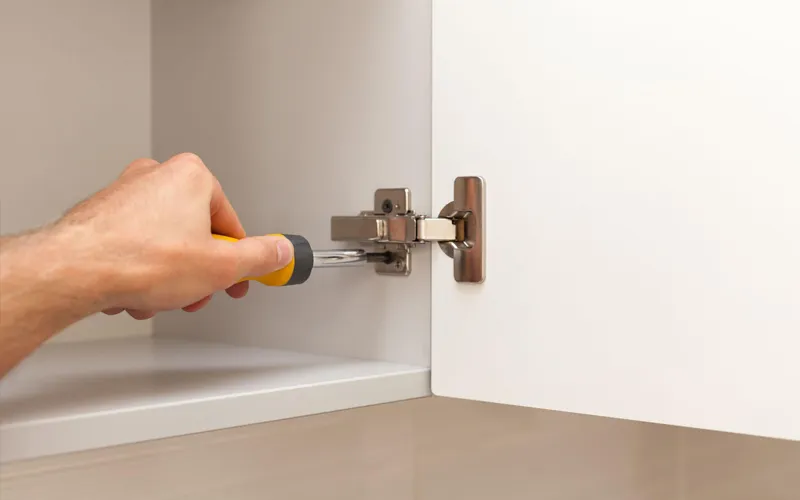
If you are learning how to fix cabinet hinges, check the door alignment after tightening the screws. Close and reopen the door to see whether it sits correctly. If the door is still uneven, inspect the hinge adjustment screws. Many modern European-style cabinet hinges have adjustment points that allow you to move the door slightly from side to side, forward or backward, and up or down. Make small adjustments and check the door after each change. If a screw turns without gripping the material, the problem is probably a damaged screw hole rather than a simple loose fastener.
How to Repair Kitchen Cabinet Door Hinge Holes
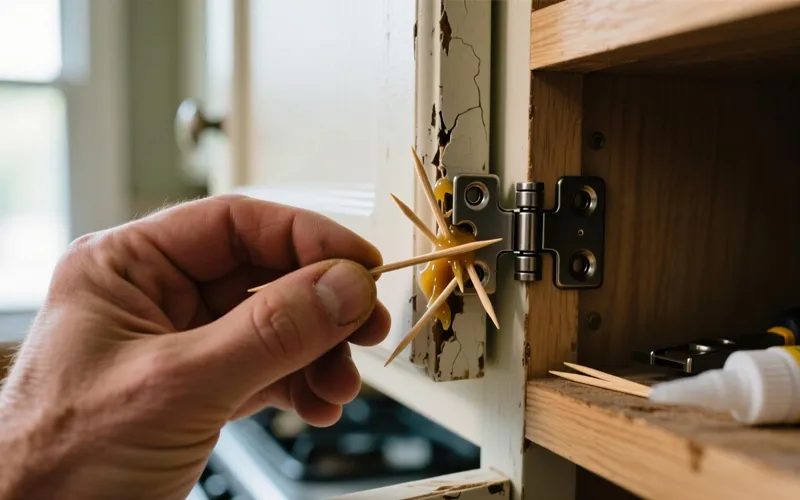
When a cabinet hinge screw hole becomes too wide, the original screw may no longer grip the material securely. To understand how to repair kitchen cabinet door hinge holes, start by removing the screw and checking the condition of the surrounding material. For minor damage in suitable wooden cabinets, place a few wooden toothpicks coated with wood glue into the hole and allow the glue to dry completely according to the product instructions. Trim the excess material, make a small pilot hole, and carefully reinstall the screw.
This method is not suitable for every cabinet, especially when particleboard is crumbling or the mounting area is badly damaged. In such cases, a compatible hinge repair plate or a suitable repair product may provide a stronger solution. Make sure the surrounding material is solid enough to support the hinge before reattaching the door.
How to Fix Loose Hinges Without Replacing the Screws
If you want to learn how to fix loose kitchen cabinet hinges without screws being replaced, first check whether the existing screws are damaged and whether the screw holes can still hold them securely. When the screws are in good condition and have only loosened, tightening them may solve the problem. If a screw spins without becoming secure, the mounting hole may need repair before the original fastener can be reused.
Avoid forcing an oversized screw into the existing hole or using adhesive alone to hold a cabinet hinge in place. If the mounting material has lost its strength, a compatible repair plate or another suitable repair method may be necessary. The goal is to create a secure attachment that can support the door during everyday use.
What to Do When Cabinet Door Hinges Keep Falling Off
Kitchen cabinet door hinges falling off can indicate that the mounting holes are damaged, the screws no longer grip properly, or the hinge has become worn. If you want to know how to fix loose kitchen cabinet hinges with screws, begin by checking whether the existing screws are suitable for the hinge and cabinet material. Replace damaged screws with compatible ones, but repair weakened mounting holes before installing new fasteners.
If the cabinet door hinges keep falling off even after tightening the screws, take the door off carefully if necessary and inspect the hinge mounting area. Look for cracked wood, crumbling particleboard, enlarged screw holes, bent hinge arms, or loose mounting plates. These signs can help you determine whether the issue is with the screws, the hinge, or the cabinet material.
A hinge repair plate can be useful when the original mounting area is damaged but the surrounding cabinet material is still strong enough to support a repair. The plate spreads the attachment across a larger area and provides new mounting points. Choose a plate designed for your hinge type and cabinet construction, and follow its installation instructions. If the hinge is bent, badly corroded, or no longer moves smoothly, replacing it with a compatible hinge may be the better option.
If you are searching for how to fix hinge on cabinet door that has come undone, check both the hinge attachment and the condition of the cabinet surface before reinstalling it. If the mounting holes are too damaged to hold the screws securely, repair them first rather than repeatedly tightening the same fasteners.
If the cabinet door remains uneven even after the screws are secure, check the hinge adjustment points and mounting plate. Some hinges allow small alignment changes without removing the hardware. If the door continues to sag, inspect the hinge for wear and make sure the mounting points are firmly attached. A cracked cabinet frame or crumbling panel may require a more substantial repair before the door can be safely used again.
How to Keep Cabinet Hinges Tight for Longer
Once the repair is complete, a few simple habits can help keep your kitchen cabinet doors in good condition. Avoid pulling doors sideways or allowing them to slam shut, as these actions put extra pressure on the hinges. Check the screws occasionally, particularly on frequently used cabinets, and clean away grease and dust that may collect around the hinge mechanism.
It is also worth checking whether the cabinet door is too heavy for its hinges or whether the hinges are correctly positioned. If the door repeatedly sags despite a secure installation, the hinges may be worn or unsuitable for its weight. Replace damaged hardware instead of continuing to tighten it, and address moisture problems that could weaken the cabinet material. Regular inspection can help you catch small issues before they require more extensive repairs.
Final Thoughts
Learning how to fix loose kitchen cabinet hinges can help you handle a common household repair without replacing the entire cabinet. Tightening loose screws, adjusting the door, or repairing a worn mounting hole can help restore stability when the hinge and surrounding cabinet material are suitable for repair.
The best repair depends on the cause of the problem. If the hinge is damaged or the mounting area is badly weakened, replacing the hardware or repairing the cabinet material may be necessary. Inspecting the hinges regularly and handling cabinet doors carefully can help prevent similar problems in the future.
Frequently Asked Questions
1. How do you fix loose kitchen cabinet hinges?
Tighten the hinge screws with a suitable screwdriver. If the screws do not hold securely, check for damaged screw holes and repair them if needed.
2. Why do kitchen cabinet hinges become loose?
Frequent use, heavy doors, loose screws, and damaged screw holes are common causes. Moisture can also weaken the cabinet material.
3. How do you fix loose cabinet hinges without replacing screws?
Tighten the existing screws if they are in good condition. If a screw spins without gripping, repair the damaged hole before reinstalling it.
4. How do you repair kitchen cabinet door hinge holes?
For minor damage in suitable wooden cabinets, use wood glue and toothpicks to fill the hole. Let it dry before reinstalling the screw.
5. Can stripped screws cause loose cabinet hinges?
Yes, damaged screw heads or worn screw holes can prevent hinges from staying secure. Replace damaged screws or repair the holes as needed.
6. What should you do if cabinet hinges keep falling off?
Inspect the screws, hinge, and mounting area. Repair damaged holes or use a compatible hinge repair plate if the surrounding material is strong enough.
7. How much does it cost to fix loose kitchen cabinet hinges?
Tightening screws may cost nothing if you already have the tools. Replacement screws, repair plates, or new hinges add to the total cost.
8. How can you prevent kitchen cabinet hinges from becoming loose?
Avoid slamming doors, check screws regularly, and fix damaged holes promptly. Replace worn hinges when tightening no longer solves the problem.
Want to read more articles like this? Explore more kitchen and bathroom improvement ideas, practical tips, design inspiration, and the latest updates on TrendsMore.com.


