



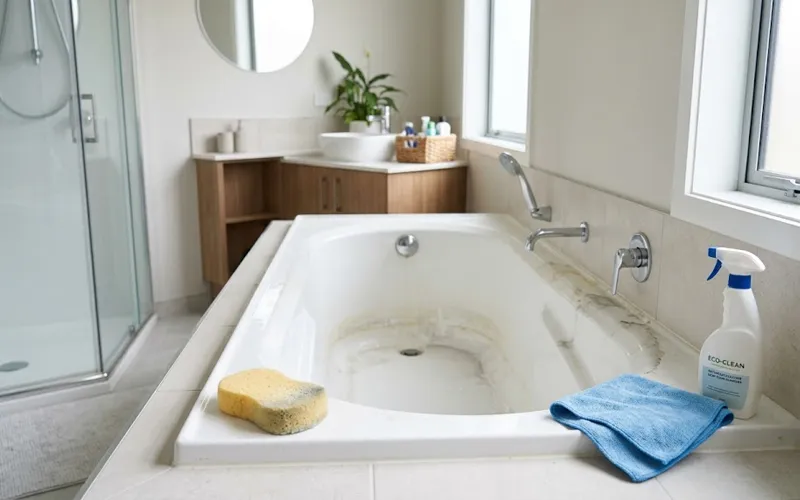
A bathtub can gradually turn yellow or lose its shine because of soap scum, hard water deposits, body oils, and mineral buildup. Even regular rinsing may not remove these residues, allowing stains to become more noticeable over time. The right cleaning method can improve the appearance of many stained bathtubs without expensive products or professional help.
Learning how to clean a bathtub to make it white again begins with identifying the bathtub material and the cause of the discoloration. Porcelain, enamel, acrylic, and plastic surfaces have different cleaning requirements. Using an unsuitable product can scratch the finish or make the discoloration worse. With a compatible cleaner and the correct technique, you can remove many surface stains while protecting your bathtub.
Why Tubs Turn Yellow
Yellow stains can develop when soap combines with minerals in hard water and mixes with body oils, shampoo, and other bathroom products. This residue gradually forms a dull layer that ordinary rinsing cannot remove. Mineral deposits may also collect around the drain, waterline, and areas where water frequently remains.
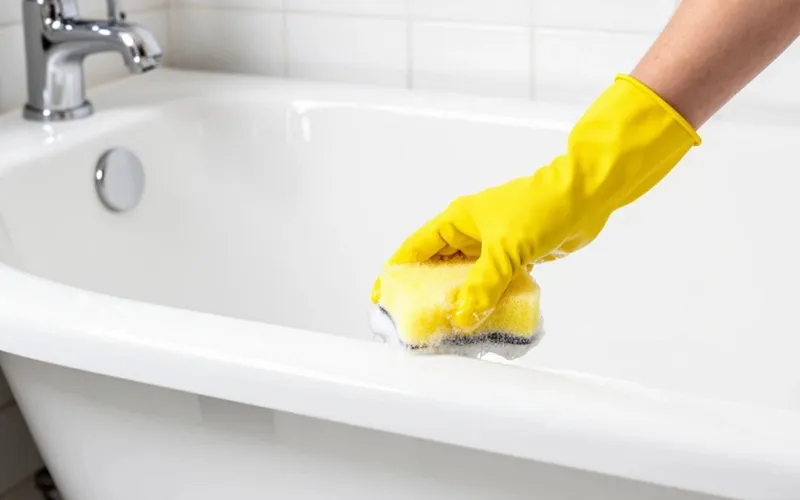
The bathtub material itself can contribute to discoloration. Older acrylic and plastic tubs may become yellow with age, chemical exposure, or surface deterioration. Enamel and porcelain surfaces can also lose their original appearance when their protective finish becomes worn or damaged.
Before selecting a cleaner, examine the stain. A surface that feels coated with residue may need soap scum removal, while chalky marks may indicate mineral deposits. If the surface is rough, peeling, or permanently discolored, cleaning alone may not restore its original color.
Start with Gentle Cleaning
The safest starting point is a mild, nonabrasive cleaner approved for your bathtub. Remove bottles, bath mats, and accessories, then rinse the tub with warm water to loosen loose dirt. Apply the cleaner according to its label, paying attention to stained areas and the waterline.
Use a soft sponge or microfiber cloth to wipe the surface gently. Allow the product to work for the recommended contact time, but do not let it dry on the bathtub. For stubborn residue, repeat the cleaning process if the product instructions permit rather than scrubbing harder.
Rinse the entire surface thoroughly and dry it with a clean towel. This removes leftover cleaning solution and makes remaining stains easier to identify. If the bathtub is still discolored, determine whether the problem is soap scum, mineral buildup, rust, or damage before trying another treatment.
Natural Cleaning Options
People searching for how to clean a bathtub to make it white again naturally can begin with mild household ingredients, provided they are compatible with the bathtub’s finish. Natural products may help with ordinary residue, but they cannot reverse every type of discoloration.
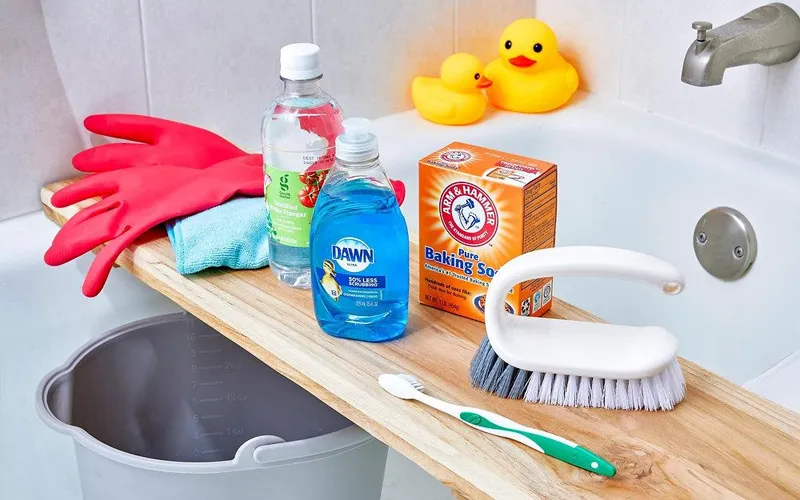
Baking Soda
Baking soda may loosen some light surface grime. Dampen the stained area, apply a small amount of baking soda, and gently wipe it with a soft, wet cloth. Rinse thoroughly after cleaning.
Because baking soda can be mildly abrasive, avoid vigorous rubbing, particularly on acrylic and plastic surfaces. If the manufacturer recommends avoiding powders or abrasive products, use a compatible liquid cleaner instead.
Dish Soap
Mild dish soap mixed with warm water can help remove oily residue from body products and everyday bathroom use. Apply the solution with a soft sponge, wipe the affected area, and rinse away the remaining soap.
This method is useful for routine cleaning but may not remove heavy mineral deposits or deeply discolored surfaces. It is a practical first option when the bathtub looks dull because of accumulated everyday grime.
White Vinegar
White vinegar can dissolve certain hard water deposits, but its acidity makes it unsuitable for some bathtub materials and finishes. Check the manufacturer’s instructions before using vinegar, and follow any recommended dilution and contact time.
If acidic cleaners are not approved for your bathtub, choose a compatible hard-water remover. Never mix vinegar with bleach or other cleaning chemicals, as dangerous fumes or harmful reactions may occur.
Cleaning at Home
Understanding how to clean a bathtub to make it white again at home means matching the cleaning product to the stain instead of using the strongest available chemical. For ordinary soap scum, a suitable bathroom cleaner may be sufficient. For chalky mineral marks, a product specifically designed for hard water deposits may work better.
Pay attention to the corners, overflow cover, drain, and joints where the bathtub meets the wall. These areas often collect residue that makes the whole tub look dirty. Use a soft brush only when necessary, particularly around seals and fittings that could be damaged by excessive pressure.
After cleaning, rinse away all product residue. If a stain remains, avoid immediately applying another chemical over the first one. Make sure the previous product has been completely rinsed away and follow the instructions for any subsequent treatment.
Plastic and Acrylic Tubs
Plastic and acrylic bathtubs need extra care because their surfaces can scratch more easily than some traditional porcelain tubs. Fine scratches may trap dirt and make the finish look dull, even after cleaning. Rough scouring pads, steel wool, and unapproved solvents can cause further damage.
To learn how to get a plastic bathtub white again, start with a mild, nonabrasive cleaner labelled as safe for plastic or acrylic. Apply it with a soft sponge, follow the recommended contact time, and rinse thoroughly. If discoloration remains, use a specialist cleaner approved for that particular material.
Avoid assuming that every plastic tub can tolerate bleach, vinegar, or abrasive powders. Different finishes have different limitations, so the manufacturer’s care instructions should guide your choice.
If suitable cleaning products do not improve the color, the yellowing may be caused by aging, chemical damage, or deterioration within the surface. A manufacturer-approved restoration product or professional refinishing may be more effective than repeated household treatments.
Choosing a Cleaner
A suitable bathtub whitener cleaner should target the actual cause of the discoloration while remaining safe for the bathtub material. Products designed for soap scum, mineral deposits, rust, and general bathroom grime are not interchangeable.
Read the label before purchasing a cleaner. Check which surfaces it can be used on, how long it should remain in contact with the stain, and whether gloves or additional ventilation are required. A nonabrasive product is often a sensible starting point for delicate finishes.
Be cautious with products advertised as instant whiteners. A cleaner may remove surface residue without repairing a worn or damaged finish. If the original coating has deteriorated, a specialist restoration treatment may be needed to improve the appearance.
Removing Stubborn Yellow Stains
If you are wondering how to clean a bathtub to make it white again after months of buildup, begin by identifying the type of stain rather than repeatedly scrubbing the same area. Different stains respond to different treatments, and an unsuitable product can damage the surface.
For rust-colored marks, select a rust remover specifically labelled as safe for your bathtub material. For hard water deposits, use an approved mineral-removal product. Soap scum generally requires a cleaner formulated to remove soap residue and oily buildup.
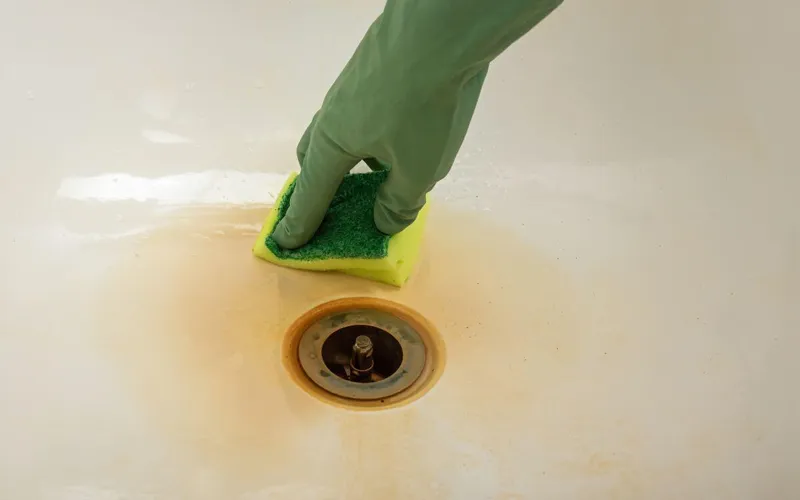
Follow the product’s contact time carefully. More time or stronger chemicals do not necessarily produce better results. If the bathtub remains yellow after appropriate cleaning, inspect the finish for scratches, fading, peeling, or other signs of deterioration.
The question of how to whiten a yellowed bathtub does not always have a simple cleaning solution. Surface stains may respond well to compatible products, but permanent discoloration may require professional advice or refinishing. Avoid concentrated chemicals and untested mixtures in an attempt to force the surface back to its original color.
Common Cleaning Mistakes
Using abrasive pads is a common mistake because they can scratch delicate finishes and create areas where dirt collects more easily. Choose soft cleaning tools and avoid applying excessive pressure to stubborn stains.
Another mistake is leaving a product on the bathtub longer than directed. Even a suitable cleaner can damage certain finishes when used incorrectly. Always follow the label and rinse thoroughly.
Never combine bleach, vinegar, ammonia, or other household cleaning chemicals. Use one compatible product at a time, and ensure the previous cleaner has been completely rinsed away before changing treatments.
Finally, do not keep repeating a method that produces no improvement. Persistent yellowing may indicate material aging or damage rather than removable dirt. Recognizing this early can prevent unnecessary surface damage.
Preventing Future Stains
Regular maintenance helps prevent soap scum and mineral deposits from becoming difficult to remove. After bathing, rinse away shampoo, body wash, and loose residue. Wiping the surface with a soft cloth reduces moisture and helps limit water spots.
Clean the bathtub regularly with a product approved for its material. The frequency will depend on how often the tub is used and how quickly residue develops. Pay particular attention to the waterline, drain, and corners before buildup becomes heavy.
Good bathroom ventilation helps reduce excess moisture around the tub and surrounding seals. If your home has hard water, rinsing and drying the surface can help manage mineral marks between cleaning sessions.
Conclusion
Restoring a yellow bathtub starts with identifying the cause of the stains and choosing a compatible cleaning method. Mild cleaners can often remove everyday grime, soap scum, and some mineral deposits, while stubborn stains may require specialist products. A worn or permanently discolored finish may need professional restoration.
When deciding how to clean a bathtub to make it white again, prioritize the bathtub material, follow product instructions, and avoid abrasive tools or chemical mixtures. Regular rinsing, gentle cleaning, and drying help prevent buildup and maintain a brighter appearance over time.
Frequently Asked Questions
Can baking soda make a yellow bathtub white again?
Baking soda may help loosen light surface grime, but it cannot reverse every type of yellowing. Check whether it is suitable for your bathtub finish and avoid vigorous scrubbing.
What is the safest cleaner for a yellow bathtub?
A nonabrasive cleaner approved for your bathtub material is a good starting point. Choose a product designed for the specific stain, whether it is soap scum, mineral deposits, or rust.
Can bleach remove yellow bathtub stains?
Bleach may help with certain stains on compatible surfaces, but it will not correct every type of discoloration. Use it only when permitted by the manufacturer, follow the label, and never mix it with other cleaning products.
Why is my bathtub still yellow after cleaning?
The cause may be mineral deposits, remaining soap scum, surface scratches, aging plastic, or a damaged finish. If suitable cleaning does not improve the color, the problem may require restoration rather than further scrubbing.
Is vinegar safe for every bathtub?
No. Vinegar can damage some finishes because it is acidic. Check the manufacturer’s instructions before using it, and never mix it with bleach.
How often should I clean my bathtub?
A quick rinse after bathing and regular cleaning, often weekly, can help prevent heavy buildup. Adjust the routine according to usage, water quality, and the bathtub manufacturer’s recommendations.
Can a plastic bathtub become permanently yellow?
Yes. Aging, chemical exposure, and surface deterioration can cause lasting discoloration. If an approved cleaner does not improve the color, consider a suitable restoration product or professional refinishing.
Want to read more articles like this? Explore more kitchen and bathroom improvement ideas, practical tips, design inspiration, and the latest updates on TrendsMore.com.


