



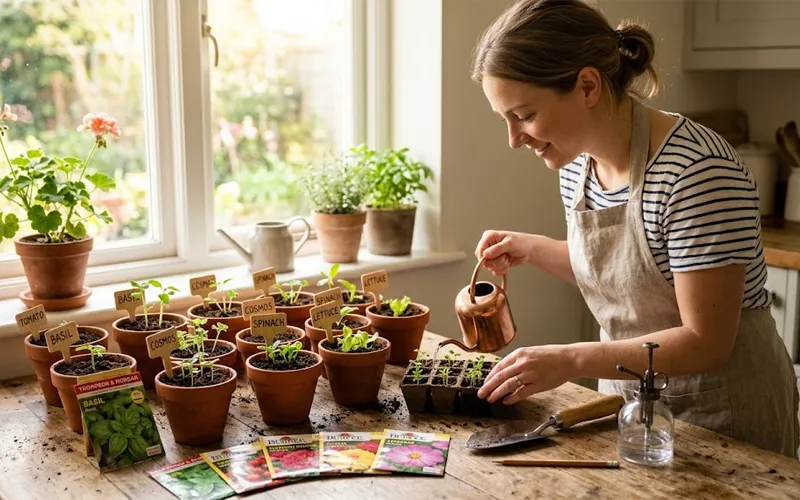
Growing plants from seeds is an affordable way to bring fresh herbs, vegetables, and flowers into your home. You only need suitable seeds, containers, a quality growing mix, and the right conditions to get started. Learning how to grow plants from seeds at home allows you to choose varieties that suit your available space and gardening experience. With a simple routine and a little patience, beginners can raise healthy seedlings without needing a large garden or expensive equipment.
Choose Suitable Seeds
Start with easy-to-grow varieties such as basil, coriander, lettuce, spinach, radishes, and marigolds. These plants are suitable for many beginner gardening projects, although their needs differ according to the variety. If you have enough sunlight and room for larger containers, you can also try compact tomatoes or peppers.
Check the seed packet before planting because it provides useful details about germination time, planting depth, temperature, and spacing. Choose fresh seeds from a reliable supplier and select varieties that match your indoor conditions. Growing two or three types initially makes it easier to monitor their progress and understand their individual requirements.
Prepare Pots and Growing Mix
Clean nursery pots, seed trays, or reusable containers can provide a suitable starting place for young plants. Every container should have drainage holes to prevent excess water from collecting around the roots. Wash reused containers before planting to remove soil residue and reduce the risk of carrying plant diseases.
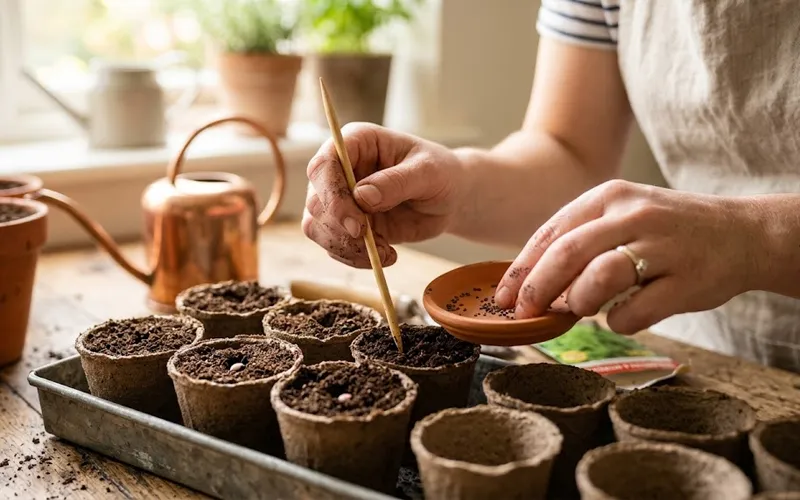
For how to grow plants from seeds at home in pots, choose a lightweight seed-starting mix instead of ordinary garden soil. A suitable mix holds enough moisture for germination while allowing air to reach developing roots. Fill the containers without compressing the medium, leaving a small gap at the top for watering. Moisten it evenly before sowing so the seeds have a suitable environment from the beginning.
Plant Seeds Correctly
Understanding how to plant a seed step by step helps prevent common planting errors. First, read the packet instructions to determine whether the seeds should be covered with soil or left on the surface. Many seeds are planted at a depth of approximately two to three times their diameter, but some small varieties require light for germination and should not be buried.
Place the seeds at the recommended depth and cover them gently when necessary. Leave enough space between them to reduce competition as seedlings develop. Water carefully with a spray bottle or gentle stream to avoid washing the seeds away. Label each container with the variety and planting date so you can track germination and identify your seedlings later.
Encourage Germination
Seeds begin to germinate after absorbing enough water to activate the processes needed for growth. Temperature requirements and sprouting times vary by plant, so follow the guidance on the packet rather than expecting every variety to emerge at the same time.
If you want to learn how to germinate seeds quickly indoors, focus on providing consistent warmth, suitable moisture, and enough oxygen around the seeds. Keep the growing medium damp but never waterlogged. A transparent cover can help retain humidity before sprouting, but remove it or provide ventilation once seedlings emerge. Excessive moisture and poor airflow can encourage mold and seed rot, so check the containers regularly.
Provide Adequate Light
After seedlings emerge, they need sufficient light to develop strong stems and healthy leaves. Place containers near a bright window that provides the amount of sunlight required by the chosen variety. If natural light is insufficient, especially during cloudy periods, use a suitable grow light and follow its recommended distance and duration.
Seedlings that become unusually tall, thin, or tilted toward a window may need stronger or more evenly distributed light. Rotate containers periodically to encourage balanced growth. Avoid assuming that all plants need intense direct sunlight, as some varieties grow better with indirect light or partial shade.
Care for Growing Seedlings
When the first true leaves appear, seedlings begin developing foliage that more closely resembles the mature plant. Continue watering according to the moisture level of the growing mix rather than following a rigid daily schedule. Small containers may dry quickly, but constantly saturated soil can damage delicate roots.
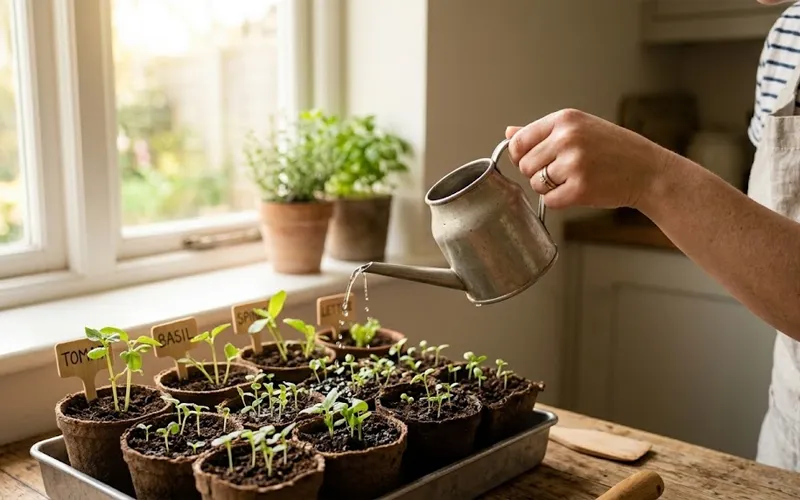
If multiple seedlings are growing too closely together, remove weaker ones to give the remaining plants adequate room. When a seedling develops several true leaves and outgrows its original container, transplant it carefully into a larger pot. Handle it by the leaves rather than squeezing the stem, and disturb the roots as little as possible. Use fertilizer only when appropriate for the plant’s stage of growth, following the product instructions.
Prevent Common Growing Problems
Overwatering, inadequate light, overcrowding, and unsuitable temperatures are frequent causes of weak seedlings. Before changing your care routine, identify the likely problem by examining the leaves, stems, soil, and growing environment. Yellow leaves, for example, can have several causes, so adding fertilizer without checking other conditions may not solve the issue.
If mold appears on the soil surface, improve ventilation and allow excess moisture to escape. Make sure containers drain properly and avoid placing seedlings near strong heat sources or areas with sudden temperature changes. When germination seems slow, compare the elapsed time with the seed packet before assuming the seeds have failed.
Understand Plant Growth Through Examples
Different plants illustrate how seeds develop into mature specimens. Beans typically produce a root first, followed by a shoot that emerges above the soil. Lettuce develops tender leaves, while tomato seedlings form stronger stems and distinctive foliage as they mature. Marigolds gradually develop leafy growth before producing flowers.
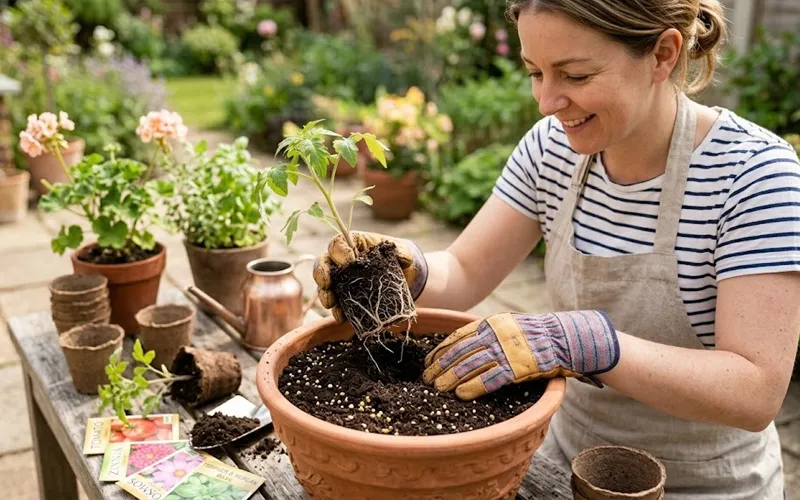
These plants grow from seeds examples demonstrate the main stages of development. A seed contains an embryo and stored food that support its earliest growth. Once leaves develop, the young plant uses sunlight to produce energy through photosynthesis, while its roots absorb water and nutrients. Recognizing these stages helps you distinguish normal development from problems that require attention.
Maintain Healthy Plants Indoors
Successful indoor gardening depends on adjusting care as plants grow. Inspect leaves for discoloration, check the soil before watering, and remove dead plant material when necessary. Keep enough space between containers for air circulation, and clean pots or tools when moving between plants to reduce the spread of potential diseases.
Some varieties remain compact enough to grow indoors, while others eventually need larger containers or an outdoor location with suitable conditions. Before moving indoor-grown seedlings outside, gradually introduce them to outdoor sunlight, wind, and temperature changes over several days. This process helps reduce transplant shock and prepares them for a different environment.
Final Thoughts
Learning how to grow plants from seeds at home becomes easier when you follow the needs of each variety instead of relying on a single routine for every plant. Select suitable seeds, prepare well-drained containers, sow them at the correct depth, and provide appropriate light and moisture throughout their development.
For beginners, growing seeds indoors for beginners is most manageable when the first project includes just a few varieties with similar care requirements. Observe how they respond to their surroundings, make gradual adjustments, and allow enough time for each stage of growth. With consistent attention, seeds can develop into useful herbs, fresh vegetables, and colorful flowers that make your home more inviting.
Frequently Asked Questions
1. How to grow plants from seeds at home for beginners?
Use a seed-starting mix, plant seeds at the recommended depth, water gently, and provide enough sunlight and warmth.
2. Which plants are easiest to grow from seeds at home?
Basil, coriander, lettuce, radishes, marigolds, and sunflowers are easy options for beginners.
3. How long does it take for seeds to germinate?
Most seeds germinate within 3–14 days, depending on the plant variety, temperature, and moisture.
4. Can I grow plants from seeds indoors without a garden?
Yes, use pots or seed trays with drainage holes and place them near a sunny window.
5. How often should I water seeds after planting?
Keep the soil consistently moist but not waterlogged. Water gently whenever the surface begins to dry.
6. What soil is best for growing plants from seeds?
Use a lightweight, well-draining seed-starting mix to support healthy germination and root growth.
7. When should I transplant seedlings into bigger pots?
Transplant seedlings when they develop several true leaves and have strong enough roots to handle the move.
8. What mistakes should I avoid when growing plants from seeds at home?
Avoid overwatering, planting seeds too deeply, using poorly drained containers, and providing insufficient light.
Want more garden ideas and tips? Explore helpful ideas and the latest trends on TrendsMore.com.


