



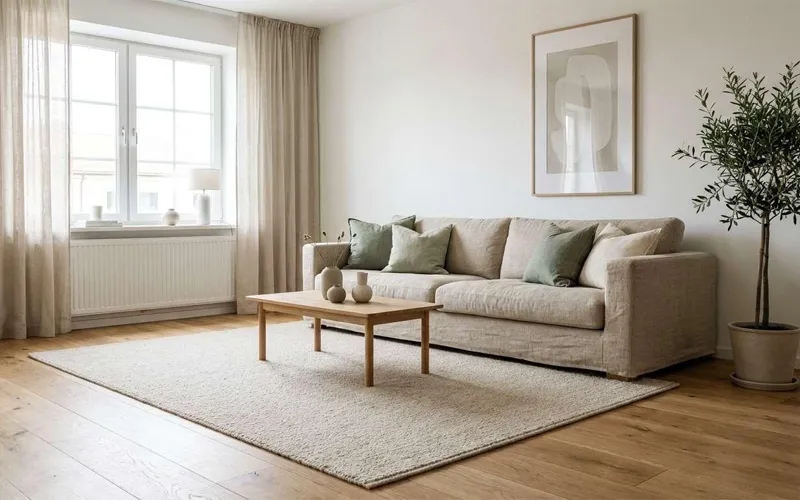
Choosing the right colors for your living room can improve the appearance of the space and make it more comfortable for everyday use. Sofas, chairs, coffee tables, and cabinets influence how the room looks because they occupy a large part of the visible area. Before choosing new furniture or paint, consider your existing flooring, natural light, wall finishes, and interior style. The right color combinations for living room furniture can help create a coordinated appearance without requiring expensive renovations or replacing everything you already own.
Start with a Balanced Color Scheme
A living room usually looks well coordinated when two or three main colors work together. One shade can dominate through the sofa or other large furniture, while another appears on the walls. A third color can add variety through cushions, curtains, rugs, or decorative accessories. These simple color combinations for living room furniture make it easier to create a balanced interior without introducing too many competing shades.
Neutral colors such as beige, cream, white, gray, and brown provide a flexible starting point. You can combine them with muted green, blue, terracotta, or charcoal to introduce more character. Look at the colors already present in your room before making a decision. Existing floors, wooden doors, and large furniture pieces can help you select shades that complement the interior rather than clash with it.
Beige and White for a Timeless Interior
Beige and white create a bright, comfortable atmosphere that suits many living room styles. A beige sofa against warm white walls provides a soft contrast, while cream cushions and a light rug keep the space looking coordinated. A wooden coffee table can add natural texture and prevent the arrangement from appearing too plain.
This combination works particularly well for homeowners who prefer a neutral interior that can adapt to changing decorative styles. Olive green cushions, brown accessories, or muted gold details can introduce extra color without overwhelming the room. In spaces with limited daylight, warm white and beige often create a softer appearance than very cool shades of white.
Gray and Blue for a Modern Look
Gray furniture paired with blue accents creates a contemporary and relaxed atmosphere. A light gray sofa can be complemented by navy cushions, a blue armchair, or a rug with subtle blue patterns. Navy adds depth, while pale blue creates a lighter and calmer effect.
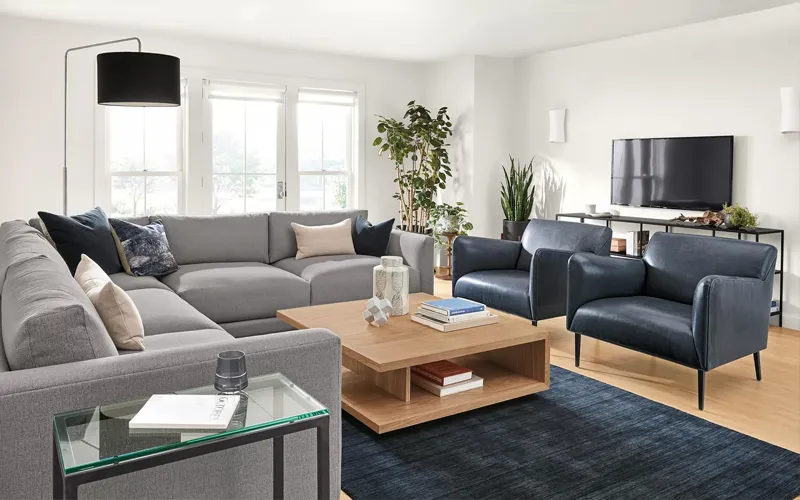
When choosing color combinations for living room furniture, pay attention to the undertones of each shade. Warm gray can complement dusty blue, while cooler gray often works well with clearer blue tones. White walls can keep the arrangement looking fresh, and wooden tables can introduce warmth. If both the furniture and walls are gray, choose noticeably different shades to prevent the room from looking flat.
Green and Natural Wood for a Relaxed Space
Green and natural wood bring a sense of warmth and connection to nature. Sage and olive green work well with light oak furniture, while forest green can complement darker walnut finishes. These combinations suit living rooms where natural materials and understated colors are important parts of the design.
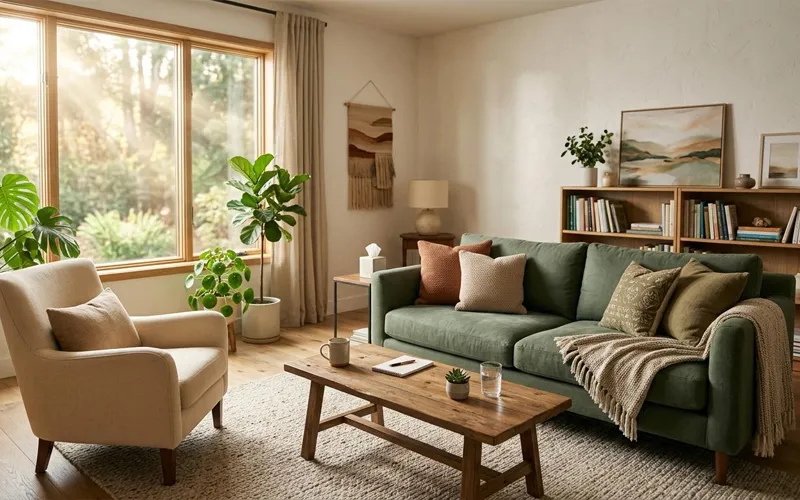
You do not need to buy a new sofa to introduce green into your interior. Cushions, curtains, an accent chair, or a few indoor plants can provide enough color to complement existing wooden furniture. In smaller rooms, lighter greens can maintain an airy appearance, while deeper shades can create a stronger focal point when balanced with lighter surfaces.
Match Wall Colors with Your Furniture
Wall paint should complement the main furniture pieces rather than compete with them. Cream walls work well with beige upholstery and warm wood, while soft gray walls can provide a suitable background for contemporary furniture. If your sofa is dark, lighter walls can create contrast and help the furniture stand out.
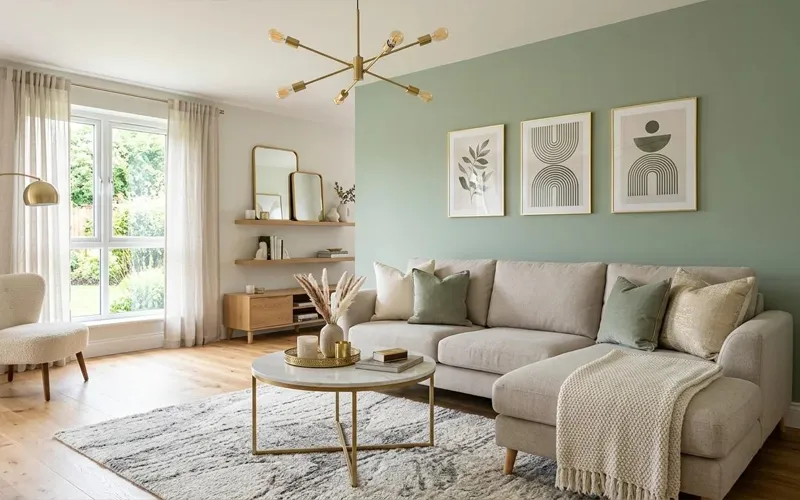
When deciding on the best color for living room walls, consider the dominant colors in your sofa, flooring, and curtains. You can also use a two colour combination for living room walls to introduce variety. For example, warm white on three walls and muted green behind the sofa can create a focal point without making the room feel crowded. Keep the second wall color connected to at least one shade already present in the furniture or accessories.
Light Paint Colors for Small Rooms
Small or poorly lit living rooms often benefit from pale wall colors because light surfaces can reflect available daylight and create a more open impression. Warm white, pale beige, soft cream, and light greige are useful options when you want the room to feel brighter without looking completely plain.
The best light paint colors for living room walls depend on the amount and direction of natural light. A north-facing room or a space with small windows may look more inviting with warm cream, while a room receiving abundant sunlight can work well with cooler white or pale gray. Paint samples should be tested directly on the wall and viewed at different times of day because daylight and artificial lighting can change how a shade appears.
Coordinate Different Wood Finishes
Wood furniture adds texture and character, but different finishes do not always look harmonious when placed together. Light oak, maple, and ash create a fresh appearance, while walnut and dark brown finishes offer a deeper, more traditional look. Matching every wooden item exactly is unnecessary; the goal is to create a visible connection between the finishes.
For a suitable wood furniture color combination for living room interiors, pair light wood with cream upholstery, muted blue, or soft green. Medium brown wood can complement beige, warm gray, and terracotta. Dark walnut furniture looks balanced against off-white walls and lighter fabrics. If the floor and furniture have different wood tones, use a rug to separate the surfaces visually and connect them with the room’s overall palette.
Modern Living Room Color Ideas for 2026
Warm neutrals, earthy greens, muted blues, and natural wood provide flexible options for modern interiors. Instead of changing large furniture pieces whenever decorating trends shift, introduce new colors through smaller items such as cushions, throws, lampshades, and artwork. This approach allows you to refresh the room without replacing furniture that remains functional.
When browsing modern living room Colors photos, examine how the sofa, walls, flooring, and accessories work together. A dark green sofa may look attractive against a cream wall in a bright room, but the same combination can appear different under dim lighting. Use photographs for inspiration rather than copying every detail, and compare paint or fabric samples with your existing furniture before purchasing anything.
If you are researching the best color for living room walls 2026, consider how well a shade will work with your furniture over time. Warm white, soft beige, gentle gray, and muted green can provide adaptable backgrounds for different decorative styles. Choose a color that suits your lighting and personal preferences instead of relying entirely on a temporary trend.
Add Contrast with Careful Color Choices
Contrast helps furniture stand out and prevents a room from looking monotonous. A cream sofa can be paired with a medium brown coffee table and darker accessories, while a gray seating area can be complemented by navy cushions and a pale rug. The contrast does not need to come from bright colors; differences in lightness and darkness can be enough.
For balanced color combinations for living room furniture, repeat selected shades in different areas of the room. For example, a blue cushion can relate to a blue pattern in the rug, while brown furniture can connect with a wooden picture frame. This repetition creates visual continuity without requiring every item to match. If the sofa already has a strong color or pattern, keep nearby accessories simpler so the arrangement remains easy on the eyes.
Avoid Common Color-Matching Mistakes
One frequent mistake is selecting wall paint and furniture separately without checking how they look together. A shade that seems subtle on a small paint card may appear much stronger across an entire wall. Upholstery can also look warmer or cooler depending on the surrounding colors and lighting. Testing samples together before making a purchase can help prevent expensive mismatches.
Another mistake is introducing too many unrelated accent colors or trying to make every item identical. A coordinated living room needs both harmony and some variation. Consider the patterns in your curtains, rugs, and upholstery before adding more decorative elements. If several pieces already have strong patterns, choose simpler colors for the remaining surfaces. Similarly, if the room feels visually crowded, removing unnecessary accessories may improve the appearance more effectively than adding another color.
Conclusion
The most practical color scheme is one that complements your existing furniture, suits the available light, and supports the way you use the room. Beige and white provide a timeless foundation, gray and blue offer a contemporary appearance, and green with natural wood creates a relaxed atmosphere. Wall paint and carefully selected accessories can strengthen these combinations without requiring a complete redesign.
When choosing color combinations for living room furniture, consider the largest pieces first, then select wall colors and smaller accents that connect the overall design. Test paint samples in your actual lighting and pay attention to the undertones of wood, upholstery, and flooring. These simple steps can help you create a living room that looks balanced, feels comfortable, and remains easy to update as your needs change.
Frequently Asked Questions
1. What are the best color combinations for living room furniture?
Beige and white, gray and blue, and green with natural wood are popular combinations. The best choice depends on your wall colors, flooring, natural light, and interior style.
2. Which furniture colors make a living room look bigger?
Light beige, cream, soft gray, and white furniture can make a small living room feel brighter and more open, especially when paired with light walls and suitable lighting.
3. What is the best wall color for a living room with dark furniture?
Warm white, cream, and light beige walls create contrast with dark furniture and help the room feel brighter. Soft gray can also work well with contemporary interiors.
4. How do I choose color combinations for living room furniture?
Start with your largest furniture pieces, such as the sofa, and consider your flooring and wall colors. Choose two or three main shades that complement each other and repeat them through rugs, cushions, or curtains.
5. Which colors go well with a gray sofa in the living room?
Gray sofas pair well with navy blue, sage green, white, beige, and natural wood. Choose warmer accents for a cozy atmosphere or cooler shades for a modern appearance.
6. What two colors work best for living room walls?
Warm white and muted green, cream and beige, or light gray and white can create attractive wall combinations. Choose shades that complement your furniture and the room’s natural lighting.
7. How can I match wooden furniture with living room colors?
Light oak furniture works well with cream, soft green, and muted blue. Dark walnut complements off-white walls, beige upholstery, and warm neutral accessories.
8. How can I update my living room colors without buying new furniture?
Add colorful cushions, throws, curtains, rugs, or artwork that complement your existing furniture. These affordable changes can refresh the room while maintaining a coordinated appearance.
Want more furniture and decor ideas? Explore helpful tips and the latest trends on TrendsMore.com.


