



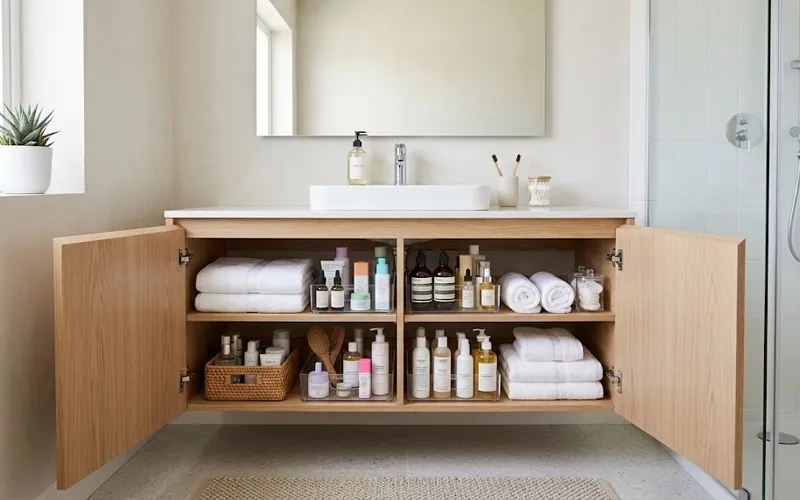
A cluttered bathroom cabinet can make your daily routine harder than it needs to be. You may struggle to find your skincare products, reach a bottle at the back of a shelf, or discover that you have bought another shampoo even though two unopened bottles are already stored underneath the sink. These problems often happen because bathroom storage has no clear system.
Learning how to organize bathroom cabinets starts with understanding what you need to store, how much space you have, and which items you use most often. You do not need expensive organizers or a large bathroom to make a difference. With careful planning, you can use your existing cabinets, drawers, and shelves more effectively.
Whether you have a small vanity, limited under-sink storage, deep closet shelves, or a separate bathroom cabinet, the following ideas will help you create an organized space that is easy to maintain.
Start by Emptying and Sorting Everything
Before organizing your bathroom cabinets, remove everything from the area you want to arrange. Place the items on a clean, dry surface so you can inspect them without rushing. Trying to organize products while they are still packed inside a crowded cabinet usually makes it harder to identify unnecessary items.
Divide your belongings into four groups: everyday essentials, occasional-use products, unopened backups, and items you no longer need. Check toiletries for expiration dates, unusual changes in smell or texture, damaged packaging, and other signs that they may no longer be suitable for use. Follow product labels and local disposal guidance when getting rid of unwanted items.
Pay attention to duplicate products as well. If you have several bottles of the same shampoo or moisturizer, decide how many you realistically need to keep. Store useful unopened backups together instead of mixing them with products currently in use.
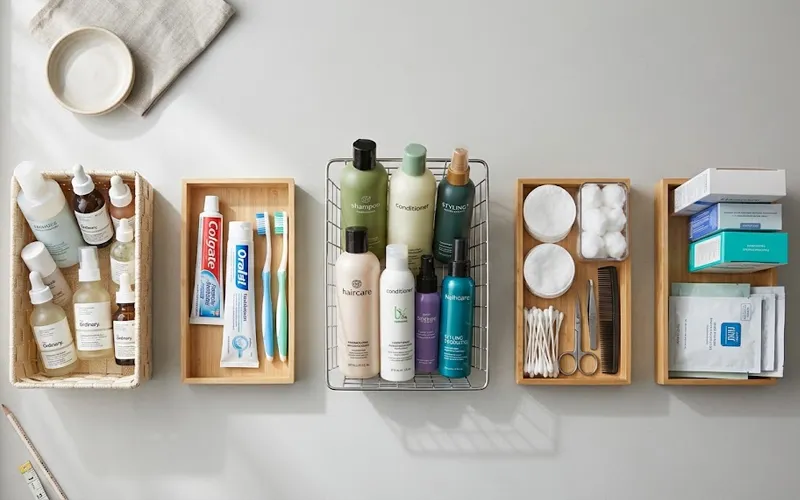
Next, separate items that do not belong in your bathroom cabinet. Towels may fit better in a linen closet, while bulky household supplies may need a dedicated storage area. Keep medicines in a suitable location according to their labels rather than automatically storing them in a humid bathroom.
Once you have removed unnecessary belongings, count the items that remain. This gives you a realistic idea of how much storage space each category requires and prevents you from filling the cabinet with organizers you do not need.
Choose a Storage System That Fits Your Bathroom
The right storage system should fit your cabinet dimensions and make your belongings easy to access. Before buying anything, measure the available width, height, and depth. Include the space occupied by hinges, drawer runners, plumbing pipes, and cabinet doors.
Write down these measurements or keep them on your phone when shopping for organizers. A container that is slightly too tall may prevent a shelf from closing properly, while an oversized basket can make it difficult to reach items stored beside it.
Choose storage products according to what you plan to keep inside them. Shallow trays work well for small grooming accessories, divided containers separate similar products, and larger baskets can hold backup toiletries. Clear containers are useful when you need to identify their contents quickly, while opaque baskets can keep less attractive supplies out of sight.
Think about accessibility before deciding where everything belongs. Items you use every day should be within comfortable reach, while occasional-use products can occupy less convenient spaces. Keep heavy containers on stable, lower shelves and avoid stacking items in a way that makes them difficult or unsafe to remove.
Most importantly, leave some room for your hands to reach inside the cabinet. A storage system that uses every available inch may look efficient, but it can become frustrating when you need to take something out or return it to its place.
Organize the Cabinet Under Your Bathroom Sink
The area beneath a bathroom sink can be difficult to organize because pipes, drain fittings, and the sink basin take up much of the available space. Instead of treating it like an ordinary cupboard, plan your storage around these obstacles.
To organize bathroom cabinet under sink storage, first identify the usable areas on both sides of the plumbing. Measure these spaces separately because one side may be wider or taller than the other. Check for existing leaks and moisture before putting products or organizers inside.
A compact pull-out basket can make items at the back easier to reach. Stackable bins may work well in areas with sufficient height, while a narrow organizer can fit beside a pipe without blocking access to the plumbing. Choose a design that can be removed easily if maintenance becomes necessary.
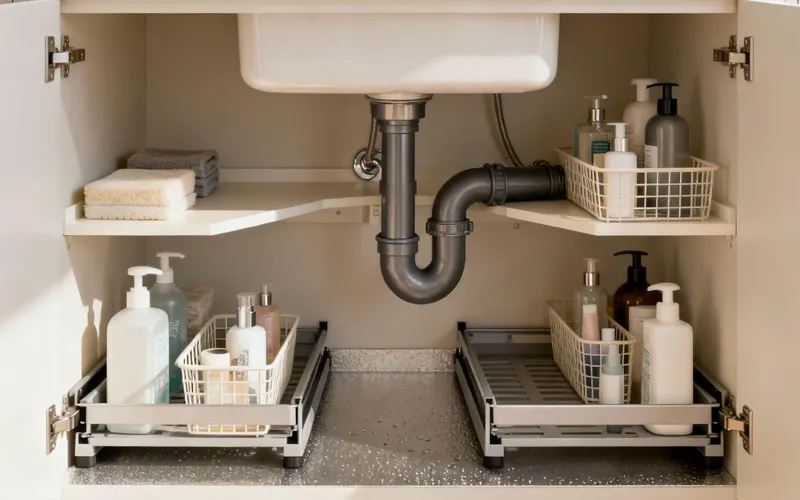
Assign a clear purpose to each container. For example, one basket can hold spare hand soap and toothpaste, while another stores hair accessories or personal care supplies. Keep products that could leak inside a washable tray to make accidental spills easier to clean.
Household cleaning chemicals should remain in their original labeled containers and be stored separately from personal care products whenever possible. Secure them against access by children and follow their safety instructions. Do not place chemicals where they could spill onto toiletries, and avoid storing products directly on a damp cabinet floor.
Check this area occasionally for moisture, damaged packaging, or signs of leaking pipes. Addressing these problems early can protect the cabinet and prevent stored belongings from becoming damaged.
Make Bathroom Drawers More Practical
Bathroom drawers are useful for small items, but they can quickly become disorganized when everything is placed together. Cotton pads, makeup, toothbrushes, razors, hair ties, and grooming tools have different shapes and sizes, so they need separate spaces.
Start by measuring the inside of each drawer, including its height. Choose dividers that fit without preventing the drawer from opening or closing smoothly. Adjustable dividers are useful when the contents change, while small washable containers can separate items that would otherwise slide around.
Arrange the drawer according to its purpose. A top drawer near the sink may hold everyday oral care products and frequently used skincare items. Another drawer can contain makeup or grooming accessories, while a lower drawer may be suitable for spare toiletries.
If you share the bathroom with other people, divide the available space into individual sections. This reduces confusion and makes it easier for everyone to return their belongings to the correct place.
When deciding how to organize bathroom cabinets and drawers together, avoid giving every storage area the same job. Drawers are generally better for small items that need separation, while cabinets can accommodate taller bottles, larger containers, and supplies that do not need to be accessed as frequently.
Also, keep electrical grooming tools dry and allow them to cool completely before storing them. Make sure cords are not tangled around other items, and follow the manufacturer’s instructions for safe storage.
Use IKEA Storage Solutions Without Overcomplicating Things
If you want a neat and affordable setup, learning how to organize bathroom cabinets IKEA style can help you explore practical storage options. The basic idea is to use simple boxes, drawer inserts, baskets, and shelf organizers that fit your existing furniture.
For example, small drawer inserts can separate cotton pads, makeup, and nail care tools. Larger storage boxes can hold spare toiletries, while narrow baskets may fit into spaces that would otherwise remain unused. You can also use shelf inserts to create an additional level for smaller products when the cabinet has enough vertical clearance.
Before purchasing IKEA organizers, check their exact dimensions against your available storage space. Make sure drawers can still open fully and that containers do not block hinges or plumbing. Product sizes, materials, and availability may vary, so choose according to your actual cabinet rather than relying on appearance alone.
Consider the material as well. Plastic organizers are often easy to wipe clean, while certain wood-based materials may need greater protection from moisture. Keep storage accessories dry and away from direct splashes unless they are specifically designed for those conditions.
You do not need matching organizers throughout the bathroom. Two or three well-chosen products that solve specific storage problems are often more useful than buying a complete set that does not fit your needs.
Try Simple DIY Ideas to Save Money
You can improve your bathroom storage without purchasing a new organizing system. If you are exploring how to organize bathroom cabinets DIY style, begin by looking at suitable containers you already have at home.
Small washable boxes can hold nail clippers, hair ties, or travel-sized products. A shallow tray can keep frequently used grooming accessories together, while a sturdy basket may work for unopened toiletries. Before reusing any container, make sure it is clean, dry, stable, and suitable for the weight of its contents.
Another helpful idea is to create simple labels for containers that are not transparent. Labels such as “Hair Accessories,” “Travel Toiletries,” and “Backup Supplies” help household members identify where things belong. Use labels that remain readable in the bathroom environment.
You can also repurpose a suitable shelf insert to create extra space for smaller products. Measure carefully before installing it, and make sure it sits securely without interfering with doors or plumbing. Avoid unstable stacks of boxes that could tip over when you remove an item.
Do not use ordinary cardboard boxes or untreated materials in areas that regularly become damp. They can weaken, absorb moisture, or develop mold. DIY storage should be practical and safe, not simply inexpensive.
Before buying additional organizers, try your new arrangement with the containers you already own. This helps you discover what works and reduces the chance of spending money on products you later find unnecessary.
Keep Bathroom Toiletries Organized and Easy to Reach
Bathroom toiletries include toothpaste, shampoo, conditioner, deodorant, moisturizers, sunscreen, shaving products, and many other personal care items. Since these products come in different packaging and are used at different times, arranging them by purpose makes them easier to manage.
Create separate groups for oral care, skincare, haircare, shaving, and other personal care needs. Store small items that could easily get lost in a divided container, and keep taller bottles upright wherever possible to reduce spills.
Check the storage instructions on individual products. Some items may need protection from direct sunlight, excessive heat, or humidity. Products that require cooler or drier conditions should be kept in a more suitable location rather than automatically placed inside the bathroom cabinet.
For toiletries used by several family members, assign separate containers or shelf sections. This is particularly helpful for products that look similar but belong to different people. Keep personal products in their original packaging when labels or ingredient information are important.
Store unopened replacements separately from the products currently in use. This makes it easier to see how much you have left and prevents new purchases from disappearing behind older bottles.
Finally, check that lids are closed properly before returning toiletries to storage. Wipe away residue from bottle exteriors and avoid placing wet products directly into closed containers. These small habits help protect both your belongings and the surfaces inside your cabinets.
Make the Most of a Bathroom Closet With Deep Shelves
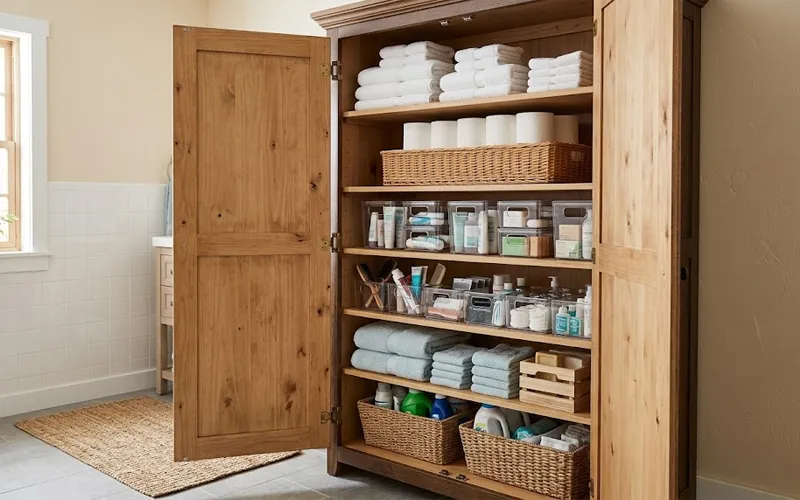
Deep bathroom closet shelves can hold towels, toiletries, toilet paper, and household supplies, but items at the back are often forgotten. The best way to use this space is to arrange products so you can reach them without removing several other things first.
Begin by measuring the depth and height of each shelf. Then choose containers that fit comfortably and can be pulled forward without catching on the shelf above. Pull-out baskets are especially useful for smaller supplies that would otherwise disappear behind larger packages.
Place backup toiletries, spare washcloths, and similar items in separate containers. Keep heavier supplies on lower shelves and lighter belongings higher up, provided they remain safely accessible. Avoid placing heavy containers near the edge where they could fall when you reach for something.
For a closet with several shelves, give each shelf a specific purpose. One may hold towels, another can store personal care backups, and a third can accommodate toilet paper or other household essentials. Keep cleaning products separate from clean towels and personal care items.
If you use bins, choose ones that are not too heavy when full. A container that is easy to move when empty may become difficult to lift after you fill it with bottles. Leave enough space to pull each bin out and return it without disturbing neighboring containers.
This arrangement is particularly helpful for households that purchase supplies in bulk because it keeps extra stock visible and prevents unnecessary repurchasing.
Small Bathroom Closet Organization Ideas That Actually Work
A small bathroom closet requires a different approach from a deep storage closet. There may be limited shelf space, little room for large baskets, and not enough clearance for bulky containers. The goal is to use the available height and width without making essential items difficult to reach.
One useful option is adjustable shelving. It allows you to change the distance between shelves to accommodate tall bottles, folded towels, or small containers. If the shelves are fixed, group items of similar heights together so the available space is used efficiently.
For narrow closets, consider slim containers that fit side by side rather than one oversized box. Small, stackable organizers can help separate toiletries, but make sure you can remove the upper container without having to unpack everything underneath it.
If the closet door has enough clearance, an over-the-door organizer may provide additional storage for lightweight items. Check the door’s construction, the organizer’s weight limit, and the available space before installing one. Avoid placing heavy bottles in hanging pockets that are not designed to support them.
You should also consider how much backup stock you actually need. Keeping several months’ worth of products in a tiny closet may leave no room for everyday essentials. Maintain a reasonable supply and use the remaining space for items you regularly need.
When the closet starts feeling crowded, review the contents and remove empty packaging or products you no longer use. This is more effective than continually adding containers to a space that has already reached its practical limit.
Choose the Right Small Bathroom Storage Cabinet
If your bathroom vanity does not provide enough storage, a small bathroom storage cabinet can offer extra room for toiletries, towels, or everyday essentials. The best option depends on the layout of your bathroom and the type of items you need to store.
A slim freestanding cabinet may fit beside a vanity or in an unused corner. A wall-mounted cabinet can free up floor space, making it useful in a narrow bathroom. Before choosing either option, measure the available area and check that doors, drawers, and nearby fixtures will remain easy to use.
Think about the internal layout as well. Adjustable shelves are useful for bottles of different heights, while drawers can hold small accessories that are difficult to arrange on open shelves. If you need to store towels, choose shelves deep and wide enough to accommodate them without forcing them into tight spaces.
Bathroom humidity should also influence your choice. Select materials and finishes appropriate for the intended location, and check the manufacturer’s guidance about moisture exposure and cleaning. A cabinet placed near a shower or sink may need more protection from splashes than one installed in a dry corner.
For wall-mounted models, use suitable fixings for the wall type and follow the manufacturer’s installation instructions. Do not assume that ordinary screws will safely support a loaded cabinet. Keep heavy items within the cabinet’s stated weight limits and avoid placing it where it could obstruct movement.
Before buying a new cabinet, check whether your existing storage could be improved with better shelf arrangements or dividers. Additional furniture is useful when it solves a genuine space problem, but it should not make a small bathroom feel crowded.
Keep Your Bathroom Cabinets Clean and Fresh
Once your bathroom cabinets are organized, regular cleaning will help protect the surfaces and keep stored products in good condition. Dust, spilled lotion, toothpaste residue, and moisture can collect around frequently used items even when the cabinet looks tidy.
Every few weeks, inspect one section at a time. Remove its contents, wipe the shelf or drawer with a cleaner suitable for the material, and allow the surface to dry completely before returning anything. Follow the cabinet manufacturer’s care instructions, especially for wood and laminate finishes.
Check containers for leaks, sticky residue, loose lids, or damaged packaging. Clean reusable organizers as needed and replace any that have cracks or surfaces that are difficult to clean. If a bottle has leaked, clean the affected area promptly instead of placing it back into storage.
Pay attention to musty smells or persistent dampness. Look for the source rather than covering the odor with fragrance. A leaking pipe, water entering through a damaged seal, or poor ventilation may require attention. Do not store products in a cabinet that remains wet.
Make a brief review of your supplies every month or two. Remove empty containers, check the condition of older products, and identify items that need replacing. This small routine helps prevent clutter from returning without requiring you to reorganize the entire bathroom.
Common Bathroom Cabinet Organization Mistakes to Avoid
Several common mistakes can make even a carefully arranged bathroom cabinet difficult to use.
Buying organizers before measuring: A basket that does not fit or a divider that blocks a drawer wastes money and creates extra work. Measure first and check the dimensions of any product you plan to buy.
Overfilling containers: When every basket is packed tightly, small items become difficult to find. Leave enough room to remove products without unpacking the entire container.
Ignoring plumbing and moisture: Storage accessories should never block access to pipes or be placed where leaks can damage their contents. Check the area before arranging products and inspect it occasionally afterward.
Mixing unrelated supplies: Combining toiletries, hair accessories, towels, and cleaning products in one crowded space makes items harder to locate. Give each category a suitable storage area based on its use and safety requirements.
Choosing appearance over convenience: Matching baskets and decorative labels may look attractive, but they are not helpful if you cannot reach the items inside them. Prioritize accessibility, stability, and easy cleaning.
Keeping unnecessary backups: Buying extra products before checking existing supplies can cause a small cabinet to become overcrowded. Keep only a reasonable amount of backup stock and use older suitable products before opening replacements.
A good organization system should reduce the effort required to find and return things. If you regularly have to move several items to reach one product, adjust the arrangement instead of accepting the inconvenience.
Final Thoughts
Learning how to organize bathroom cabinets can help you create a cleaner and more practical bathroom without replacing your existing storage. Start by sorting your belongings, measuring the available space, and choosing a suitable place for each category.
Use drawers for small accessories, plan around the plumbing beneath your sink, and arrange closet shelves according to the supplies they hold. Affordable containers and simple DIY solutions can improve storage without unnecessary spending.
The most effective setup is one that fits your bathroom, supports your daily routine, and remains easy to maintain. With thoughtful organization and occasional cleaning, you can keep essential products accessible and make better use of every available inch.
Frequently Asked Questions
1. How do you organize bathroom cabinets efficiently?
Start by removing unnecessary items and grouping toiletries by category. Use baskets, drawer dividers, and small containers to keep everyday essentials easy to reach.
2. How do you organize a bathroom cabinet under the sink?
Measure the available space around the plumbing and use compact pull-out baskets or stackable bins. Keep cleaning products separate from toiletries and leave pipes accessible for maintenance.
3. How do you organize bathroom cabinets and drawers?
Use drawers for small items like makeup, cotton pads, and grooming tools. Store taller bottles and larger supplies in cabinets, keeping frequently used products within easy reach.
4. What are the best DIY ideas for bathroom cabinet organization?
Reuse clean, washable containers, small baskets, and suitable shelf inserts. Add simple labels to identify different categories and avoid materials that can become damaged by moisture.
5. How can I organize bathroom toiletries in a small space?
Group toiletries into skincare, haircare, oral care, and shaving supplies. Use slim containers, store backup products separately, and keep only essential items in frequently used areas.
6. How do you organize a bathroom closet with deep shelves?
Place smaller items in pull-out baskets so you can reach products at the back easily. Assign each shelf a purpose and store heavier supplies on lower shelves.
7. What are the best small bathroom closet organization ideas?
Use slim storage bins, adjustable shelves, and stackable organizers that fit your available space. Avoid overfilling the closet and keep everyday essentials easy to access.
8. How can I choose the right small bathroom storage cabinet?
Measure the available floor or wall space before buying a cabinet. Choose moisture-appropriate materials, practical shelves or drawers, and a design that fits your storage needs without crowding the bathroom.
Want more furniture and decor ideas? Explore helpful tips and the latest trends on TrendsMore.com.


