



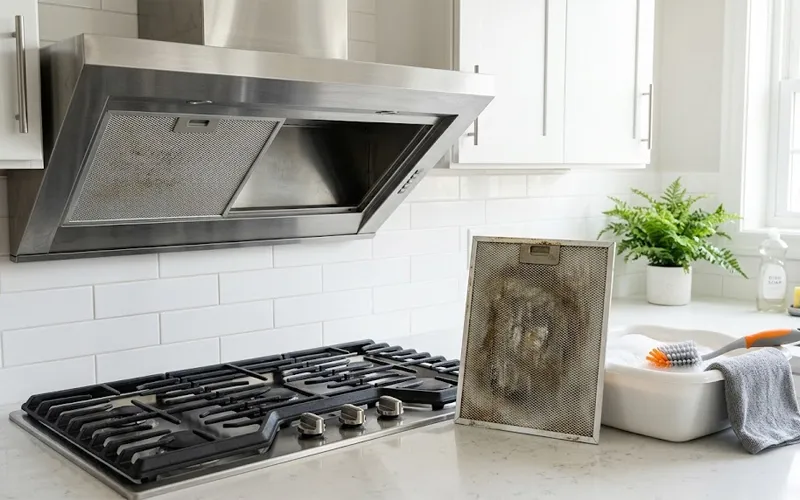
A kitchen exhaust fan helps remove smoke, steam, cooking smells, and airborne grease. Over time, grease sticks to the filter and other parts of the hood, making them dirty and reducing airflow. If the filter becomes heavily clogged, cooking odors may linger even when the fan is running.
Learning how to clean a kitchen exhaust fan filter can help you keep your kitchen ventilation working properly without spending money on unnecessary cleaning products. Warm water and dish soap are usually enough for regular maintenance, while baking soda can help loosen stubborn residue. Vinegar may be useful in some situations, but it is not suitable for every filter material.
Before you start, check your appliance manual to confirm which parts can be washed. Some filters are reusable, while others need to be replaced.
Why Does the Exhaust Fan Filter Collect Grease?
Whenever you fry food, sauté vegetables, or cook with oil, tiny grease particles enter the air and move toward the exhaust hood. The filter catches much of this grease before it reaches the fan and ventilation duct. Dust also sticks to the oily surface, gradually creating a thick layer.
As grease builds up, air passes through the filter less easily. You may notice weaker suction, unpleasant cooking smells, or sticky residue around the hood. Regular cleaning prevents this buildup from becoming difficult to remove.
How quickly the filter gets dirty depends on your cooking habits. If you frequently fry food or prepare oily meals, you will probably need to clean it more often than someone who mainly boils or steams food.
Prepare the Fan Before Cleaning
Before starting, switch off the exhaust fan and disconnect its power supply according to the manufacturer’s instructions. Allow the appliance to cool completely and cover the stovetop with an old towel to catch drips.
Check whether your appliance has a metal mesh filter, a baffle filter, or a charcoal filter. Many metal filters can be washed, but charcoal filters in recirculating range hoods often need replacement. Do not assume that every filter is washable.
Gather warm water, grease-cutting dish soap, a soft brush, a microfiber cloth, and a suitable basin. Baking soda is optional if the filter has stubborn grease.
Avoid spraying cleaning products directly into the motor, switches, lights, or wiring. Never pour water into the hood or dismantle electrical components unless the manufacturer provides clear instructions.
Clean with Warm Water and Dish Soap
Warm water and dish soap are usually the best starting point for a washable metal filter. The detergent breaks down oily residue, while the warm water helps soften it.
Remove the filter according to the appliance instructions. Fill a basin with warm water and add enough dish soap to create a cleaning solution. If the manufacturer allows soaking, place the filter in the water for around 10 to 15 minutes.
Gently scrub both sides with a soft brush, paying attention to the corners and narrow openings where grease tends to collect. If the filter has fine mesh, avoid pressing too hard because the metal can bend.
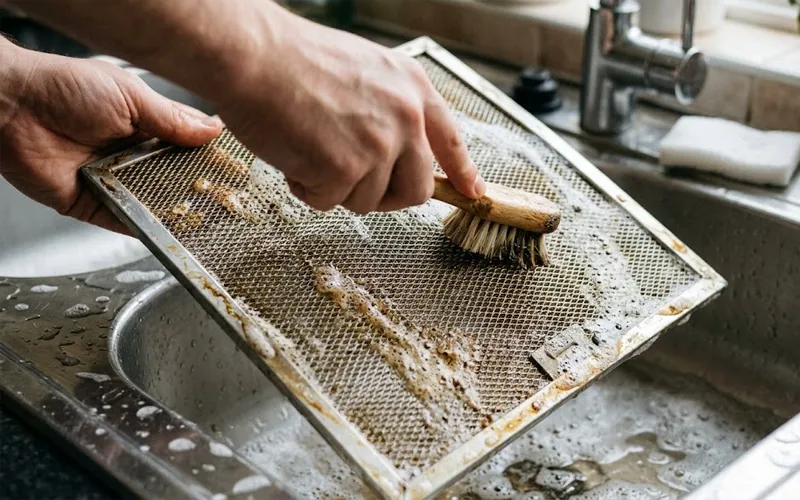
Rinse it thoroughly with clean water. Hold it up to the light to check whether the openings are clear. If a greasy film remains, repeat the cleaning process rather than using a rough scouring pad.
Let the filter dry completely before reinstalling it. This method is generally effective for routine maintenance and works best when the grease has not been left to harden for months.
Use Baking Soda for Stubborn Grease
If dish soap alone does not remove the buildup, baking soda may help loosen stubborn residue on compatible washable filters. It provides mild abrasive action, so use it gently on delicate mesh and coated surfaces.
For how to clean a kitchen exhaust fan filter with baking soda, begin by placing the removable filter in a suitable basin. Sprinkle a moderate amount of baking soda over the greasy areas, then add warm water and a little dish soap. Let the solution sit for 15 to 20 minutes if soaking is permitted.
For small, heavily soiled patches, mix baking soda with a little water to make a paste. Apply it to the affected area and leave it for a few minutes before gently brushing the residue away.
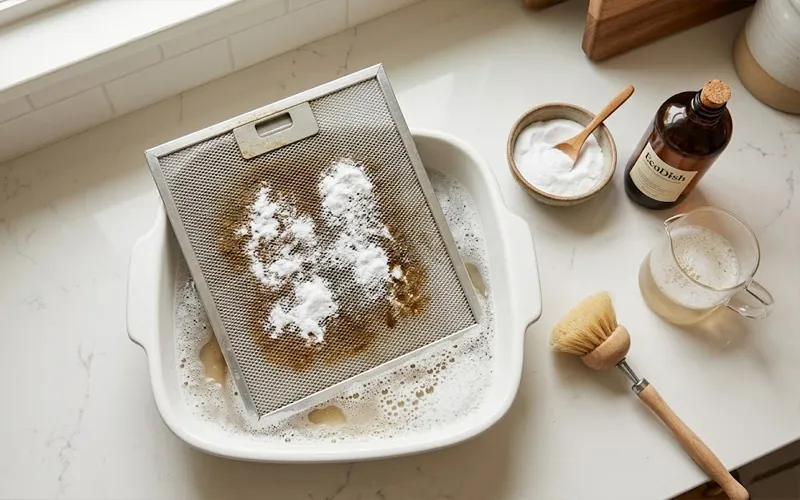
Rinse the filter carefully to remove all the paste and loosened grease. If necessary, repeat the process with fresh cleaning solution. Avoid steel wool and rough scrubbers because they may damage the filter’s finish.
Do not mix baking soda and vinegar expecting a stronger cleaner. They react with each other and largely neutralize one another, so using them together does not provide the same benefits as using an appropriate cleaner separately.
When Is Vinegar Suitable?
White vinegar can help remove certain mineral deposits, but it is not always the best option for cooking grease. Dish soap is generally more effective for oily residue.
If you want to try how to clean a kitchen exhaust fan filter with vinegar, first check whether the manufacturer approves vinegar for your filter material. If it is safe, mix equal parts white vinegar and warm water. Briefly soak the removable filter for five to ten minutes only if the instructions permit it. Gently brush the surface, wash it with dish soap, and rinse it thoroughly.
Be especially careful with aluminum filters. Vinegar is acidic and can discolor or damage some aluminum finishes, particularly when left on the surface for too long. If you do not know what material your filter is made from, stick to warm water and dish soap.
Never mix vinegar with bleach or chlorine-based cleaners, as this can release dangerous gas. Use one cleaning product at a time and rinse the filter properly.
Wipe the Filter Without Removing It
Sometimes you may only need to remove a light layer of surface grease between full washes. In this situation, how to clean a kitchen exhaust fan filter without removing it depends on using very little moisture and cleaning only the accessible surface.
Switch off the appliance and protect the stovetop from drips. Mix a few drops of dish soap into warm water and dampen a microfiber cloth. Wring the cloth out thoroughly so that it is not dripping wet.
Wipe the visible surface gently, working in small sections. A soft toothbrush can help reach accessible corners, but do not force grease deeper into the mesh. Follow with a separate cloth lightly dampened with clean water, then dry the surface with a clean towel.
Avoid spraying the filter directly or allowing liquid to run inside the hood, where it could reach electrical components.
This approach is useful for light maintenance, but it cannot remove grease trapped deep inside the filter. If the mesh remains sticky or airflow has decreased, remove and wash the filter properly if the appliance is designed for it.
Clean the Inside of the Hood
The underside of the hood and the area around the filter housing can collect grease even when the filter is cleaned regularly. These surfaces should be wiped occasionally to prevent sticky deposits, dust buildup, and unpleasant odors.
To learn how to clean kitchen hood vent inside the accessible areas, switch off the appliance and disconnect the power if required. Remove the filter if the manual allows it. Dampen a microfiber cloth with warm water and dish soap, then wipe the underside and reachable interior surfaces.
For hardened deposits, hold the warm, soapy cloth against the grease for a short time to soften it. Wipe gently and use a soft brush around corners. Avoid sharp tools and abrasive pads, especially on stainless steel, painted metal, and coated surfaces.
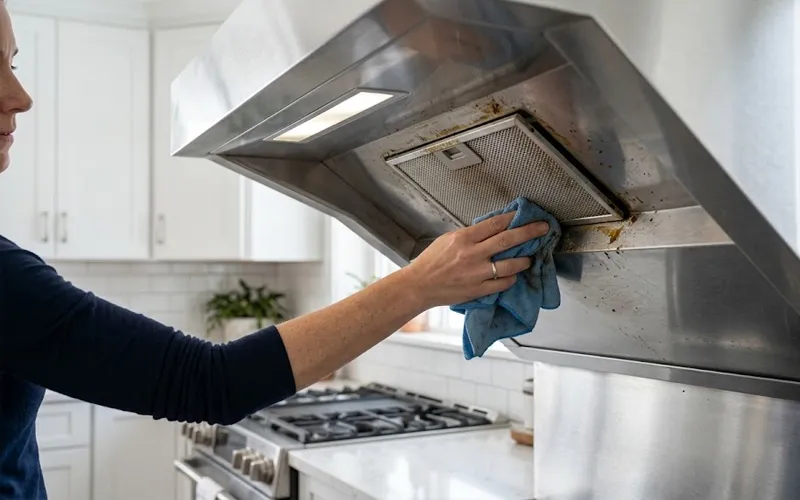
Use a clean, lightly damp cloth to remove soap residue and dry the surfaces afterward. Keep water away from switches, wiring, lights, and motor openings.
Only clean areas that you can reach safely. If grease has accumulated deep inside the ductwork or around inaccessible mechanical parts, professional cleaning is a safer option.
Clean the Fan Blades Carefully
Grease and dust can also collect on the fan blades, especially when the filter is clogged. These components require extra care because they are connected to moving parts and may be close to the motor.
If you need to know how to clean kitchen exhaust fan blades, first check the manufacturer’s instructions for accessing them. Disconnect the power and do not remove covers or mechanical parts unless the manual explains how to do so safely.
If the blades are accessible, use a microfiber cloth lightly dampened with warm, soapy water to wipe away grease. A soft brush can help reach narrow spaces. Avoid excessive moisture around the motor shaft, bearings, wiring, and electrical connections.
Never pour water over the fan assembly or bend the blades while cleaning. Damaged or unbalanced blades can cause vibration and affect performance. Allow the cleaned surfaces to dry completely before restoring power.
If the blades cannot be reached safely, the fan vibrates unusually, or grease has entered the motor housing, contact a qualified technician instead of dismantling the unit yourself.
Remove Thick Grease from the Vent Hood
Old grease can become sticky and difficult to remove when it remains on the hood for a long time. The easiest approach is to soften it gradually rather than scrape it off with sharp tools.
For how to clean kitchen exhaust fan grease without removing the hood assembly, apply warm, soapy water to a microfiber cloth and hold it against the greasy area briefly. Wipe away the softened residue and repeat if necessary. Use a soft, non-scratch brush for corners and edges.
If the grease is on a removable metal filter, wash the filter separately. Baking soda may help with stubborn deposits if the manufacturer permits its use on that material.
When considering how to clean vent hood grease, avoid steel wool, metal scrapers, and strong oven cleaners unless the appliance manufacturer specifically approves them. These products can damage aluminum, plastic, paint, and protective coatings.
Do not attempt to flush grease from ventilation ducts with hot water or household cleaning chemicals. Heavy deposits inside inaccessible ductwork should be handled by a qualified professional because grease accumulation can increase fire risk.
Common Cleaning Mistakes to Avoid
Using excessive force is one of the most common mistakes. Fine mesh can bend under pressure, while abrasive pads may scratch metal finishes. Let the cleaning solution soften the residue before brushing.
Another mistake is reinstalling the filter while it is still wet. Allow it to dry completely, then check that it fits securely in its original position. An incorrectly fitted filter may allow more grease to enter the hood.
Avoid using boiling water unless the manufacturer specifically recommends it. Warm water is generally sufficient and easier to handle safely.
You should also avoid washing disposable charcoal filters unless the manual confirms that they are reusable. Water can damage their odor-absorbing material, so replacement is often necessary.
Finally, never allow cleaning liquid to enter electrical openings. If you are unsure whether a component can be cleaned safely, consult the appliance manual rather than taking it apart.
How Often Should You Clean the Filter?
Cleaning frequency depends on how often you cook and how much grease your meals produce. If you regularly fry food or use a lot of oil, inspect the filter every few weeks and clean it when a visible coating develops. Less frequent cooking may mean that cleaning is needed less often.
Sticky surfaces, blocked mesh openings, weak airflow, and lingering cooking odors are signs that maintenance may be overdue. Cleaning the filter before grease hardens usually makes the job quicker and easier.
Follow the manufacturer’s recommended schedule whenever one is provided. Also check accessible hood surfaces regularly and replace charcoal filters according to the recommended interval.
Conclusion
Knowing how to clean a kitchen exhaust fan filter makes it easier to remove grease before it affects airflow or spreads to other parts of the appliance. Warm water and dish soap are usually sufficient for regular cleaning, while baking soda can help loosen tougher deposits on compatible filters. Vinegar should be used carefully because it may damage certain materials.
Always identify your filter type before cleaning, use gentle tools, and keep moisture away from electrical components. Regular maintenance can help your exhaust fan remove cooking fumes more effectively and prevent grease from becoming a much harder cleaning job.
Frequently Asked Questions
1. How to clean a kitchen exhaust fan filter at home?
Soak the washable filter in warm water and dish soap for 10–15 minutes. Gently scrub, rinse, and dry completely before reinstalling.
2. How to clean a kitchen exhaust fan filter with baking soda?
Add baking soda and dish soap to warm water. Soak the filter if permitted, gently scrub the grease, and rinse thoroughly.
3. Can I clean a kitchen exhaust fan filter with vinegar?
Yes, if the manufacturer approves it. Avoid vinegar on aluminum filters because it may damage or discolor the surface.
4. How to clean a kitchen exhaust fan filter without removing it?
Wipe the accessible surface with a microfiber cloth dampened with warm, soapy water. Avoid letting liquid enter electrical parts.
5. What is the best cleaner for kitchen exhaust fan grease?
Warm water and dish soap are usually effective. Baking soda can help remove stubborn grease from compatible filters.
6. How do you clean the inside of a kitchen exhaust hood?
Switch off the appliance and wipe accessible surfaces with a soft cloth and soapy water. Keep moisture away from electrical components.
7. How often should I clean my kitchen exhaust fan filter?
Inspect it every few weeks and clean it when grease builds up. Frequent frying may require more regular cleaning.
8. Can I wash a charcoal filter in a kitchen exhaust fan?
Most disposable charcoal filters cannot be washed and must be replaced. Check your appliance manual for specific instructions.
Want to read more articles like this? Explore more kitchen and bathroom improvement ideas, practical tips, design inspiration, and the latest updates on TrendsMore.com.


