



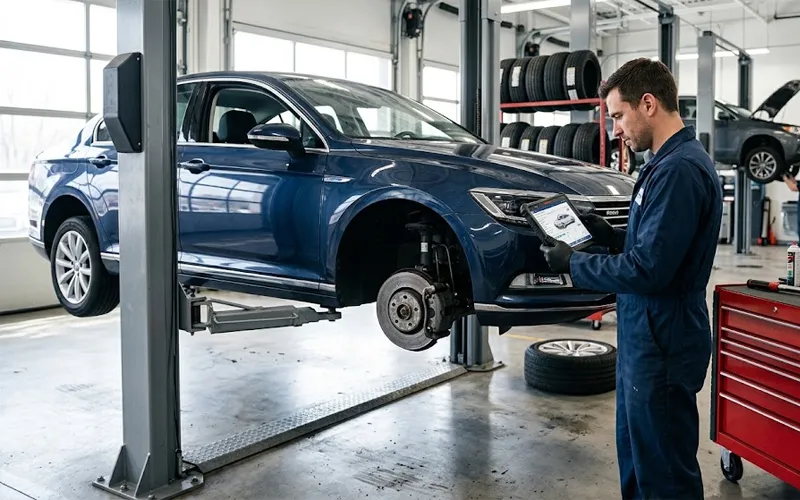
Owning a vehicle involves more than filling the fuel tank and visiting a mechanic when something goes wrong. Every major system in a car operates under different conditions and requires specific care. Engine components work under high temperatures, tires remain in constant contact with the road, braking parts experience repeated friction, and fluids gradually lose their protective properties. When these systems are inspected and serviced at appropriate intervals, a vehicle is more likely to remain dependable, efficient, and safe. A well-organized car maintenance schedule gives drivers a clear way to manage these responsibilities instead of guessing when work is due. It can also help identify developing concerns before they become expensive mechanical problems.
Why Regular Vehicle Care Matters
A vehicle changes gradually as mileage, operating hours, and age increase. Engine oil can become contaminated, brake components can wear down, tires can develop uneven patterns, and filters can become restricted by accumulated dirt. Some problems produce obvious warning signs, while others develop without noticeable symptoms. Waiting for unusual noises, dashboard warnings, or poor performance is therefore not always a reliable approach to vehicle care. Preventive inspections allow potential problems to be identified while components are still usable, giving the owner an opportunity to repair, adjust, clean, or replace them before a failure occurs.
A regular car maintenance schedule also supports road safety. Proper tire inflation contributes to predictable handling, while correctly functioning brakes provide reliable stopping performance. Working headlights, brake lights, turn signals, mirrors, wipers, and seat belts are equally important because they help the driver communicate with other road users and maintain visibility. Cooling and lubrication systems also deserve attention because problems in these areas can affect engine reliability, especially during demanding conditions. Routine maintenance cannot eliminate every possible breakdown, but it can reduce preventable failures and provide a clearer understanding of the vehicle’s condition.
Understanding Mileage and Time Intervals
Vehicle servicing is usually based on both distance traveled and elapsed time. Mileage is useful for components that experience wear through regular use, while time-based intervals matter for fluids, rubber components, seals, batteries, and other parts that can deteriorate with age. A vehicle that travels very little can still require servicing even though its odometer shows relatively low mileage.
The correct interval depends on the specific vehicle and how it is operated. Engine design, transmission type, model year, drivetrain, climate, road conditions, and driving habits can all influence service requirements. Short trips may place different demands on an engine than long highway journeys because the vehicle may spend more time starting and operating before reaching normal temperature. Heavy traffic, frequent braking, towing, carrying heavy loads, and driving on rough or dusty roads can also increase stress on certain systems.
This is why a car maintenance schedule by mileage or time is more useful than relying on mileage alone. A general plan should be treated as background information rather than a universal rule. The owner’s manual and manufacturer service information should remain the primary reference for deciding when specific maintenance tasks are required. If a vehicle is used under severe conditions, the manufacturer may recommend shorter intervals or additional inspections.
Building a Mileage-Based Maintenance Plan
A car maintenance schedule by mileage makes vehicle care easier because services can be organized according to the distance the car has traveled. Basic inspections are usually performed more frequently, while some larger maintenance tasks occur at longer intervals. However, the exact mileage points vary between vehicles, so drivers should avoid applying numbers from another make or model without checking the appropriate documentation.
At lower mileage, routine attention generally includes tire condition, fluid levels, lighting, filters, and general operating condition. As the vehicle accumulates more miles, components exposed to mechanical wear may require closer examination. These can include brake components, suspension parts, steering joints, belts, spark plugs on applicable engines, and transmission-related components.
Keeping track of the odometer at every service is especially useful. A simple car maintenance schedule tracker can record the date, mileage, work performed, parts replaced, and any follow-up inspection recommended by the technician. This history gives the owner a reliable reference for future servicing and can help a technician understand previous work when diagnosing a new problem.
Tires, Brakes, and Safety-Critical Components
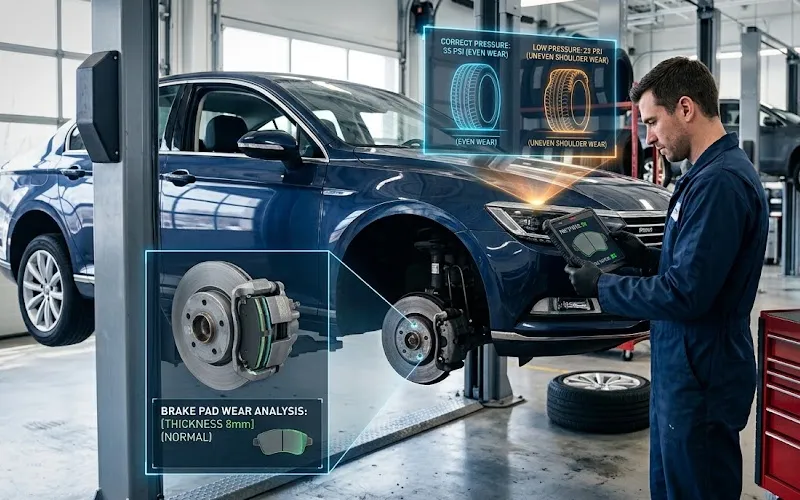
Tires deserve close attention because they provide the vehicle’s direct connection with the road. Drivers should monitor inflation pressure, tread depth, uneven wear, visible damage, and signs of aging. The recommended pressure is normally provided by the vehicle manufacturer and may differ from the maximum pressure printed on the tire sidewall. Maintaining the correct pressure can support handling, braking performance, ride quality, and even wear.
Brake systems also require regular attention because their condition changes gradually through use. Brake pads and shoes become thinner, while discs and drums can develop wear or surface problems. Brake fluid has separate service requirements and should be maintained according to the vehicle manufacturer’s specifications. Warning signs such as grinding, persistent squealing, vibration, a soft pedal, pulling during braking, or a noticeable change in stopping performance should be investigated promptly.
Other safety equipment should not be overlooked. Headlights, brake lights, indicators, hazard lights, windshield wipers, mirrors, seat belts, and the horn all contribute to safe operation. These items may be simple compared with an engine or transmission, but a failure can still create a serious safety concern.
Using Time-Based Maintenance Correctly
Mileage alone does not provide a complete picture of vehicle condition. A car that travels only a few thousand miles each year can still experience age-related deterioration. Engine oil may absorb moisture and contaminants, brake fluid can accumulate water, rubber materials can harden, and batteries can gradually lose their ability to hold a strong charge.
Time-based servicing is particularly important for vehicles that spend long periods parked or are mainly used for short journeys. Seasonal changes can also affect different systems. High temperatures may accelerate battery and rubber-component deterioration, while cold weather can increase demands on starting and electrical systems.
When both mileage and time limits are provided by the manufacturer, drivers should generally follow whichever requirement is reached first. Special instructions may also apply to vehicles that are stored for extended periods or operated in unusually demanding environments.
Creating a Practical Maintenance Routine
An effective maintenance routine should separate simple checks that drivers can perform themselves from inspections that require professional equipment or technical knowledge. Depending on the vehicle’s instructions, owners can regularly check tire pressure, inspect fluid levels, test exterior lights, examine wiper blades, and look for visible leaks or damage. Paying attention to changes in steering, braking, vibration, engine behavior, or unusual sounds can also provide useful early warning signs.
Professional inspections cover areas that are difficult to evaluate without specialized knowledge. A technician can examine brake wear, suspension components, steering connections, belts, hoses, battery condition, fluid leaks, and electronic systems. Diagnostic equipment may also identify sensor or computer-related faults that are not immediately visible during normal driving.
A car maintenance schedule checklist can combine these responsibilities into a simple system. Routine observations, scheduled services, seasonal checks, and vehicle-specific requirements can each be recorded separately. This makes the process easier to manage and reduces the chance that an important inspection will be forgotten.
Engine Fluids and Filtration
Fluids perform different jobs throughout a vehicle. Engine oil reduces friction and helps manage heat, coolant controls engine temperature, transmission fluid provides lubrication and hydraulic functions in applicable systems, and brake fluid transfers hydraulic pressure through the braking system. Some vehicles also use power steering fluid, while others have electrically assisted steering.
Each system requires the correct type of fluid and service procedure. Using an unsuitable product can affect performance or cause component damage. Checking a fluid level is also different from determining whether the fluid is still suitable for continued use. Service intervals and replacement procedures should therefore be based on the vehicle’s specifications.
Filters are equally important. The engine air filter limits contaminants entering the intake system, the oil filter captures particles circulating through engine oil, and the cabin filter helps reduce dust and airborne particles inside the passenger compartment. Replacement intervals can vary depending on vehicle design and operating environment. Dusty or polluted areas may require more frequent attention than cleaner environments.
Battery, Belts, Hoses, and Cooling System
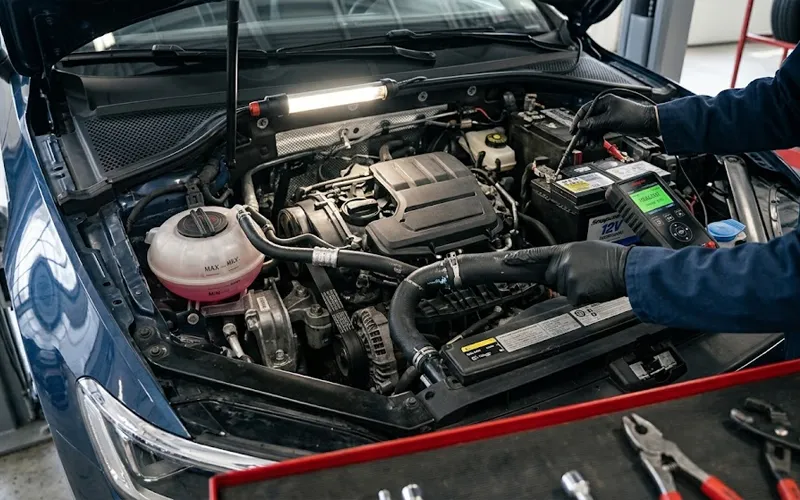
The battery supplies the electrical energy required for starting and supports numerous electrical systems. Its performance can decline with age, extreme temperatures, repeated short journeys, or extended periods without adequate charging. Checking its condition before it becomes severely weak can reduce the possibility of an unexpected starting problem.
Belts and hoses operate under heat, pressure, movement, and vibration. A belt may show cracking, fraying, glazing, or other deterioration, while a hose may become swollen, hardened, softened, or damaged. These components should be inspected according to the vehicle’s service requirements rather than being replaced only after failure.
The cooling system deserves particular attention because overheating can cause serious engine damage. Coolant level, leaks, hoses, the radiator, thermostat, water pump, and related components all contribute to temperature control. Some defects may not be obvious from a simple visual inspection, so professional evaluation can be important when symptoms such as overheating, coolant loss, or unusual temperature changes appear.
Manufacturer-Specific Maintenance Requirements
There is no single recommended car maintenance schedule that applies equally to every vehicle. Manufacturers use different engines, transmissions, electronic systems, materials, and component designs. Even vehicles from the same brand can have different requirements because of differences in engine size, model year, drivetrain, or equipment.
Anyone researching a vw car maintenance schedule should identify the exact Volkswagen model, engine, and production year before deciding when services are due. The same principle applies to a ford car maintenance schedule or a honda accord car maintenance schedule. General online information can provide useful background, but it should not replace the official service information for the specific vehicle.
Local searches such as car maintenance schedule hixson can help drivers find nearby service providers or regional information. However, local advice should complement rather than replace the manufacturer’s maintenance requirements. A qualified technician can assess the actual condition of a vehicle and explain whether additional work is needed.
Organizing Maintenance Records
Accurate records can make long-term vehicle ownership much easier. Each entry should ideally include the service date, mileage, work completed, replacement parts, fluid specifications when relevant, and any recommended follow-up work. Keeping invoices and service documents can provide additional evidence of completed maintenance.
Drivers can organize this information in whichever format is easiest to maintain. A car maintenance schedule template can provide a basic structure for manual records, while a car maintenance schedule pdf can be saved electronically. A printable car maintenance schedule may suit drivers who prefer physical paperwork, while a car maintenance schedule app can provide digital reminders and allow several vehicles to be managed from one place.
The purpose of these tools is organization rather than unnecessary paperwork. A consistent record helps prevent missed services, reduces the chance of performing the same work twice, and gives technicians useful background when investigating recurring problems.
Adapting Maintenance to Driving Conditions
The way a vehicle is used can significantly affect maintenance needs. Severe conditions may include repeated short journeys, heavy stop-and-go traffic, extensive idling, towing, carrying heavy loads, driving on unpaved roads, or operating in unusually hot, cold, dusty, or humid environments.
Different conditions place different stresses on vehicle systems. Heavy traffic can increase braking demands, while towing can place additional load on the engine, transmission, cooling system, tires, and brakes. Dusty roads can increase the amount of contamination reaching air filters, and repeated short trips may prevent some systems from spending enough time at normal operating temperature.
Drivers should check how their manufacturer defines severe or special operating conditions. If their usage falls within that category, certain services may need to be performed more frequently than they would under ordinary driving conditions.
Using a Maintenance Chart and Digital Tools
Some drivers prefer a visual car maintenance schedule chart because it allows upcoming services to be reviewed quickly. A chart can organize tasks according to mileage, months, seasons, or specific vehicle components. The important point is that the information should come from the manufacturer’s requirements rather than from a generic chart designed for another vehicle.
Modern vehicles can also provide useful maintenance information through dashboards, connected services, and smartphone applications. Depending on the model, a vehicle may display oil-life estimates, tire-pressure information, service reminders, or diagnostic warnings. These features can make maintenance easier to monitor, but they should be considered support tools rather than complete maintenance systems.
Electronic reminders cannot necessarily detect every physical problem. Uneven tire wear, damaged hoses, fluid leaks, suspension wear, and certain mechanical faults may require a physical inspection. Drivers should therefore continue to follow the manufacturer’s service requirements and pay attention to changes in vehicle behavior.
Making Long-Term Maintenance More Effective
Good maintenance is easier when upcoming work is planned before it becomes overdue. Reviewing future service requirements can help drivers schedule inspections around work commitments, road trips, seasonal changes, or periods of heavier vehicle use. Planning also provides an opportunity to discuss several related maintenance items during the same visit when appropriate.
Scheduled maintenance and unexpected repairs should also be viewed differently. Scheduled work is based on known service requirements, while repairs respond to a specific fault, failure, or damaged component. Understanding this difference helps vehicle owners recognize which expenses are part of normal upkeep and which result from an unexpected problem.
Consistent servicing can also make future troubleshooting more efficient. When a technician has access to an accurate history, previous repairs, replacements, and inspections can be considered when investigating a new symptom. This can reduce uncertainty and help identify whether a problem is new or connected to an earlier issue.
Build a Maintenance System That Fits Your Vehicle
A typical car maintenance schedule can provide a useful starting point, but the most effective maintenance system is one that matches the actual vehicle and its everyday use. A high-mileage commuter may place greater emphasis on distance-based services, while an occasionally used vehicle may require closer attention to time-sensitive components and battery condition. A vehicle exposed to severe conditions may need additional inspections beyond the standard schedule.
The system should also be simple enough to maintain consistently. Recording services when they are completed, keeping important documents together, and reviewing upcoming requirements periodically can create a reliable history without making vehicle care unnecessarily complicated.
The strongest approach combines the manufacturer’s service information with observations of the vehicle’s current condition and an understanding of how it is operated. The official schedule provides the baseline, inspections reveal actual wear or developing problems, and driving conditions indicate whether additional attention may be necessary.
Frequently Asked Questions
What is a car maintenance schedule?
It is a plan that helps drivers organize inspections, services, and replacements according to mileage, time, and vehicle-specific requirements.
How often should vehicle maintenance be performed?
The correct interval depends on the manufacturer’s recommendations, vehicle age, mileage, and operating conditions. The owner’s manual is the best starting point.
Can regular maintenance improve vehicle safety?
Yes. Checking tires, brakes, lights, wipers, steering components, and other safety-related systems can help identify problems before they affect normal driving.
Should maintenance be based on mileage or time?
Both can matter. Some components wear mainly through use, while others deteriorate with age. When both limits are specified, the applicable service should generally be completed when the first requirement is reached.
What information should be included in maintenance records?
Useful records include the service date, odometer reading, work completed, parts replaced, relevant fluid information, and any recommended follow-up work.
Do driving conditions affect service intervals?
Yes. Towing, heavy traffic, short trips, dusty roads, extreme temperatures, and other demanding conditions can increase stress on certain vehicle systems.
Are dashboard service reminders enough?
No. Electronic reminders are useful for organization, but they do not replace the manufacturer’s maintenance instructions, physical inspections, or professional diagnosis when needed.
What is the easiest way to manage vehicle maintenance?
Choose a simple system that you will consistently use. A digital app, spreadsheet, printed record, or schedule can all work if services and upcoming requirements are recorded accurately.
Conclusion
A comprehensive maintenance plan is an important part of responsible vehicle ownership because different systems wear and age at different rates. Mileage, elapsed time, driving conditions, climate, vehicle design, and operating habits can all influence when specific services are required. Understanding these factors allows drivers to move beyond a simple approach of repairing the vehicle only after something fails.
The best starting point is the manufacturer’s maintenance information for the exact vehicle. From there, drivers can keep accurate service records, monitor safety-critical components, recognize unusual changes in vehicle behavior, and consider whether demanding operating conditions require additional attention. Digital reminders, printed records, and maintenance applications can make organization easier, but they are most effective when used alongside proper inspections.
When vehicle care is planned according to the car’s actual requirements, drivers can make better servicing decisions, identify developing concerns earlier, and maintain a clearer understanding of the vehicle’s condition. A consistent approach can support safer operation, dependable performance, better ownership planning, and a longer useful service life while reducing unnecessary guesswork.
Want to read more articles like this? Explore more automotive guides, car maintenance tips, and the latest updates on TrendsMore.com.