



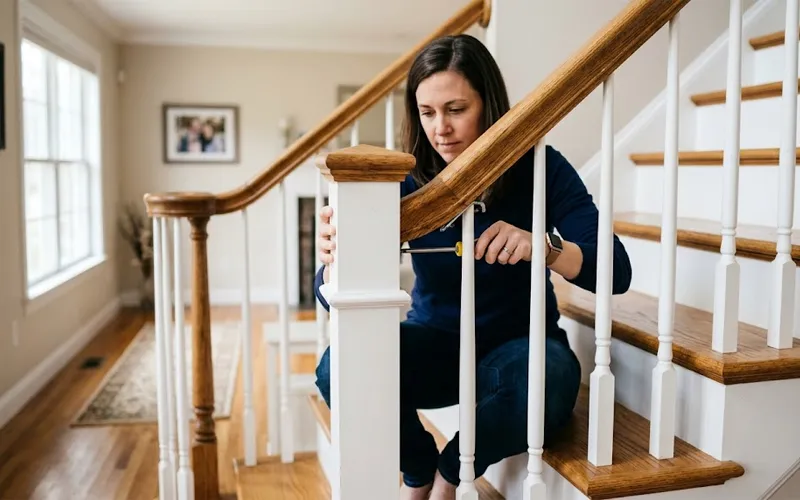
A loose stair railing can make everyday stair use dangerous, especially for children, older adults, and anyone who relies on the handrail for balance. Fortunately, some minor problems can be repaired with basic tools when the supporting structure is still in good condition. The first step is to identify which connection has become loose and why it has failed.
Learning how to fix a loose stair railing involves inspecting the handrail, supporting posts, brackets, and fasteners before choosing a suitable repair. A loose screw may need tightening, while an enlarged screw hole or damaged mounting point requires a different solution. Understanding these differences helps you avoid temporary repairs that may fail during normal use.
This guide explains seven practical steps for repairing common stair railing problems, including a loose post at the top of stairs, a loose banister on top landing, and loose metal spindles. You will also learn which problems are suitable for DIY repairs and when professional assistance is necessary.
Why Does a Stair Railing Become Loose?
Stair railings can loosen through repeated pressure, worn fasteners, poor installation, or movement in the materials supporting them. Wooden components may develop cracks or enlarged screw holes, making it difficult for screws to grip securely. Metal railings can become unstable when bolts loosen, brackets bend, or corrosion weakens the connections.
The location of the movement often helps identify the cause. If the handrail moves but the posts remain firm, the problem may involve a bracket or joint. If a supporting post moves at its base, the floor connection or mounting hardware may be damaged. Finding the source of the problem is essential before deciding how to fix stair railing components safely.
Tools and Materials You May Need
The tools required depend on the railing material and the type of damage. Common items include a screwdriver, drill, tape measure, suitable screws or bolts, and a wrench. Wooden railings may require solid-wood repair plugs or compatible replacement hardware, while metal systems may need replacement brackets, bolts, or mounting plates.
Choose fasteners designed for the railing and its supporting structure. Longer screws are not automatically stronger or safer because hidden wiring, pipes, and other materials may be present behind the mounting surface. Keep the staircase clear while working, and prevent people from using a railing that is visibly unstable.
Step 1: Inspect the Entire Stair Railing
Begin at the bottom of the staircase and inspect the handrail, supporting posts, brackets, spindles, and mounting points. Apply only gentle hand pressure to locate the movement without leaning on the railing. Look for missing screws, gaps between joints, cracked wood, rust, bent fittings, or loose mounting plates.
Pay particular attention to the base of each newel post and the points where the handrail meets the wall or supporting posts. A newel post is the larger post that supports the railing at the end or turn of a staircase. Identifying the exact location of the damage helps you select the correct repair method.
If a post is split, the mounting surface is badly damaged, or the railing is pulling away from the stairs, the problem may extend beyond a loose fastener. Such damage needs a repair that restores the strength of the connection rather than simply making the parts appear secure.
Step 2: Tighten Loose Screws and Bolts
If the inspection reveals loose fasteners on an otherwise sound connection, tighten them using the appropriate screwdriver or wrench. Turn each screw carefully until it is secure, but avoid excessive force that could strip the threads, crack wood, or damage metal fittings.
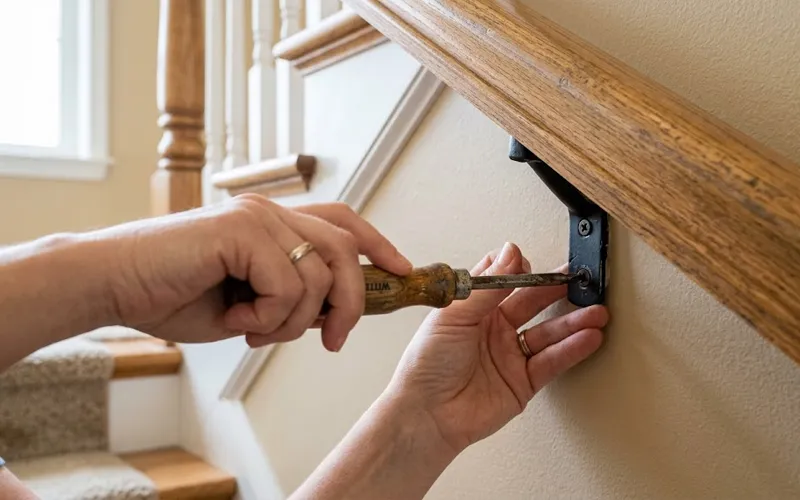
For a wall-mounted handrail, examine how the brackets attach to the wall. Their screws must connect to a suitable structural support, such as a wall stud, or use an appropriate anchor system for the wall construction. Fasteners held only in weak drywall may pull out when someone relies on the handrail for balance.
After tightening the hardware, check whether the original movement has stopped. If a screw spins freely, cannot hold its position, or repeatedly loosens, the hole or supporting material may need repair before the fastener can work properly.
Step 3: Repair Damaged Screw Holes in Wooden Railings
Wooden railings can become unstable when repeated movement enlarges the holes around their screws. In this situation, the screw may turn without gripping the wood, even when it appears fully tightened.
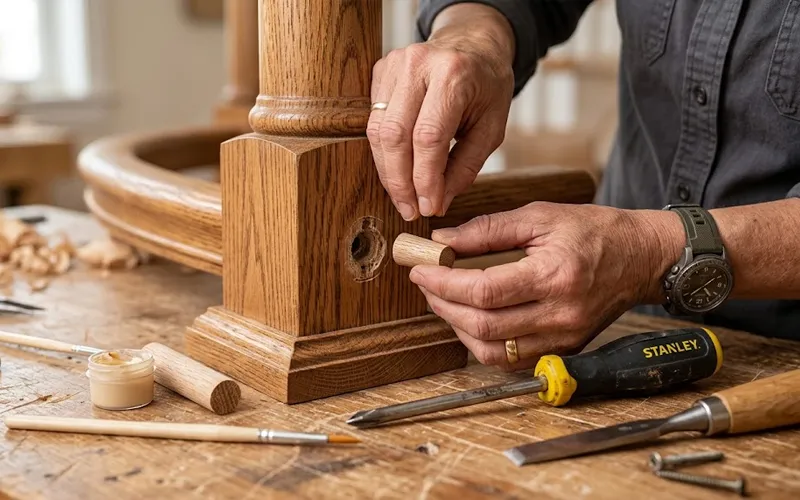
For a minor repair in a suitable wooden fitting, remove the screw and examine the hole. A properly fitted solid-wood repair plug or insert may restore the material needed for a secure fastening. Once the repair is suitable for the joint, fit an appropriate screw without overtightening it. Ordinary wood filler alone is generally unsuitable for rebuilding a hole that must support a safety railing.
For a major structural connection, the repair method must match the design and condition of the joint. A newel post repair kit may be appropriate for certain damaged post connections, but it must be compatible with the post and its mounting system. Rotten wood, deep splits, or severely weakened sections may require replacement rather than a simple hole repair.
Step 4: Secure a Loose Post at the Top of the Stairs
A loose post at top of stairs can affect the stability of the surrounding railing, particularly when it supports a landing or the end of a handrail. The movement may result from loose base fasteners, a damaged mounting block, or a weakened connection beneath the floor.
Inspect the post’s base to understand how it is secured. Some posts connect through the floor to structural framing, while others use concealed brackets or specialised fixing systems. Tighten accessible fasteners only when the surrounding materials are sound and the original mounting arrangement is understood.
If you need to know how to fix loose banister on top landing, inspect the connection between the post, handrail, and landing. Determine whether the movement comes from the post base or the joint where the handrail meets it. The correct repair may require compatible structural hardware or replacement of a damaged component.
When the post moves significantly, the landing feels weak, or the mounting arrangement cannot be identified, consult a qualified carpenter or stair installer. Keep people away from the affected staircase until the structural problem has been resolved.
Step 5: Fix a Loose Handrail Bracket
A loose handrail bracket can cause a wall-mounted handrail to move even when the rail itself is undamaged. These brackets transfer the force applied to the handrail into the supporting wall, so their mounting connections must be secure.
Examine the bracket, its screws, and the surface behind it. If the screws have loosened but the mounting point remains sound, tighten them carefully. If they spin freely or pull out, remove the bracket and check whether it is attached to a wall stud or another suitable structural support. Select replacement fasteners or anchors appropriate for the wall material.
Replace a bracket that is bent, cracked, or badly corroded with a compatible model. The handrail must also be firmly attached to the bracket, with no damaged fittings or gaps that could allow the connection to shift. A secure mechanical fixing is essential; adhesive alone should not be used as a substitute for appropriate mounting hardware.
Step 6: Repair Loose Metal Spindles and Railing Connections
Metal spindles are the vertical bars positioned between the handrail and the lower rail or staircase. They may become loose when their screws, bolts, sockets, or connecting fittings wear out. The result can be rattling, visible movement, or a gap in the railing.
To repair loose metal spindles on stairs, examine where each spindle meets the upper and lower rails. Tighten accessible fasteners with the correct tool and replace missing or damaged hardware with compatible parts. Some railing designs use concealed fittings, so check the manufacturer’s installation details when the connections are not visible.

If you want to learn how to tighten loose metal railing, inspect the main mounting plates and structural joints as well as the individual bars. A loose base plate can destabilise an entire section even when its spindles are firmly attached. Check for corrosion, cracked welds, bent components, and damaged anchors.
Severe rust, cracked welds, or damaged metal supports may require professional metalwork or replacement. Do not attempt to restore a structural connection with ordinary glue or improvised fasteners, as these methods may not provide the strength required for safe use.
Step 7: Check the Repair and Test Stability
After completing the repair, inspect the connections you worked on. Confirm that the handrail is properly attached to its brackets, the posts are secured to their mounting points, and the spindle fittings are correctly installed. Remove any loose hardware or sharp edges that could cause injury.
From a safe position, apply gentle hand pressure to the repaired section and watch for movement at the joints. Do not lean your body weight against the railing or use another person as a test load. If any part shifts, stop using the affected staircase until the remaining problem has been identified and corrected.
A railing that feels firm during a light check is not automatically proven to meet building safety requirements. If the repair involves a structural post, elevated landing, or uncertain mounting connection, arrange a professional inspection. Monitor the repaired area during normal use and address any new movement promptly.
Common Mistakes to Avoid During Stair Railing Repairs
One mistake is tightening a fastener without checking whether the surrounding material can hold it. A screw installed in damaged wood or an unsuitable wall anchor may loosen again, even if it initially feels secure.
Another mistake is choosing hardware based only on its length or appearance. Screws, anchors, brackets, and replacement fittings must be suitable for the railing design and supporting material. Using incompatible components can weaken the connection instead of improving it.
Finally, avoid hiding structural damage with filler, adhesive, or additional screws placed without a clear repair plan. Cracked posts, rotten wood, failed welds, and weakened mounting points require an appropriate repair or replacement method.
When Should You Call a Professional?
A minor loose fastener on an otherwise sound railing may be suitable for DIY repair. However, a broken banister post, significant movement at a post base, a damaged landing connection, or severe corrosion can indicate a structural problem.
Professional assistance is also advisable when the railing is attached to concrete or masonry and the correct anchoring method is uncertain, or when concealed fixings make the connection difficult to inspect. A qualified carpenter or stair installer can assess the damage and determine whether the post, mounting hardware, or supporting structure needs replacement.
If the railing protects an open stair edge or elevated landing, keep people away from the affected area until the hazard has been addressed. Do not rely on a visibly unstable railing for support while waiting for repairs.
Conclusion
Learning how to fix a loose stair railing begins with identifying the source of the movement and choosing a repair that suits the material and mounting system. Tightening suitable fasteners, repairing damaged wooden holes, securing compatible brackets, and replacing faulty spindle fittings can resolve some common problems when the supporting structure remains sound.
However, broken posts, weakened structural connections, severe corrosion, and damaged landing supports may require professional repair or replacement. Choosing the correct method for the actual damage helps restore a dependable railing and makes everyday stair use safer.
Frequently Asked Questions
1. How do you fix a loose stair railing?
Inspect the railing to find the loose connection, then tighten suitable screws or bolts. Repair damaged screw holes or replace faulty hardware if necessary.
2. Why does my stair railing keep coming loose?
A stair railing may loosen because of worn screws, enlarged holes, damaged wood, weak wall anchors, or a poorly secured post.
3. How do you fix a loose stair railing post?
Check the post’s base and mounting hardware for damage. Tighten suitable fasteners if the supporting structure is sound, or contact a professional if the post moves significantly.
4. How do you fix a loose handrail bracket?
Check the bracket screws and wall support. Tighten loose fasteners or replace damaged hardware, ensuring the bracket is secured to a suitable structural support.
5. How do you repair loose screw holes in a wooden stair railing?
Remove the loose screw and inspect the hole. A suitable solid-wood repair plug or insert may restore the fastening point, but severely damaged wood may need replacement.
6. How do you tighten loose metal spindles on stairs?
Inspect the spindle connections and tighten accessible screws or bolts with the correct tool. Replace damaged fittings and seek professional help for cracked welds or severe corrosion.
7. Can you fix a loose stair railing without replacing it?
Yes, if the damage is minor and the supporting structure remains sound. Loose fasteners and some damaged screw holes can be repaired, but broken posts or weakened structural connections may require replacement.
8. When should you call a professional to repair a loose stair railing?
Call a qualified carpenter or stair installer if a post moves significantly, wood is rotten or deeply cracked, metal welds are damaged, or the railing’s structural mounting cannot be identified safely.
Want to read more articles like this? Explore more home improvement ideas, helpful tips, and the latest updates on TrendsMore.com.


