




Refrigerator mat pads help protect shelves and drawers from food spills, crumbs, and moisture. Over time, they can develop sticky patches, stains, and unpleasant smells from stored food. Cleaning them regularly helps maintain a fresh refrigerator and prevents food residue from building up. However, the wrong cleaning method can damage certain materials, causing them to warp, crack, or lose their original texture.
Learning how to clean refrigerator mat pads without damaging them involves choosing suitable cleaning products and using gentle techniques. Mild dish soap, lukewarm water, and a soft sponge are usually enough for washable mats. Before cleaning, check the manufacturer’s instructions to make sure the method is suitable for your particular mat.
Why Refrigerator Mat Pads Need Regular Cleaning
Although refrigerator mats catch spills and crumbs, food particles and moisture can collect around their edges and underneath them. If left unattended, this buildup can cause discoloration, unpleasant odors, and conditions that encourage mold growth.
Cleaning the mats also allows you to inspect the refrigerator shelves for hidden spills and residue. Removing this buildup helps keep food storage areas clean and makes it easier to identify mats that are damaged or no longer easy to maintain.
Check the Material Before Washing
Refrigerator mats are available in different materials, including silicone and plastic. Many can be washed by hand, but their resistance to heat, cleaning products, and soaking can vary. Mats with textured surfaces, protective coatings, or non-slip backing may require extra care.
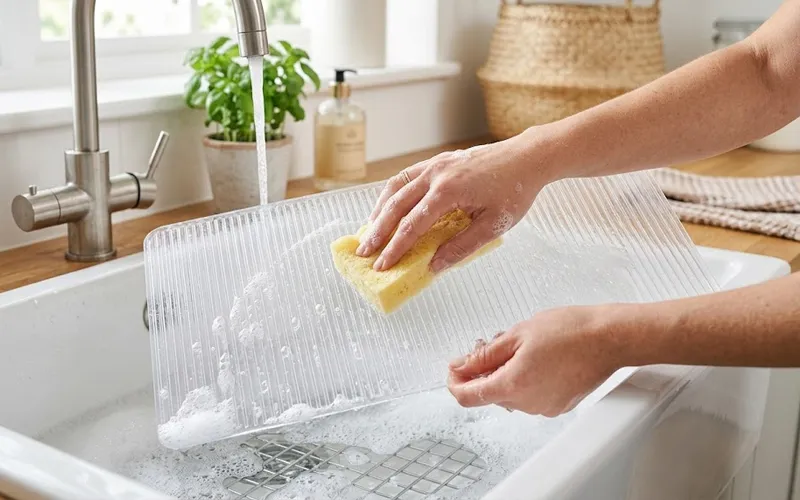
Read the product label or manufacturer’s instructions before choosing a cleaning method. Some mats may be suitable for machine washing or dishwasher cleaning, while others require hand washing. If the material is unclear, hand cleaning with mild soap and lukewarm water is a sensible starting point.
Avoid abrasive powders and rough scouring pads that can scratch the surface. If you want to try a new cleaning product, test it on a small, hidden area first to check for discoloration or other damage.
How to Clean Refrigerator Mat Pads Step by Step
Begin by removing food containers from the refrigerator shelf and carefully lifting out the mats. Shake off loose crumbs, then check both sides for dried spills, grease, and trapped food particles. Place the mats in a sink or basin for cleaning if their material allows it.
Fill the basin with lukewarm water and add a small amount of mild dish soap. Use a soft sponge or cloth to wipe the entire surface, paying attention to corners and textured areas where residue can collect. If the mats should not be submerged, clean them with a damp, soapy cloth instead.
For larger mats that do not fit in the sink, wipe the surface in sections. Avoid pulling, twisting, or scrubbing too forcefully, as these actions may damage flexible materials or protective coatings.
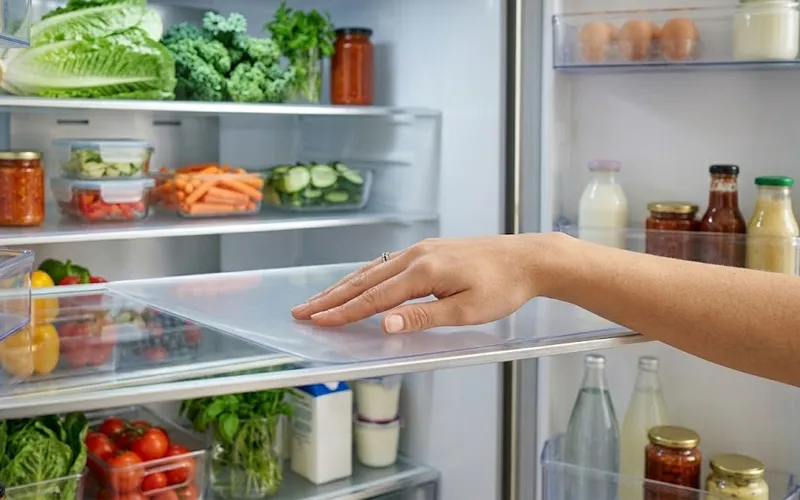
After cleaning, rinse the mats thoroughly with fresh water to remove all soap residue. Use a clean towel to absorb excess water, then leave them in a clean, well-ventilated area until both sides are completely dry. Check the refrigerator shelf and dry it if necessary before putting the mats back. Never place damp mats beneath food containers because trapped moisture can contribute to odor and mold problems.
Remove Stubborn Stains and Sticky Residue
Tomato sauce, fruit juice, oily food, and dried spills can leave marks that ordinary wiping may not remove. To loosen this residue, apply a little mild dish soap mixed with lukewarm water to the affected area. Let it sit briefly if the manufacturer’s instructions allow, then wipe gently with a soft sponge or microfiber cloth.
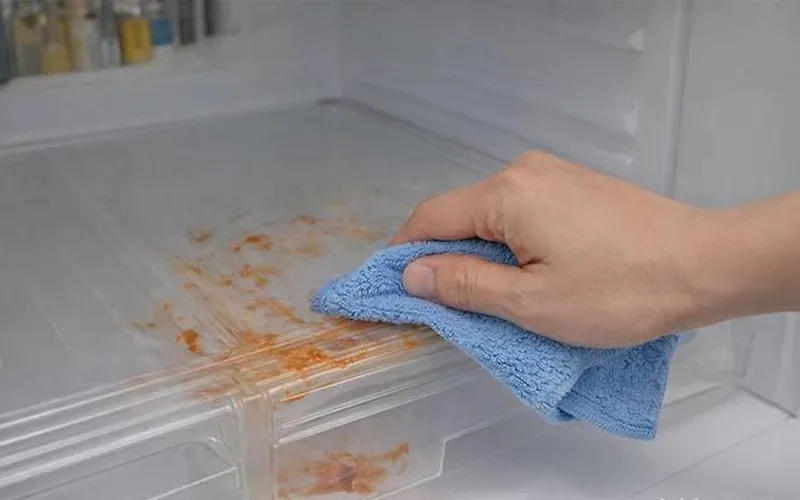
For textured mats, a soft-bristled brush can help reach grooves without scratching the surface. If the stain remains, repeat the process rather than applying excessive pressure. Avoid sharp tools, abrasive cleaners, and unapproved stain removers, as these may leave permanent marks or weaken the material.
Some stains may remain even after proper cleaning, particularly on older or porous mats. If the surface is still intact and the mat has no persistent odor, the discoloration may be cosmetic. However, replace a mat that has developed cracks, peeling, or damage that prevents proper cleaning.
How to Get Rid of Unpleasant Refrigerator Mat Odors
Lingering smells may come from food residue trapped beneath the mat, spills on the refrigerator shelf, or nearby spoiled food. After washing the mat, inspect the shelf and its edges to identify any hidden source of the odor. Check nearby containers and drawers as well, since cleaning the mat alone will not remove smells caused by other items.
If the odor remains on the mat, baking soda may help absorb it when the material’s manufacturer confirms that it is suitable. Use it according to the product instructions, then remove any residue and rinse the mat if required. Avoid heavily scented cleaners or perfumes that simply cover up the smell instead of addressing its source.
If the odor returns soon after cleaning, or the mat has visible mold that cannot be safely removed, replacing it may be the better option. Always follow the manufacturer’s care guidance when deciding whether a mat can be cleaned and reused.
Common Cleaning Mistakes to Avoid
Using excessively hot water is a common mistake because some plastic mats can soften, warp, or lose their shape when exposed to high temperatures. Stick to lukewarm water unless the product instructions specify a different temperature.
Another mistake is mixing cleaning products. Never combine bleach with ammonia or other cleaners, as dangerous fumes may develop. Avoid using solvents or concentrated chemicals unless they are specifically approved for the mat’s material.
Do not assume that every refrigerator mat is washable or reusable. Some products are designed for single use, while others have special care requirements. Following the manufacturer’s instructions helps prevent avoidable damage and ensures that the cleaning method is appropriate for the product.
Clean Refrigerator Mat Pads?
Cleaning frequency depends on how much food residue collects on the mats and how often the refrigerator is used. Inspect them during routine refrigerator cleaning and wash them whenever spills, sticky patches, or visible dirt appear. Mats beneath fresh produce, frequently used containers, or spill-prone items may need more attention.
Clean up spills promptly, especially when raw food juices are involved, and inspect the shelf underneath whenever you remove a mat. This helps prevent hidden residue from remaining in the refrigerator for long periods.
Replace mats when they become brittle, cracked, badly worn, or difficult to clean. Persistent odors that remain after proper cleaning are another reason to consider replacement. Regular inspection helps you identify these problems before the mats become unsuitable for continued use.
Conclusion
Cleaning refrigerator mat pads is straightforward when you use the right method for their material. Mild dish soap, lukewarm water, and gentle wiping are usually sufficient for removing everyday dirt and food residue from washable mats.
When learning how to clean refrigerator mat pads without damaging them, always follow the manufacturer’s care instructions and dry the mats completely before reinstalling them. These simple practices help maintain cleaner refrigerator shelves and keep reusable mats in good condition.
Frequently Asked Questions
1. How do you clean refrigerator mat pads without damaging them?
Use lukewarm water, mild dish soap, and a soft sponge to remove dirt and food residue. Check the manufacturer’s instructions and let the mat dry completely before putting it back.
2. Can you wash refrigerator mat pads with dish soap?
Yes, many washable refrigerator mats can be cleaned with mild dish soap and water. Rinse them thoroughly to remove soap residue and avoid harsh cleaners that may damage the material.
3. How do you remove sticky residue from refrigerator mats?
Apply a small amount of mild dish soap mixed with lukewarm water to the sticky area. Let it sit briefly if the care instructions allow, then wipe gently with a soft cloth or sponge.
4. How do you remove bad smells from refrigerator mat pads?
Wash the mat, inspect the refrigerator shelf underneath, and remove any trapped food residue. If the smell persists, check for damage or mold and consider replacing the mat if it cannot be cleaned safely.
5. Can refrigerator mat pads go in the dishwasher?
Some refrigerator mats are dishwasher-safe, but others may warp or become damaged. Check the manufacturer’s instructions before placing a mat in the dishwasher.
6. How often should you clean refrigerator mat pads?
Clean them whenever you notice spills, sticky residue, visible dirt, or unpleasant smells. Inspect them during regular refrigerator cleaning and clean up food spills promptly.
7. How do you dry refrigerator mat pads after washing?
Remove excess water with a clean towel and leave the mat in a well-ventilated area until both sides are completely dry. Dry the refrigerator shelf before reinstalling the mat to prevent trapped moisture.
8. When should you replace refrigerator mat pads instead of cleaning them?
Replace mats that have cracks, peeling surfaces, severe wear, or persistent odors that remain after proper cleaning. Damaged mats can be difficult to clean thoroughly and may no longer protect refrigerator shelves effectively.
Want more cleaning tips? Explore helpful cleaning ideas and the latest updates on TrendsMore.com.


