



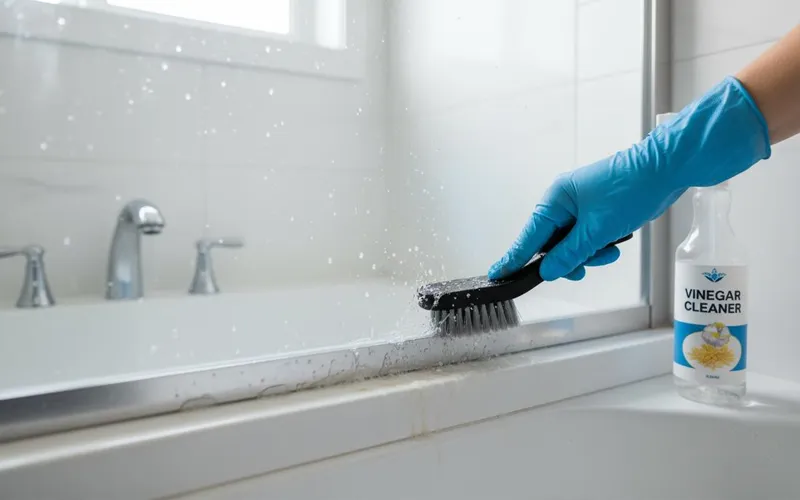
Shower door tracks can collect soap scum, hard water deposits, hair, and dirt that affect the appearance and movement of sliding glass doors. Because these narrow spaces are difficult to reach, residue often builds up in corners, grooves, and areas hidden beneath overlapping panels. If left untreated, trapped moisture may also encourage mold growth.
Learning how to clean shower door tracks becomes easier when you choose suitable cleaning products and tools for the surface. Mild dish soap is usually enough for everyday grime, while compatible cleaners may be needed for mineral deposits or mold. The following methods explain how to remove different types of buildup without damaging the tracks or glass doors.
Why Shower Door Tracks Get Dirty
Shower tracks are regularly exposed to water, shampoo, body wash, and soap. When water evaporates, dissolved minerals can remain behind as white marks or chalky deposits. Soap residue can also combine with body oils and dust, creating a sticky layer that attracts more dirt.
Poor drainage and limited airflow can make the problem worse. Water trapped around rubber seals or inside narrow grooves may encourage mold and mildew growth. Understanding what causes the buildup helps you choose an effective cleaning method instead of using the same product for every stain.
Supplies You Need Before Cleaning
Gather a soft toothbrush, microfiber cloths, warm water, mild dish soap, and a small spray bottle. Cotton swabs or a narrow nylon brush can help reach corners that larger cleaning tools cannot access. A plastic scraper may also help loosen hardened residue, provided it is safe for the track’s material.
Keep white vinegar, baking soda, and a suitable bathroom cleaner available only if the surface requires them. Check the manufacturer’s instructions before using acidic or abrasive products, especially on aluminum, coated metal, rubber seals, or older tracks. Test unfamiliar cleaners in a small, hidden area first.
Wear cleaning gloves when recommended by the product label, keep the bathroom ventilated, and never mix different cleaning chemicals. In particular, vinegar must never be mixed with bleach because the combination can release dangerous chlorine gas.
How to Clean Shower Door Tracks Step by Step
Remove Loose Dirt and Standing Water
Open the shower doors as far as their design allows. Remove loose hair, dust, and debris with a dry cloth, soft brush, or suitable vacuum attachment. If water has collected inside the track, absorb it with a microfiber cloth before applying a cleaning solution.
Check the corners and the spaces beneath overlapping door panels, where loose debris can remain hidden. Do not force a glass door out of its runners. If removal is necessary for thorough cleaning, follow the manufacturer’s instructions or seek professional assistance.
Wash With Warm Water and Dish Soap
Mix a few drops of mild dish soap into warm water. Dip a soft toothbrush into the solution and gently scrub the inside edges, grooves, and corners of the track. Work in small sections so you can loosen the dirt without spreading it across the entire surface.
Wipe away the loosened residue with a clean, damp microfiber cloth. Use a cotton swab for narrow areas that the toothbrush cannot reach, then remove the remaining soap with fresh water. Dry the surface and inspect it before deciding whether any stubborn deposits need additional treatment.
Shower Door Tracks With Vinegar
For how to clean shower door tracks with vinegar, first confirm that the track material and finish can tolerate acidic cleaners. White vinegar can help dissolve certain hard water deposits, but it may damage some aluminum finishes, sealants, natural stone, and other sensitive surfaces. When the material is uncertain, choose a manufacturer-approved alternative.
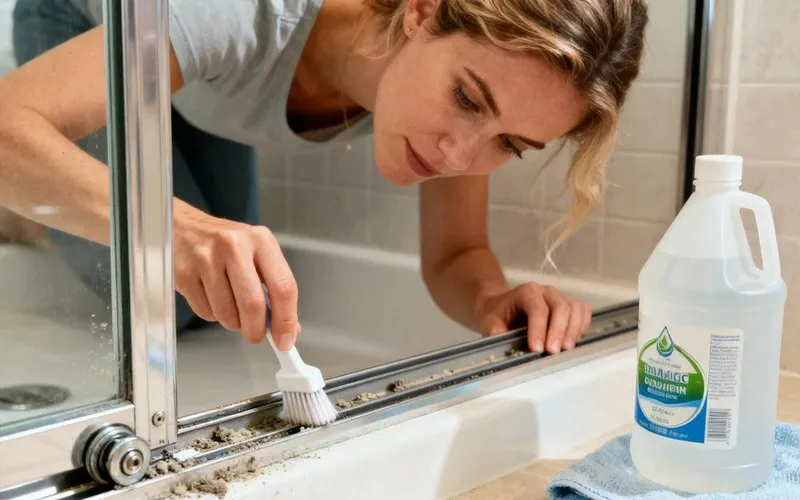
If vinegar is suitable for your track, mix equal parts white vinegar and water. Apply a small amount to a cloth and place it against the mineral deposits, or use a spray bottle to treat the affected area. Allow it to work briefly, following the manufacturer’s guidance, without letting the solution dry on the surface.
Gently loosen the deposits with a soft toothbrush, then rinse thoroughly with clean water and dry the track. Avoid prolonged contact with metal components. If the white marks remain, do not increase the vinegar concentration or scrub aggressively; use a compatible descaling product instead.
Shower Door Tracks With Baking Soda
Baking soda can help loosen certain types of sticky residue and soap scum. To try how to clean shower door tracks with baking soda, mix a small amount with water to form a soft paste, then apply it to the affected area. Use a soft toothbrush to work the paste gently into the grooves without pressing too hard.
Rinse the track thoroughly to remove all traces of the paste, then wipe it dry with a microfiber cloth. Baking soda is mildly abrasive, so it may not be suitable for delicate coatings or easily scratched finishes. Test it on an inconspicuous area before use.
Avoid combining baking soda and vinegar as a stronger cleaning treatment. The two ingredients react with each other and largely neutralize one another, so applying the appropriate cleaner separately is generally more useful.
Cleaning Aluminum Shower Door Tracks Safely
Aluminum tracks need careful treatment because their protective finish can become dull, stained, or damaged by unsuitable products. For routine cleaning, use warm water and mild dish soap with a soft toothbrush or non-abrasive cloth. Pay attention to the edges where dirt collects, then wipe the surface with clean water.
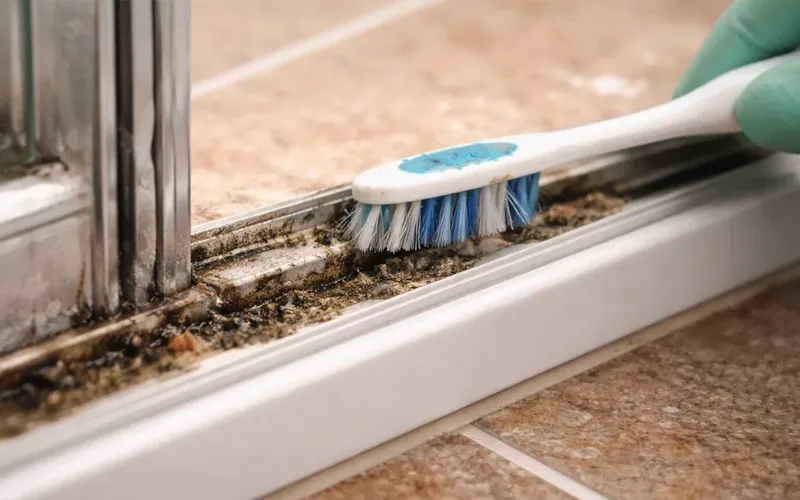
When cleaning aluminum shower door tracks, avoid steel wool, rough scouring pads, strong acids, and harsh alkaline cleaners unless the manufacturer specifically approves them. Vinegar and abrasive powders may damage certain aluminum finishes, so do not assume that a household cleaning product is safe for every track.
If mineral deposits remain after washing, select a descaler labeled as suitable for the specific aluminum surface. Follow the stated contact time and rinsing instructions. Finish by drying the track completely to help reduce water marks and further mineral buildup.
Shower Door Tracks Stains
Different stains require different treatments. White, chalky marks usually indicate mineral deposits, while cloudy or greasy residue may come from soap scum. Dark marks can be caused by mold, embedded dirt, corrosion, or a deteriorating finish.
When dealing with how to clean shower door tracks stains, first identify the likely cause. Wash ordinary dirt with mild dish soap, use a compatible descaler for mineral deposits, and choose a suitable bathroom cleaner for greasy residue. Always follow the product label and test it on a hidden area before treating the entire track.
Some marks will not disappear because the surface itself has changed. Corrosion, damaged coatings, and deteriorated sealants can resemble stubborn dirt. If a mark remains after careful cleaning, inspect the area rather than repeatedly scrubbing it. A damaged seal or track may need repair or replacement.
Mold From Shower Door Tracks
Mold can grow in damp corners, beneath rubber seals, and around areas where water remains trapped. Small areas of surface mold may be treated with a bathroom cleaner specifically labeled for the affected material. Apply the product as directed, allow the recommended contact time, and clean accessible areas with a soft brush.
For how to clean mold from shower door tracks, choose a product that is suitable for the track, seals, and surrounding surfaces. Wear protective gloves when required and keep the room well ventilated. Rinse the area according to the product instructions and dry it thoroughly.
Never combine bleach-based cleaners with vinegar, ammonia, or other cleaning products. If mold covers a large area, returns repeatedly, or appears to extend beneath inaccessible seals, surface cleaning may not be enough. Persistent growth can indicate trapped moisture, a leak, or damaged caulking that needs to be addressed. Consider professional help when the affected area cannot be cleaned safely.
Overlapping Sliding Shower Doors
Overlapping glass panels can block access to parts of the track, making it difficult to remove hidden debris. Open the doors as far as possible and clean the exposed sections with warm soapy water. Use a narrow nylon brush or cotton swab to reach the grooves without putting excessive pressure on the glass or rollers.
When learning how to clean overlapping sliding shower doors, move the panels separately if the design allows. Clean the newly exposed sections and remove loosened dirt with a damp cloth. Repeat the process until you have covered the accessible length of the track.
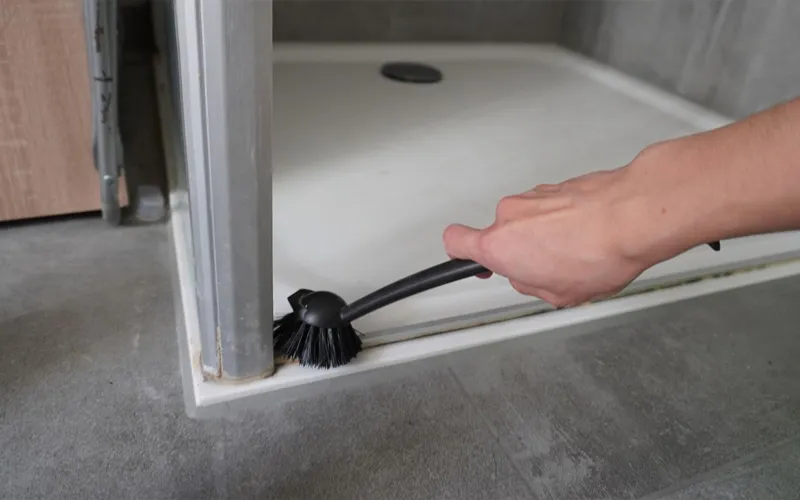
Do not lift, tilt, or remove heavy glass panels unless the manufacturer provides clear instructions for safe removal. If substantial buildup remains underneath a panel that cannot be moved safely, arrange professional assistance rather than risking injury or glass damage.
After cleaning, check the rollers for visible debris and make sure the doors slide normally. Avoid applying oil or grease unless the manufacturer recommends a specific lubricant, as unsuitable products may attract dirt or interfere with the door mechanism.
What Is the Best Cleaner for Shower Tracks?
The best cleaner for shower tracks depends on the material and the type of buildup. Mild dish soap is a practical choice for routine dirt and soap residue. A compatible descaler is generally more suitable for stubborn mineral deposits, while a bathroom mold cleaner labeled for the affected surface can help treat small areas of surface mold.
Vinegar is an option only for compatible, acid-resistant materials. Baking soda may help with some residue but can scratch delicate finishes. For coated metal, aluminum, or older tracks, a manufacturer-approved cleaner is often the safest choice.
Read the label before using any specialist product and follow its application and rinsing instructions. Choosing a cleaner based on the actual problem is more effective than applying several products in succession without identifying the source of the stain.
How to Keep Shower Door Tracks Clean Longer
After each shower, wipe away standing water from the track, especially around the corners and overlapping panels. This simple habit reduces the amount of moisture available for mold growth and limits the formation of fresh mineral deposits as water evaporates.
Clean the tracks with mild soap and water whenever residue begins to accumulate. A weekly or biweekly routine may be sufficient for many households, although frequent use and hard water may require more regular attention. Run the bathroom exhaust fan as recommended to improve ventilation and help the area dry faster.
Inspect drainage openings and rubber seals occasionally. If water repeatedly collects in the same place, check whether an opening is blocked or a seal is damaged. Correcting the underlying problem will help prevent recurring buildup more effectively than frequent deep cleaning alone.
Final Thoughts
Knowing how to clean shower door tracks properly helps improve the appearance of a bathroom and keeps sliding doors moving smoothly. Start by removing loose debris, wash the surface with mild dish soap, and use a suitable specialist cleaner only when mineral deposits, stains, or mold require additional treatment.
Always match the cleaning method to the track material, especially when dealing with aluminum finishes and overlapping glass panels. With gentle cleaning tools, proper drying, and regular maintenance, you can keep the tracks in better condition and reduce the need for intensive cleaning.
Frequently Asked Questions
1. How often should you clean shower door tracks?
Clean shower door tracks weekly or whenever soap scum and dirt begin to build up. Wiping away standing water after each shower can help prevent stains and mold.
2. How do you clean shower door tracks with vinegar?
Mix equal parts white vinegar and water if the track material is acid-safe. Apply briefly, scrub gently with a soft brush, rinse thoroughly, and dry the surface.
3. Can you use baking soda to clean shower door tracks?
Yes, baking soda paste may help loosen soap scum and sticky residue. Test it on a hidden area first because its mild abrasive texture can scratch delicate finishes.
4. How do you clean overlapping sliding shower doors?
Move the doors separately if their design allows, then clean exposed grooves with warm soapy water and a narrow nylon brush. Never remove heavy glass panels without proper instructions.
5. What is the best cleaner for shower tracks?
Mild dish soap is best for everyday dirt, while a compatible descaler can remove mineral deposits. Choose a surface-safe bathroom cleaner for mold and follow its label instructions.
6. How do you remove hard water stains from shower door tracks?
Use a descaler approved for the track material to loosen mineral deposits. Avoid vinegar on aluminum or other acid-sensitive finishes unless the manufacturer confirms it is safe.
7. How do you clean mold from shower door tracks?
Use a bathroom mold cleaner suitable for the affected surface, following its label directions. Wear recommended protective equipment, ventilate the room, and never mix bleach with vinegar or other cleaners.
8. How can you prevent dirt from building up in shower door tracks?
Wipe the tracks dry after showering, remove hair and loose debris regularly, and keep drainage openings clear. Good bathroom ventilation also helps reduce moisture and mold growth.
Want to read more articles like this? Explore more kitchen and bathroom improvement ideas, practical tips, design inspiration, and the latest updates on TrendsMore.com.


