



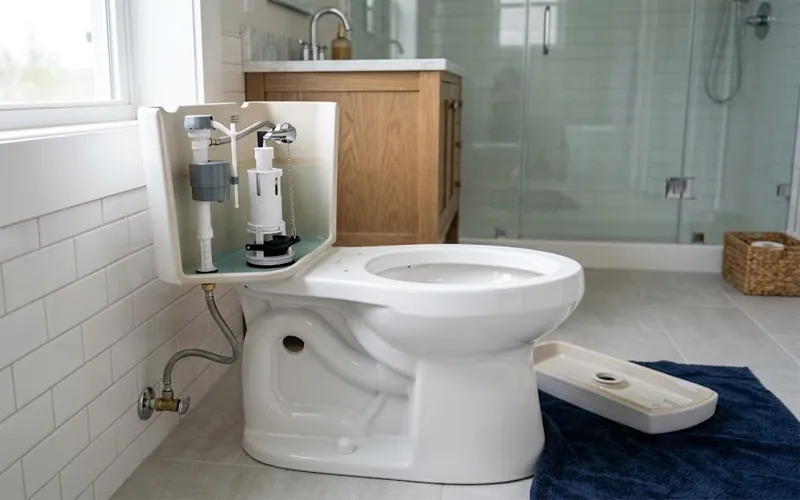
A running toilet can waste water, increase your water bill, and create constant noise in your bathroom. Common causes include a faulty fill valve, a worn flush valve seal, or an incorrectly adjusted water level. Many modern toilets use a movable float cup or a tower-shaped mechanism instead of a traditional ball float. Understanding these parts will help you identify the problem and choose the right repair.
Learning how to fix a running toilet without a ball float starts with understanding how the tank works. After flushing, the fill valve allows fresh water into the tank, while the flush valve closes to hold the water until the next flush. If either component fails, water may continue flowing into the bowl or entering the tank unnecessarily. Checking each part separately can help you avoid replacing components that are still working correctly.
Understand Why Your Toilet Keeps Running
Carefully remove the toilet tank lid and place it on a stable surface. Look for a vertical fill valve, a movable float cup, and the flush valve assembly. Some toilets also have a dual-flush button connected to a central valve, so the internal design may differ between models.
If water continues flowing into the overflow tube, the fill valve may not be shutting off correctly or the water level may be too high. If the tank fills normally but its water level gradually falls, the flush valve seal may be leaking. These signs help you identify the likely cause before starting a repair.
How to Fix a Running Toilet Without a Ball Float
First, turn off the water supply using the shutoff valve near the toilet. Turn it clockwise gently, then flush to lower the water level inside the tank. If the valve is stuck or begins leaking, do not force it because an old shutoff valve can break.
Inspect the fill valve and its movable float cup for dirt, mineral deposits, or restricted movement. Clean accessible surfaces with a soft cloth according to the manufacturer’s instructions. Avoid sharp tools that could damage plastic components or rubber seals.
Next, check the fill valve’s water-level adjustment. Depending on the model, it may have a screw, clip, or sliding control. Adjust it according to the manufacturer’s instructions so the water stops below the overflow tube’s top edge, leaving the recommended clearance. Turn the water supply back on and allow the tank to refill. If the water stops at the correct level, the adjustment may have solved the problem.
Check the Flush Valve Seal for Leaks
If the toilet continues running after the fill valve has been adjusted, inspect the flush valve seal. A dirty, damaged, or poorly fitted seal can allow water to escape from the tank into the bowl, causing the fill valve to activate repeatedly.
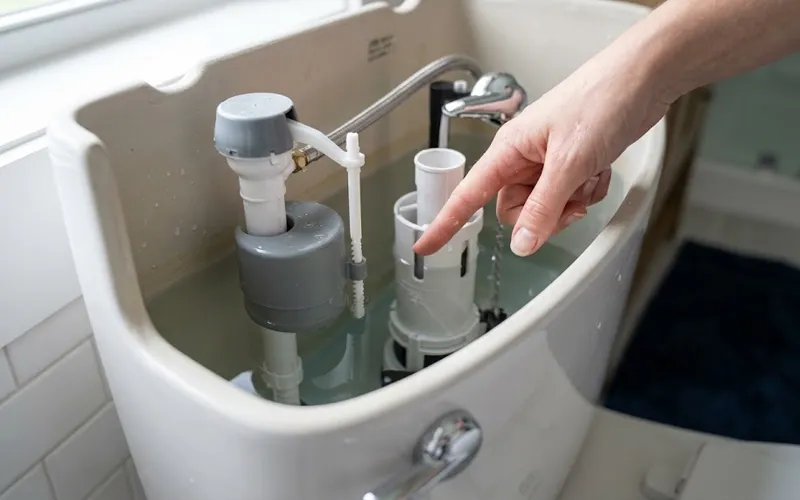
Allow the tank to fill completely, then shut off the water supply. Mark the water level or note its position and wait several minutes without flushing. If the level drops, water may be escaping through the flush valve seal. Check for cracks, hardening, mineral deposits, or an uneven fit. Clean the seal if permitted by the manufacturer, or replace it with a compatible part if it is worn or damaged.
This inspection is an important part of how to fix a running toilet without a ball float because a leaking seal can make a functional fill valve appear faulty. Identifying the actual problem can save you from replacing the wrong component.
Repair a Toilet With a Button Flush System
If you want to learn how to fix a running toilet with a button flush, begin by checking whether the button returns to its normal position after flushing. A stuck button or incorrectly adjusted connecting rod can prevent the central flush valve from closing completely.
Remove the tank lid carefully and inspect the connecting rods or cables according to the manufacturer’s instructions. Make sure they are not pressing continuously against the flush valve. If adjustment is necessary, leave enough clearance for the valve to close fully.
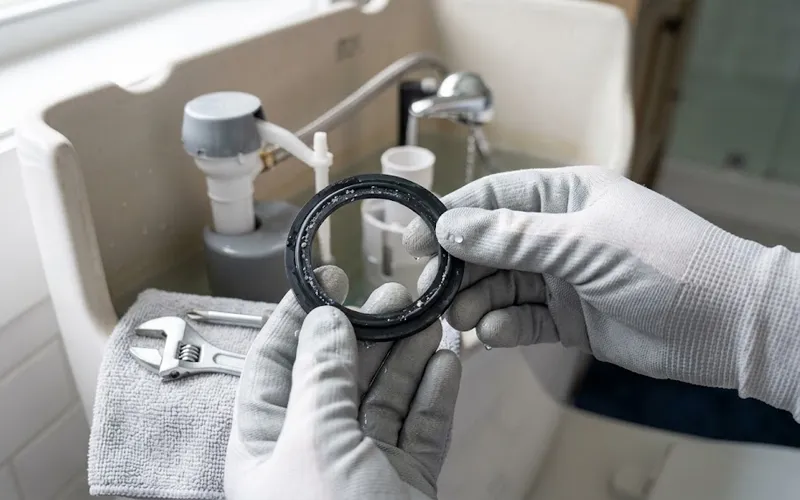
If the button moves freely but water continues running, inspect the central valve and its seal for dirt, damage, or misalignment. Clean accessible surfaces gently and test the toilet again. Replace the affected component if the seal is worn or the valve is cracked.
What If the Toilet Still Runs When the Float Is Up?
If your toilet won’t stop running even when float is up, the fill valve may have an internal fault, or water may be escaping through the flush valve seal. A raised float does not always mean the water supply has shut off completely.
Observe the tank to determine where the water is going. If water continues entering the overflow tube, check the fill valve’s shutoff function and water-level setting. If the water level falls after filling, inspect the flush valve seal instead. This simple distinction helps you choose the correct repair.
For a toilet keeps running no flapper problem, check whether the toilet uses a tower-shaped or canister-style flush valve. Some modern toilets do not have a traditional flapper but still rely on a rubber seal to hold water in the tank. Consult the manufacturer’s instructions if you cannot identify the mechanism.
Can You Fix the Toilet Without Removing the Tank?
In many cases, you can complete the repair without separating the tank from the toilet bowl. Fill valve adjustments, cleaning accessible components, and replacing certain seals can often be done from above.
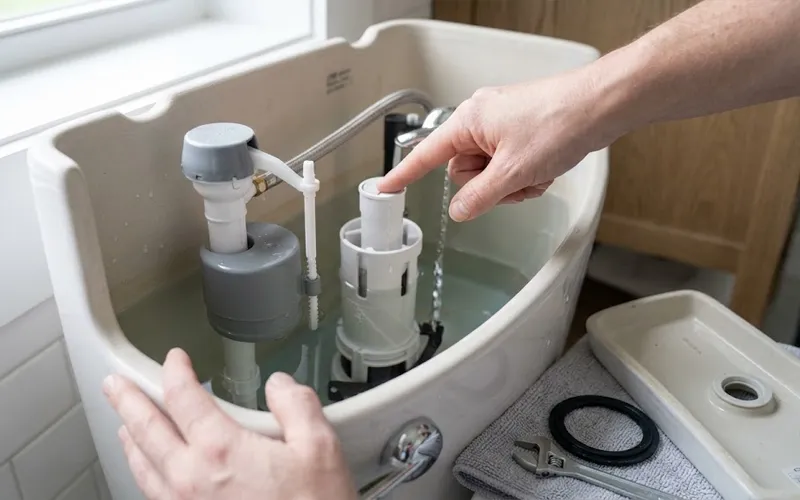
If you need to know how to fix a running toilet without removing the tank, check whether the faulty component can be accessed safely through the tank opening. Some flush valves and seals are designed for removal from above, while other models require more extensive disassembly.
Take a photo of the mechanism before removing any parts so you can restore everything to its original position. Avoid forcing stubborn fittings or overtightening plastic components. If the repair requires removing tank bolts or handling a concealed mechanism you cannot identify, consult the manufacturer’s instructions or contact a plumber.
Common Toilet Repair Mistakes to Avoid
One common mistake is repeatedly adjusting the fill valve without checking whether the flush valve seal is leaking. Another is forcing a stuck shutoff valve or overtightening plastic fittings, which can cause additional damage. Avoid harsh cleaning products unless the manufacturer confirms they are suitable for the toilet’s components.
After completing the repair, restore the water supply slowly and allow the tank to refill. Flush two or three times and check whether the water stops at the correct level. Listen for continued hissing and check whether water flows into the bowl when the toilet is not being used. If the problem persists or you notice a leak around the base or supply connection, seek help from a qualified plumber.
Final Thoughts
Most running toilet problems are caused by a faulty fill valve, an incorrect water level, or a leaking flush valve seal. Checking these components individually helps you identify the cause before buying replacement parts.
Once you understand how to fix a running toilet without a ball float, you can handle many common repairs with basic tools and careful adjustments. If cleaning and adjustment do not solve the problem, replace the faulty component with a compatible part or contact a plumber. Regular inspection can also help reduce water waste and keep your toilet working properly.
Frequently Asked Questions
1. How do you fix a running toilet without a ball float?
Check the fill valve, adjust the water level, and inspect the flush valve seal. Clean or replace damaged parts if needed.
2. Why does my toilet keep running after flushing?
A toilet may keep running because of a faulty fill valve, a leaking flush valve seal, or a water level that is too high.
3. How do you fix a running toilet with a button flush?
Check whether the flush button returns to its normal position. Inspect the connecting rods or cables and ensure the flush valve closes properly.
4. What should I do if my toilet keeps running when the float is up?
Check whether water is entering the overflow tube or leaking into the bowl. A faulty fill valve or worn flush valve seal may be responsible.
5. Can you fix a running toilet without removing the tank?
Yes, many running toilet problems can be fixed from inside the tank. Adjusting the fill valve or replacing an accessible seal may solve the issue.
6. How do you know if a toilet flush valve seal is leaking?
Let the tank fill, then turn off the water supply and wait several minutes. If the water level drops, the flush valve seal may be leaking.
7. Why does a toilet without a flapper keep running?
Some modern toilets use a tower-shaped flush valve instead of a traditional flapper. A dirty, damaged, or poorly fitted seal can cause continuous water flow.
8. When should you replace a toilet fill valve?
Replace the fill valve if it fails to stop water flow after proper adjustment or continues malfunctioning after cleaning, following the manufacturer’s instructions.
Want more DIY and repair ideas? Explore helpful tips and the latest trends on TrendsMore.com.


