



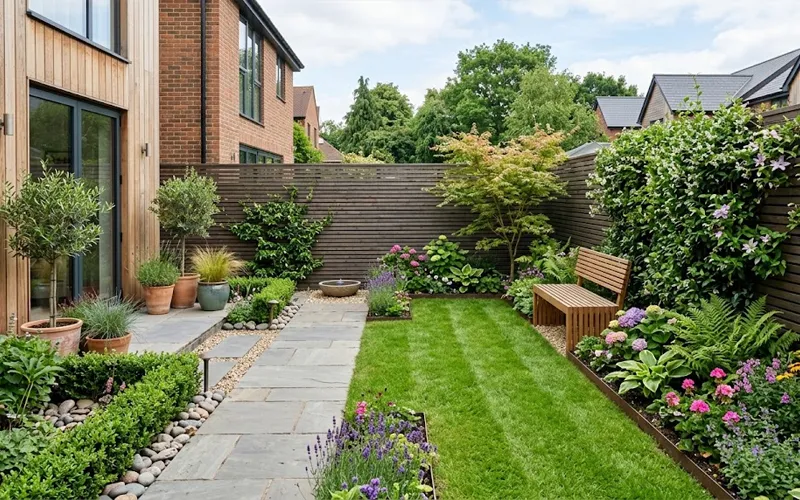
A small garden can add beauty, comfort, and practical value to a home without requiring a large outdoor area or an expensive renovation. The challenge is usually not the size of the garden but how effectively the available space is used. A narrow side garden, small front yard, balcony-style outdoor area, or compact backyard can all become more useful with thoughtful planning. The best small garden improvement ideas focus on solving real problems such as limited planting space, poor organization, lack of privacy, weak lighting, or uncomfortable seating. By making improvements according to the size and purpose of the garden, homeowners can create an outdoor space that feels organized rather than overcrowded.
Assess the Space Before Making Changes
The first step is to understand the conditions of the garden. Measure the available area and note where sunlight reaches during the morning, afternoon, and evening. Some parts may receive several hours of direct sun while others remain shaded by walls, fences, or nearby buildings. This information is important because plants have different light requirements, and choosing plants without considering their growing conditions can lead to poor results.
Drainage should also be checked before adding new planting areas. Water that remains on the ground after rain can damage some plants and create muddy areas. Look at existing pathways, doors, utility points, and areas that need regular access. A good plan keeps these practical requirements in mind instead of placing attractive features where they interfere with everyday use.
Divide the Garden Into Useful Areas
A small garden does not need many separate features, but it benefits from clear organization. Think about what you actually want to use the space for. You might need an area for plants, a small place to sit, a clear pathway, or a corner for storing gardening equipment. Once these functions are identified, each part of the garden can be given a specific purpose.
A well-planned layout helps you avoid filling every open area with plants, pots, furniture, or decorative items. A narrow planting border along one wall can leave the center open, while a small seating area can occupy an otherwise unused corner. Good zoning makes the garden easier to navigate and helps every available section contribute to the overall design.
Select Plants According to Their Mature Size
Choosing plants based only on how they look when purchased can create problems later. Some plants grow much wider or taller than expected, eventually blocking paths, covering windows, or making a compact garden feel crowded. Always consider the mature height and spread of a plant before placing it in a small area.
Use smaller plants near pathways and reserve taller varieties for suitable boundaries or background positions. Plants with different textures can create interest without requiring a large number of species. Evergreen plants can provide consistent structure, while seasonal flowers can add changing color. Herbs and compact edible plants can also make a small garden more useful when placed in containers or dedicated planting spaces.
For very limited areas, Very small garden ideas on a budget can include using a few well-chosen containers instead of trying to create a large planting bed. Compact pots can be moved when necessary, making them useful for renters or homeowners who want flexibility.
Improve the Front Entrance With Simple Planting
The front garden is often the first outdoor area visitors see, so its design should support the entrance rather than compete with it. Small garden ideas in front of House can work particularly well when plants are arranged around a clear pathway and kept at a manageable height.
Low-growing plants can define the edge of a walkway without blocking movement. A few matching containers near the entrance can create symmetry, while one taller plant can provide visual height in a suitable corner. The key is to keep the entrance easy to access and avoid placing plants where they obstruct doors, steps, windows, or house numbers.
For a narrow front garden, repetition can also create a more organized appearance. Using similar pots or repeating one type of plant along an edge can make the area look intentional without requiring a complicated design.
Use Walls and Fences for Vertical Gardening
When ground space is limited, walls and fences provide an opportunity to increase greenery without taking away valuable floor area. Vertical gardening can be created with wall-mounted containers, hanging planters, trellises, or suitable climbing plants.
However, vertical planting should be planned according to the strength and condition of the supporting surface. Containers filled with soil can become heavy, especially after watering, so they need secure mounting. Climbing plants should also be selected carefully because some varieties spread aggressively or require regular support and pruning.
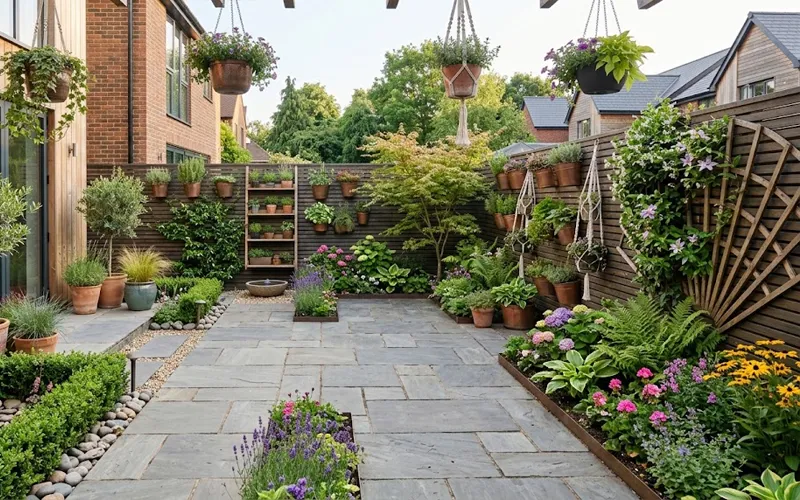
Vertical gardening is particularly useful when the garden needs more greenery but there is little room for additional planting beds. It can also help soften plain walls and create a stronger visual boundary around the outdoor area.
Create Privacy Without Closing In the Space
Small gardens often sit close to neighboring homes, streets, or other buildings, making privacy an important consideration. A complete solid screen can provide privacy, but it may also make a small garden feel enclosed. A better approach in many cases is partial screening.
Tall planters, trellises, climbing plants, narrow hedges, or strategically positioned screens can block direct views while allowing some light and airflow to pass through. The height of the privacy feature should match the area where privacy is actually needed rather than covering the entire garden.
This approach allows the outdoor space to remain visually open while giving users a greater sense of separation from surrounding areas.
Make Containers Work Harder
Containers are valuable in small gardens because they allow plants to be introduced without permanent changes to the ground. They are especially useful where soil quality is poor, paving covers most of the area, or the homeowner wants the ability to rearrange plants.
Different container sizes can be used for different plant types, but they should not be scattered randomly. Grouping containers according to height or arranging them along a defined edge can make the garden look more organized. Containers also need drainage holes and suitable potting material to prevent waterlogged roots.
If existing pots are still structurally sound, cleaning or repainting them can provide a fresh appearance without replacing everything. This is one of the simplest Small garden improvement ideas on a budget because the improvement comes from better arrangement and maintenance rather than buying numerous new items.
Improve the Ground Surface and Pathways
The ground surface has a major effect on how a small garden functions. Damaged paving, uneven paths, weeds between joints, or muddy sections can make even a well-planted garden feel neglected. Before adding decorative features, address these basic problems.
A clear pathway should be wide enough for comfortable movement and should connect the important points of the garden. In very small spaces, a simple path along one side may be more efficient than dividing the garden with multiple walkways.
If replacing the entire surface is not practical, smaller repairs can still improve the area. Cleaning existing paving, replacing damaged sections, adding gravel to suitable areas, or defining planting edges can make the garden easier to use and maintain.
Add a Seating Area That Matches the Scale
A seating area can turn a garden from a decorative space into one that people actually use. In a compact garden, furniture should be selected according to the available floor area. A narrow bench may work better than a large sofa, while two lightweight chairs can provide flexibility.
Before placing furniture, check that there is enough room to walk around it comfortably. Avoid blocking gates, doors, or pathways. Foldable or stackable furniture can be particularly useful because it can be moved when the space is needed for another activity.
For Modern small garden ideas on a budget, simple furniture with clean lines can create a contemporary appearance without requiring a complete redesign. The important factor is not the price of the furniture but whether its size, shape, and placement suit the garden.
Use Color and Texture With Restraint
Color can make a small garden more attractive, but too many competing colors can make the space look busy. Instead of selecting every plant because it has a different flower color, choose a simple color scheme and repeat it in a few locations.
Texture can provide variety without relying heavily on bright colors. Fine leaves, broad foliage, grasses, flowering plants, wood, stone, and textured containers can all create visual differences. Using a limited number of materials usually makes a small space feel more coherent.
This is also where Small garden ideas photos can be useful for planning. Looking at real garden photographs can help homeowners understand how different combinations of plants, surfaces, containers, and furniture work together. Rather than copying an entire photograph, identify one feature that suits the dimensions and conditions of your own garden.
Make a Small Backyard More Functional
A compact backyard can often support several activities if each area is planned carefully. Instead of filling the entire space with furniture or planting, decide which activities matter most. For example, one section could support container gardening while another provides room for sitting or outdoor meals.
Small backyard design ideas on a budget can include using existing walls as boundaries, choosing multipurpose furniture, creating narrow planting strips, and using containers instead of expensive permanent landscaping. A small storage box or vertical tool organizer can also keep equipment from occupying valuable floor space.
The goal is to make the backyard convenient to use rather than trying to fit every possible garden feature into it.
Improve Outdoor Lighting for Safety and Use
Garden lighting should serve a practical purpose as well as improving the appearance of the space. Pathways, steps, entrances, and seating areas are the most useful places to consider lighting because these are areas where visibility matters after dark.
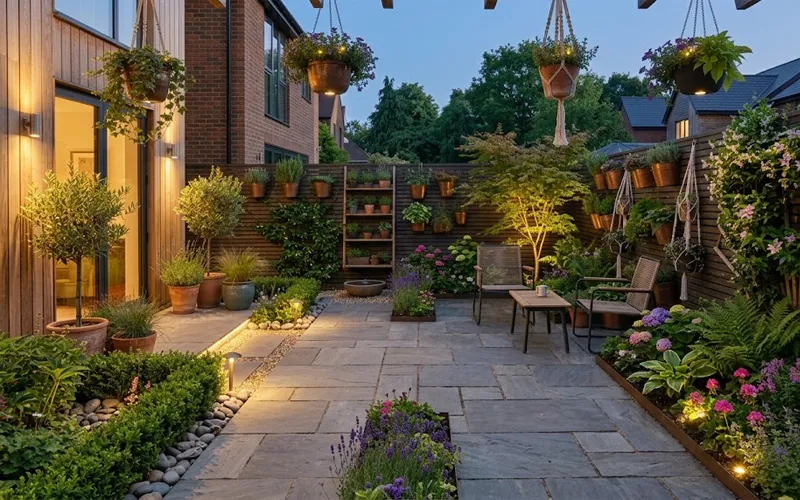
Solar-powered lights can be convenient where electrical wiring is not available, while fixed outdoor lighting may be more suitable for areas that require reliable illumination. Avoid installing too many bright lights in a small garden. A few carefully positioned fixtures can provide sufficient visibility without making the space uncomfortable.
Lighting can also highlight a particular plant, wall, or garden feature, but decorative lighting should come after essential areas such as paths and steps have been addressed.
Keep Maintenance Under Control
Maintenance should be considered before making any improvement. A garden that looks attractive but requires several hours of work every week may not be practical for everyone. Select plants according to the amount of care you can realistically provide.
Regular watering, pruning, weeding, removing dead leaves, checking containers, and cleaning pathways are usually more effective than occasional major cleanups. Grouping plants with similar water and sunlight needs can also make routine care easier.
Avoid introducing plants that are likely to become invasive or difficult to control in a restricted space. Similarly, complicated water features or fragile decorative materials may require more maintenance than they are worth in a small garden.
Find Inspiration Without Copying the Whole Design
Garden photographs can be useful when you are trying to decide what style suits your home. Small garden ideas Photos on a budget can show how simple materials and inexpensive improvements can be arranged effectively.
When reviewing photographs, pay attention to practical details rather than only appearance. Look at the amount of open space, plant sizes, pathway placement, furniture dimensions, and use of walls or containers. A design that looks perfect in a photograph may not work in your garden because of differences in sunlight, climate, drainage, or available space.
The most useful inspiration is therefore something you can adapt to your own conditions rather than reproduce exactly.
Choose Improvements Based on Priority
You do not need to complete every improvement at once. Start with problems that affect the garden most. If the space feels cluttered, reorganize it before buying anything. If plants are struggling, improve their growing conditions. If the pathway is difficult to use, repair it before adding decorative features.
This priority-based approach makes small garden improvement ideas more affordable and practical because money is directed toward changes that provide a real benefit. It also makes the transformation easier to manage, allowing you to evaluate each improvement before deciding what should be changed next.
Build the Garden Around How You Use It
The most successful small garden improvement ideas are based on the way people actually use their outdoor space. A garden designed for morning coffee may need comfortable seating and suitable privacy, while a space mainly used for gardening may benefit more from planting areas and accessible storage.
Think about the time of day the garden is used, how many people normally use it, and which activities should have priority. These details can determine where seating, plants, lighting, storage, and pathways should be placed. A well-planned small garden can make daily life more enjoyable by combining useful features with a simple and attractive design.
Conclusion
Good small garden improvement ideas do not depend on having a large yard or spending a lot of money. The biggest improvements often come from understanding the available space, choosing plants that fit its conditions, organizing different functions, improving pathways, using vertical surfaces, and selecting furniture and lighting according to the garden’s actual size.
Whether the space is a narrow front entrance, a tiny backyard, or a compact outdoor corner, practical planning can make it more comfortable and attractive. Start with the problems that matter most, make changes gradually, and avoid adding features simply to fill empty space. A well-planned small garden can remain easy to maintain while providing a useful and welcoming part of the home.
Frequently Asked Questions
1. What are the best small garden improvement ideas?
Use compact plants, vertical gardening, simple seating, containers, and clear pathways to make better use of limited space.
2. How can I improve a small garden on a budget?
Reuse existing pots and furniture, repair pathways, rearrange plants, and add affordable lighting or containers.
3. How can I make a very small garden look bigger?
Keep the layout open, avoid clutter, use vertical planting, and choose furniture and plants that match the garden’s size.
4. What plants are best for a small garden?
Choose compact plants based on your garden’s sunlight, soil, drainage, and available space.
5. How can I add privacy to a small garden?
Use trellises, climbing plants, narrow hedges, tall planters, or partial screens without blocking too much light.
6. How can I improve a small front garden?
Keep the entrance clear and use low plants, containers, and narrow planting borders to frame the pathway.
7. How can I make a small backyard more useful?
Create separate areas for seating, gardening, dining, or storage and use compact furniture and vertical solutions.
8. What should I consider before improving a small garden?
Check the space, sunlight, drainage, access, plant sizes, and maintenance needs before making changes.
Want more garden ideas and tips? Explore helpful ideas and the latest trends on TrendsMore.com.


